
Livraison le jour même ou le lendemain

Qualité garantie

Débloquez vos offres de bienvenue: Livraison GRATUITE | Jusqu'à -80 % | 30 jours d'essai gratuits à JoyPlus
Téléchargez l'application
A cut on your finger in the shower, a blister on your heel after a few miles of hiking or a graze that comes away after just a few minutes in the water: waterproof plasters meet common everyday needs, but not all of them offer the same protection.
Before you buy, it is worth looking beyond claims such as ‘water-resistant’ or ‘long-lasting’. The size, material, dressing pad and intended use are the factors that really determine whether a plaster is suitable. Here are the key points to consider when comparing waterproof plasters, water-resistant models and products designed for specific needs.
The wording ‘water-resistant’ may be enough for washing your hands or having a quick shower, but it does not necessarily guarantee that the plaster will stay in place during prolonged immersion. For the swimming pool, sea or bath, choose a model with continuous adhesive edges and clear information stating that it is suitable for water-based activities.
Even with a waterproof plaster, the skin around the wound must be clean and completely dry before application. If the plaster is wet, coming away or dirty, it should be replaced.
A small finger plaster will not properly cover a large graze. Conversely, an oversized model may restrict movement and come away more quickly around a joint. Check its dimensions, shape and the area covered by the dressing pad.
For blisters, hydrocolloid plasters work differently from plasters intended for minor wounds. They are generally applied directly to areas exposed to rubbing and are often available in shapes designed for the heel, toe or sole of the foot.
An adhesive that holds very firmly may irritate sensitive skin. People prone to skin reactions can choose latex-free models, breathable backings or hypoallergenic plasters, after checking the instructions and list of ingredients. However, please note that ‘hypoallergenic’ does not mean that a reaction is completely impossible.
Children’s plasters also require a little extra care. Check the recommended age, whether latex is present and how easily the plaster can be removed.
Waterproof plasters designed for showers and swimming generally combine a waterproof or water-resistant backing with adhesive around the edges. A very thin, transparent film provides discreet protection, while a flexible backing moves more comfortably with fingers, knees and elbows.
For everyday use, breathability is another important consideration. Breathable backings may reduce the feeling of dampness, but they do not remove the need to change the plaster when it is wet or dirty.
For cuts, grazes and minor superficial wounds, choose a non-stick dressing pad. This prevents the plaster from sticking directly to the wound and generally makes removal more comfortable. It is particularly useful for fingers, knees and children’s minor injuries.
Waterproof adhesive tape, on the other hand, is mainly used to hold a dressing pad or plaster in place. It should not be applied directly to an open wound unless the instructions specifically allow it.
A pack of 20 or 40 plasters is ideal for a family first-aid kit at home or in the car. Boxes containing 5 or 6 plasters are more suited to specific needs, such as preventing and protecting blisters.
Do not rely solely on the stated wear time. This depends on perspiration, friction, the area of the body and how the skin was prepared. Always follow the instructions and replace the plaster as soon as it starts to come away, becomes damp or gets dirty.
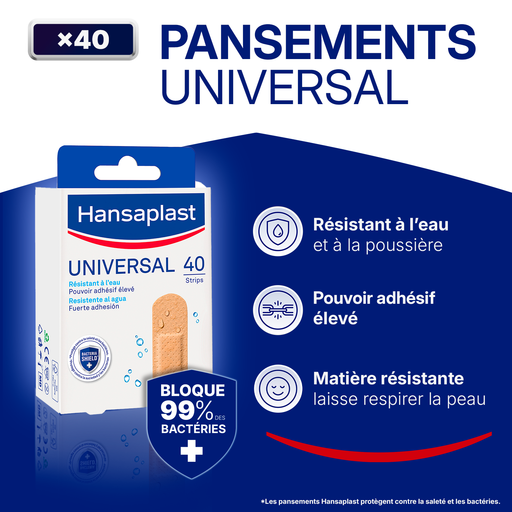
Why this choice suits this profile : This pack of 40 plasters is easy to keep at home, in the car or in a family first-aid kit. The universal sizes cover cuts, grazes and minor everyday injuries.
The quantity and universal sizes mean you will not be left with just a few specialist plasters when dealing with the most common injuries.
40 plasters, water-resistant protection, breathable backing and a latex-free formulation.
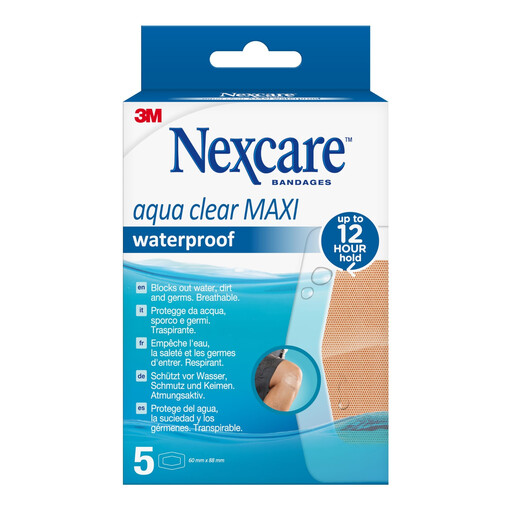
Why this choice suits this profile : Measuring 60 × 88 mm, this maxi-sized model is ideal for anyone looking for discreet protection for larger grazes or cuts, particularly during outdoor activities.
Its dimensions are clearly stated, while the non-stick dressing pad prevents the unpleasant surprises associated with a plaster that is too small or uncomfortable.
Ultra-thin, breathable backing, natural latex-free design, 5 plasters and a recommendation to replace after 12 hours or as soon as it starts to come away.
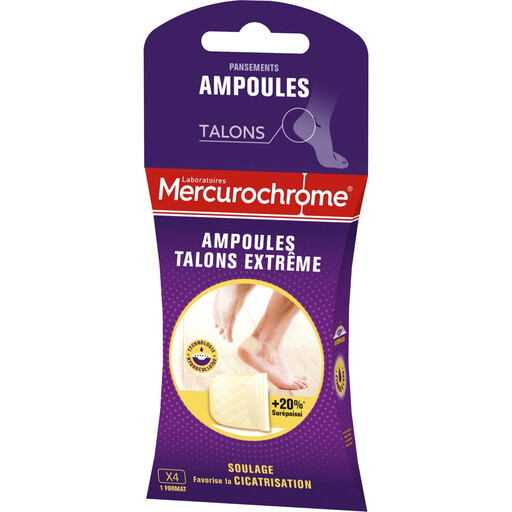
Why this choice suits this profile : Its shape, designed for the heel and sole of the foot, is ideal for hikers, sports enthusiasts and anyone exposed to repeated rubbing from footwear.
This specialist shape prevents you from folding a universal plaster over the heel, which can create uncomfortable edges that catch inside your shoe.
Hydrocolloid technology, reinforced protective mesh and tapered edges for greater freedom of movement ; box of 4 plasters.
For a superficial wound that needs protecting in the shower, the MERCUROCHROME Waterproof Bandages Ultra-Thin Transparent X16 is another interesting option: 16 pre-cut plasters, an ultra-thin transparent backing, a non-stick dressing pad and a design intended for baths, showers and swimming. Check the precautions on the packaging before use, particularly for deep, infected or extensive wounds.
We have selected a complete, regularly updated range of products that meet these demanding criteria and European safety standards.
Yes, some models are designed for showers, baths or swimming. However, how well they stay in place depends on how the skin was prepared, how well the edges adhere and how long they are exposed to water. Replace the plaster if it starts to come away, if water has got underneath it or if it becomes dirty.
The duration varies depending on the product and the area being protected. Some models intended for minor injuries should be changed every day, or as soon as they become damp. Hydrocolloid plasters for blisters can remain in place for several days, until their edges naturally begin to come away, in accordance with the instructions.
No. These products are designed for minor superficial injuries or blisters, depending on their technology. Do not use an ordinary plaster on a deep wound, bite, serious burn or wound showing signs of infection. In the event of heavy bleeding, persistent pain or unusual changes, seek medical advice promptly.