
Livraison le jour même ou le lendemain

Qualité garantie

Débloquez vos offres de bienvenue: Livraison GRATUITE | Jusqu'à -80 % | 30 jours d'essai gratuits à JoyPlus
Téléchargez l'application
A cut on your finger in the shower, a blister after a hike or a child’s grazed knee: waterproof bandages help limit contact with water, dirt and friction. However, not all models offer the same level of protection—and, more importantly, they are not designed for the same needs.
Before buying waterproof bandages, check three criteria that marketing often pushes into the background: the actual level of water resistance, the format and the adhesive’s skin tolerance. A bandage that is too short will quickly peel away, a model designed for blisters may not be suitable for a cut, and a highly adhesive strip can irritate sensitive skin.
The term water-resistant bandages may simply refer to protection suitable for a few splashes or handwashing. A model marketed as waterproof, with continuous adhesive edges, will generally be better suited to showers or baths. This does not necessarily guarantee that it will stay perfectly in place during prolonged swimming.
Instead, examine its construction: a waterproof backing, a non-stick pad and properly sealed edges tell you more than a prominent claim on the packaging.
A classic rectangular bandage may fit poorly on a finger, heel or joint. Repeated movement creates creases and eventually lifts the edges. For a blister, it is better to choose hydrocolloid bandages that extend well beyond the friction zone. For a cut on the fingertip, an ergonomic format that wraps around the phalanx helps reduce the risk of peeling.
Extra-strong adhesion can be useful during a workout, but it is not necessarily suitable for fragile skin. Look for claims such as “suitable for sensitive skin,” “latex-free” or “ultra-soft non-woven.” Products are not interchangeable: the manufacturer’s description and instructions remain the best sources for confirming whether a model is right for your situation.
For minor everyday wounds, a micro-aerated backing offers a useful balance between protection from moisture and comfort. The term “breathable” describes a material property; it does not constitute a medical guarantee.
For sports activities, pay particular attention to the stated wear time, the flexibility of the backing and the width of the adhesive area. Nexcare Max Hold models claim a wear time of up to 48 hours, depending on the reference, while Nexcare Aqua Clear MAXI indicates up to 12 hours. These durations are indicative and depend in particular on the condition of the skin, perspiration and the intensity of movement.
On clean, dry skin, the bandage should extend sufficiently beyond the edges of the wound. For a larger injury, the 10 cm × 7 cm format of the Mercurochrome sterile bandage may be more suitable than a small pre-cut model. For a blister on the heel, the shape of the bandage and the margin around the affected area matter just as much as its total surface area.
A non-stick pad is easier to remove when applied to a small superficial wound. A hydrocolloid bandage, meanwhile, forms a gel when it comes into contact with blister fluid, in accordance with the manufacturer’s instructions. It should be applied to clean, dry skin without stretching the backing.
People sensitive to adhesives should consider latex-free references or products specifically designed for sensitive skin. The Mercurochrome finger model uses a soft, micro-aerated non-woven fabric. By contrast, Nexcare Max Hold states that it is not intended for delicate skin.
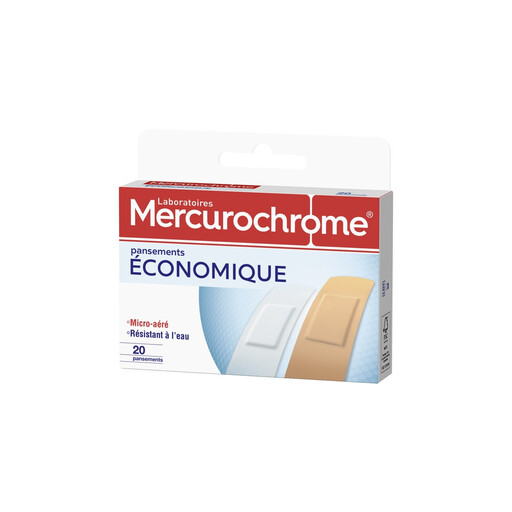
Why choose it: this 20-bandage assortment covers cuts, grazes and minor everyday injuries, whether at home or in a family first-aid kit.
Its micro-aerated, water-resistant backing is better suited to everyday use than a model that must remain completely dry.
20 units, a flexible texture and a recommended replacement every day or whenever the bandage becomes wet or dirty.
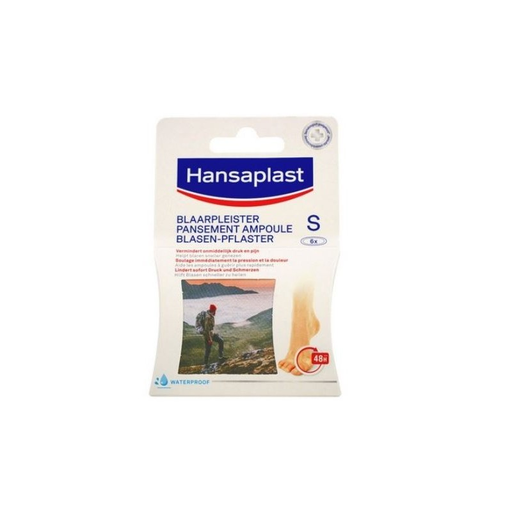
Why choose it: its pack of 40 bandages gives families several sizes to hand for minor everyday mishaps.
The product page claims protection during handwashing, showers, baths and swimming; nevertheless, check that the edges are still firmly attached after immersion.
A non-stick pad, a backing that allows the skin to breathe and adhesion advertised as extra-strong.
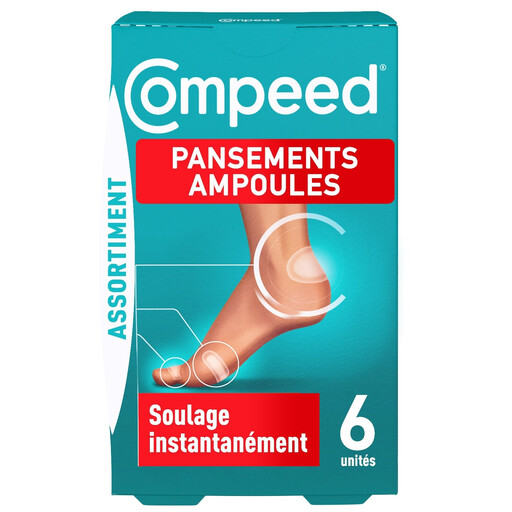
Why choose it: the assortment includes two medium sizes, two small sizes and two toe models, covering a range of areas on the foot.
Choose the format according to the friction zone instead of using a standard bandage on the heel or toes.
Hydrocolloid technology, three formats and a clear instruction: allow the bandage to detach naturally.
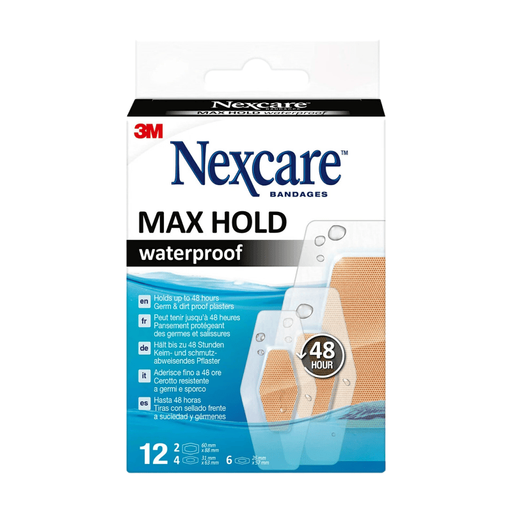
Why choose it: its assorted formats and movement-friendly backing make it suitable for hiking, cycling and sports activities.
The manufacturer does not recommend it for delicate skin—a useful detail that helps prevent an unsuitable purchase despite its reinforced adhesion.
12 assorted sizes, strong water resistance and a stated wear time of up to 48 hours, depending on conditions.
We have brought together an up-to-date selection of waterproof bandages for different uses, taking into account the safety requirements applicable in France.
A waterproof bandage is not suitable for deep wounds, bites, serious burns or infected injuries. Consult a healthcare professional if the wound remains painful, becomes red or swollen, or develops discharge.
Yes, provided the manufacturer states that it is suitable for use in the shower or contact with water. Dry the area afterwards and check that the edges are still properly adhered. Prolonged immersion or repeated friction may reduce the bandage’s staying power.
The duration varies depending on the product and conditions of use. Some models should be replaced every day, or as soon as they become wet or dirty. Hydrocolloid bandages can remain in place for several days if they continue to adhere properly. Always follow the instructions and remove the bandage if irritation occurs.
Choose a hydrocolloid blister bandage that is wide enough to extend beyond the friction zone. For a particularly heavily used heel, a model with tapered edges or a protective raised section may help reduce creasing inside the shoe. If there are signs of infection, seek medical advice.