
Livraison le jour même ou le lendemain

Qualité garantie

Débloquez vos offres de bienvenue: Livraison GRATUITE | Jusqu'à -80 % | 30 jours d'essai gratuits à JoyPlus
Téléchargez l'application
A sponge may seem like an insignificant purchase. However, choosing the wrong one can quickly lead to scratches, lingering odours or having to replace it too often. Spontex sponges come in several versions: versatile models, washing-up sponges, non-abrasive options, formats designed for the bathroom and machine-washable sponges.
Before filling your basket, it is worth distinguishing marketing claims from the features that genuinely make a difference in everyday use.
A sponge described as non-abrasive may be suitable for a hob or saucepan without necessarily being appropriate for non-stick coatings, glass or a glossy surface. Dirt trapped between the sponge and the surface can also leave marks.
The best approach is to check the recommended surfaces and test the sponge on a discreet area.
Scouring sponges are very useful for removing cooking residue and stubborn dirt. However, their abrasive side is of no use when wiping a table, cleaning a mirror or caring for a delicate hob. A double-sided sponge or a model with a microfibre section makes it easier to adapt your cleaning technique to the surface.
Claims such as ‘durable’ or ‘long-lasting’ deserve closer inspection. Some models specify an exact number of machine washes, while others recommend replacement approximately every two months for hygiene reasons. Lifespan also depends on how often the sponge is used, the household cleaning products applied and the type of dirt being tackled.
For absorbing liquids, high-absorbency sponges made from plant-based cellulose retain water effectively and rinse easily. Polyurethane foam models offer a soft, comfortable grip and good absorbency, but should be avoided on certain non-stick surfaces when the product information advises against them.
The presence of cotton, wood pulp or flax in the plant-based section can provide a useful indication of the materials used. Also check whether the manufacturer mentions recycled fibres or wood sourced from sustainably managed forests.
For delicate surfaces, look specifically for the terms non-abrasive, non-scratch or ‘test beforehand recommended’. A gentle scouring side may be suitable for hobs, crockery and some saucepans, while a firmer side should be reserved for stubborn dirt.
Extra care is still needed with non-stick coatings: even a sponge described as gentle should be tested in line with the manufacturer’s recommendations.
Machine-washable sponges can extend the time between replacements, provided you follow the specified temperature and programme. Some models can be washed at 40 °C, others at up to 70 °C, while a few can also be cleaned in the dishwasher. Avoid fabric softener and tumble drying where the care instructions prohibit them.
After each use, rinse the sponge thoroughly, wring it out and leave it to air-dry. This habit helps limit trapped moisture and unpleasant odours. As for so-called ‘antibacterial’ properties, these should be understood as a feature of the treatment applied to the product, rather than a general hygiene guarantee. For the models concerned, the product information may specify, for example, the presence of an antibacterial agent or provide test results obtained under stated conditions.
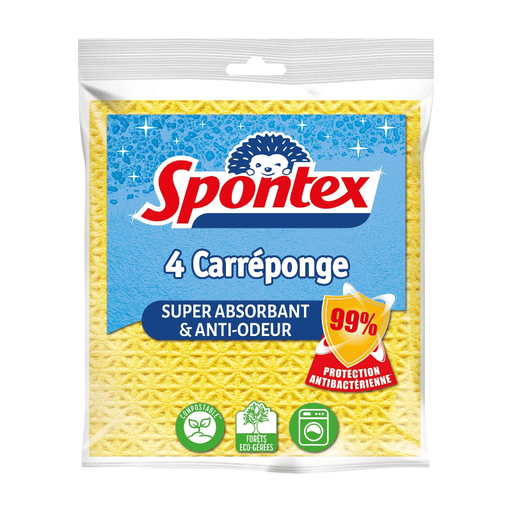
Why this choice suits this profile : Its square shape and pack of four sponges provide a useful starting point for equipping the kitchen, bathroom and other rooms in your home.
The product information highlights high absorbency and recommends rinsing after every use: two essential points for limiting moisture-related odours.
Pack of 4 sponges, a combination of foam and cellulose, with an antibacterial treatment stated in the product information.
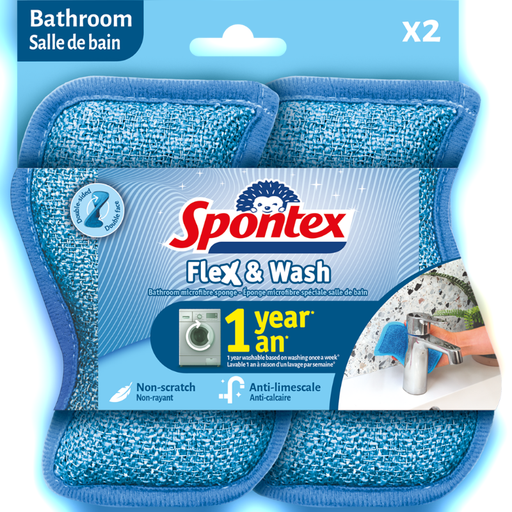
Why this choice suits this profile : This model combines a microfibre side for mirrors and glass with a scouring side designed for limescale and bathroom dirt.
The stated washability of up to 52 cycles provides a concrete benchmark, making it far more meaningful than a simple durability claim without supporting figures.
Microfibre side made from recycled fibres, washable at up to 40 °C, medium-strength scouring side.
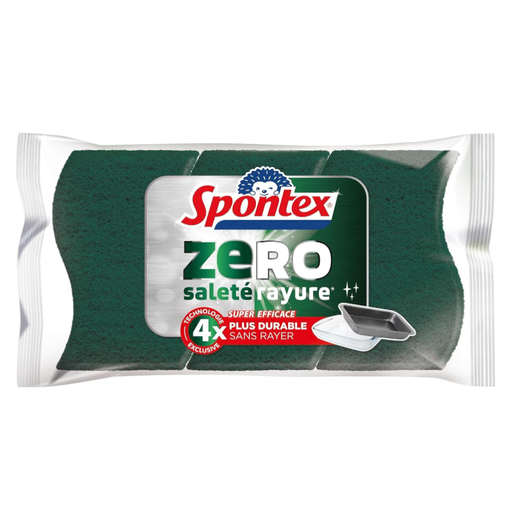
Why this choice suits this profile : Households that regularly clean baking dishes or very dirty surfaces may find this model well suited to their needs, provided they follow the restrictions stated in the instructions.
The product information states that it is four times more durable than a standard sponge and is suitable for washing at 40 °C.
Pack of 3, scouring particles described as non-scratch, made in France as stated.
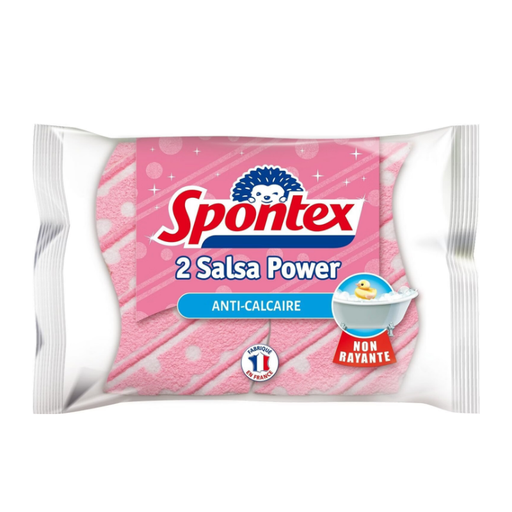
Why this choice suits this profile : Its design is intended for taps, shower screens, baths, washbasins and mirrors, particularly in homes with significant limescale build-up.
Its bathroom-specific design helps avoid using the same abrasive side on materials that require different treatment.
Pack of 2, format suited to hard-to-reach areas, machine washable at 40 °C as stated.
We have put together a complete, real-time selection of products that meet these demanding criteria, in compliance with European safety regulations.
It depends on how the sponge is used and its condition. Several product information sheets recommend replacing it approximately every two months. Washable models can be cleaned at the stated temperature, but should be replaced as soon as they become misshapen, torn or continue to smell despite rinsing.
A product designed for the bathroom, such as a non-scratch limescale-removing sponge, will be better suited to this specific task. Use the side intended for deposits, rinse it after every use and always test it on a small area if the material is delicate.
They can reduce repeat purchases, but you should compare the pack price, the stated number of washes and the care instructions. A sponge washable at 40 °C or 70 °C also requires a suitable cycle. Its running cost therefore depends on how often it is washed and the lifespan actually achieved.