
Livraison le jour même ou le lendemain

Qualité garantie

Débloquez vos offres de bienvenue: Livraison GRATUITE | Jusqu'à -80 % | 30 jours d'essai gratuits à JoyPlus
Téléchargez l'application
A sponge may seem like a small, straightforward purchase. But the wrong choice can quickly leave scratches on a hob, trap odours, crumble or build up grease after just a few uses. Spontex sponges are designed for a wide range of tasks, from washing up and cleaning the kitchen or bathroom to caring for delicate surfaces and everyday cleaning.
Before you add one to your basket, take a moment to look out for the most common pitfalls.
A scouring sponge designed to tackle stubborn, baked-on residue may not be suitable for a non-stick pan, ceramic hob or glass surface. Even if it’s described as versatile, its abrasive side could leave marks.
Always check which surfaces it’s suitable for and test it on an inconspicuous area first. For delicate surfaces, choose a non-scratch sponge and avoid using the scouring side if the instructions advise against it.
An antibacterial treatment is no substitute for rinsing, drying or replacing your sponge regularly. Claims can vary depending on the product and how it’s used. For example, the Flex & Wash Bathroom product page states that it reduces E. coli on glass and human coronavirus on tiled surfaces by 99%, using water alone, in a test carried out by an independent laboratory. This result applies only under the test conditions and is not a general guarantee of hygiene in your home.
An antibacterial sponge should therefore be rinsed after every use, wrung out thoroughly and left to air-dry.
A washable sponge may mean you need to replace it less often, but only if it can genuinely withstand the recommended washing method. Check the maximum temperature, whether it can go in the washing machine or dishwasher, whether fabric softener should be avoided and whether it needs to air-dry.
A standard sponge will generally need replacing regularly, especially if it becomes misshapen, changes colour, develops an unpleasant smell or starts to shed fibres. Spontex product pages often recommend replacing sponges after around two months, while some reusable models are advertised as suitable for up to 52 washes under the specified conditions.
For everyday washing up, choose an absorbent sponge with a soft side and a cleaning side suited to the type of dirt you need to tackle. Models containing plant-based cellulose may combine cotton, wood pulp and flax. Scouring sides use different fibres or particles, depending on the level of abrasion required.
A grease-fighting sponge can make rinsing easier if its fibres hold on to less greasy residue. However, you’ll still need washing-up liquid and should rinse it thoroughly after every use.
A machine-washable sponge can be a practical choice if you want to reuse your cleaning products. The models featured here can be washed at different temperatures: 40 °C, 70 °C or, for some products, for up to 52 cycles. Follow the temperature shown on the packaging and avoid washing a very dirty sponge with delicate laundry.
Some sponges can go in the dishwasher, but this isn’t a general rule. A machine-washable sponge won’t necessarily withstand every programme.
For the kitchen, choose a washing-up sponge that’s easy to handle, absorbent and suitable for your cookware and utensils. For mirrors, glass shower screens and taps, a microfibre sponge can help reduce streaks. In the bathroom, look for a side designed to remove limescale, and check that it’s suitable for chrome, painted or delicate surfaces.
Sponges designed for heavy-duty cleaning aren’t a substitute for sponges used for finishing touches. A simple way to stay organised is to keep one sponge for washing up, another for the bathroom and a third for heavily soiled surfaces.
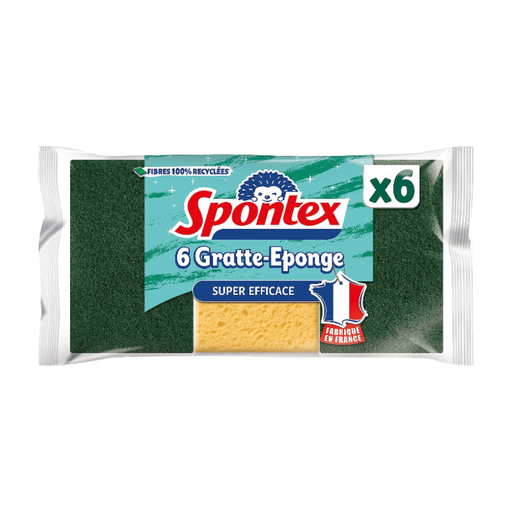
Why it’s a good fit for you: This pack of six sponges is a great starting point for equipping your kitchen and tackling everyday household cleaning.
The materials and recommended uses are clearly stated: don’t use the scouring side on delicate surfaces.
Scouring side made from 100% recycled fibres, plant-based cellulose and machine washable at 40 °C.
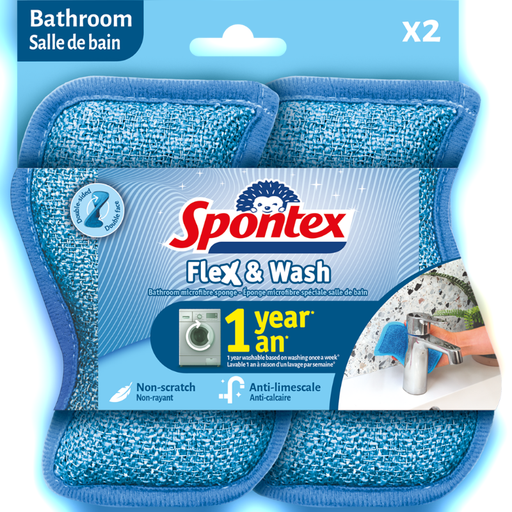
Why it’s a good fit for you: Its dual-sided design is ideal if you want to tackle limescale, then wipe down glass and mirrors with a single cleaning tool.
Each side has a different purpose: one gently scrubs away limescale, while the microfibre side helps leave a streak-free finish.
Advertised as suitable for up to 52 washes, with recycled fibres and an absorbent foam core, according to the product page.
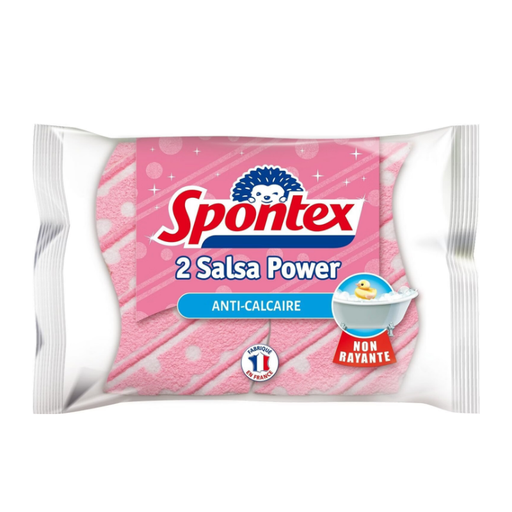
Why it’s a good fit for you: This pack is ideal for regular cleaning of taps, shower screens, the sink, bath and mirror.
It’s clearly intended for bathroom use and its cleaning side is described as non-scratch. However, we still recommend testing it first.
Easy-to-handle design, machine washable at 40 °C and made to tackle limescale deposits.
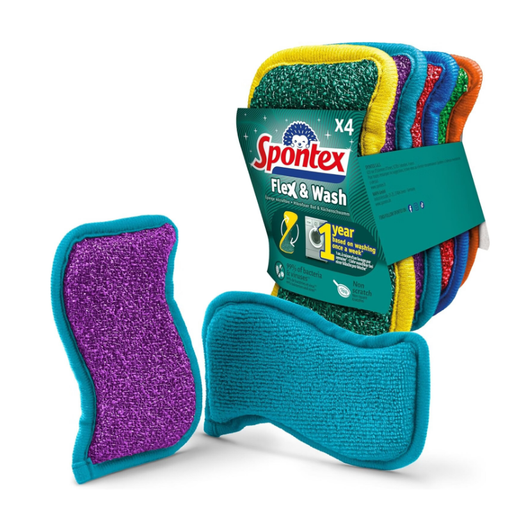
Why it’s a good fit for you: This pack is a good choice if you want to replace your sponges less often and use them around the kitchen, bathroom and other areas of the home.
The advertised number of wash cycles and care instructions give you a clearer idea of how long the sponges can be used.
Microfibre side, non-scratch scouring side and recycled fibres, as stated on the product page.
We’ve put together a complete, regularly updated list of products that meet these strict selection criteria and comply with European safety regulations.
Choose a product described as non-scratch and check that its product page says it’s suitable for pans and delicate coatings. Avoid highly abrasive green scourers and always test on a small area first.
A sponge’s lifespan depends on its material, how often you use it and how well you care for it. Several Spontex models recommend replacing sponges after around two months, while some reusable sponges are advertised as suitable for up to 52 washes. Replace yours straight away if it develops an unpleasant smell, becomes misshapen or starts to crumble.
Rinse it before washing and remove any residue, then follow the temperature on the packaging. Don’t use fabric softener if the instructions advise against it, and avoid tumble-drying if this is specified. Leave the sponge to air-dry after every use.