
Livraison le jour même ou le lendemain

Qualité garantie

Débloquez vos offres de bienvenue: Livraison GRATUITE | Jusqu'à -80 % | 30 jours d'essai gratuits à JoyPlus
Téléchargez l'application
A sponge may seem like an insignificant purchase. Yet its material, texture and care directly affect how well it works and how long it lasts. From household sponges for the kitchen and bathroom to African exfoliating body nets, each use calls for a different design.
Here are the most common pitfalls and the criteria to consider before choosing your cleaning and bath sponges.
A double-sided sponge generally has a soft surface for wiping and a more abrasive side for removing dirt. That does not mean it is suitable for every surface. A scouring side can leave marks on a non-stick frying pan, a glossy hob, glass or delicate paintwork.
Check the manufacturer’s recommendations and always test it on an inconspicuous area. Even a sponge advertised as scratch-resistant should not be considered harmless on every finish.
An absorbent sponge holds water effectively, but it can also take a long time to dry if its structure is too dense. A sponge left damp in an enclosed sink may develop unpleasant odours and deteriorate more quickly.
After each use, rinse it, wring it out without twisting it excessively, then leave it to dry in a well-ventilated place. High absorbency does not replace regular care.
A machine-washable sponge can reduce how often you need to replace it, but it is not everlasting. The fibres eventually wear out, the foam loses its shape and residue can remain trapped in the material.
For example, the Spontex Flex & Wash range states that it can be washed for up to 52 cycles, according to the product information provided. It should nevertheless be replaced when it is heavily worn, misshapen or no longer works as effectively.
For everyday washing-up, a vegetable cellulose sponge combined with a scouring surface can be suitable for many tasks. The SPONTEX Essential Multi-Purpose Sponges combine a PEFC-certified vegetable sponge with a scouring side. PEFC certification guarantees that the fibres come from forests managed according to the criteria defined by this system; it does not mean that the sponge is entirely compostable.
For windows, mirrors and bathroom surfaces, a microfibre sponge may be better suited to finishing touches. Microfibre helps distribute moisture and reduce streaks, while a separate scouring side can tackle limescale deposits.
A green or heavily textured side does not behave like a soft surface. For a washing-up sponge, choose the level of abrasion according to the utensils you need to clean. Non-stick frying pans, decorated glass and glossy surfaces require particular care.
So-called “magic” sponges are generally made from foam with an abrasive microstructure. They can remove certain marks from walls, soles and washable surfaces, but always test their effect in a hidden area first. Avoid using them on skin, very glossy surfaces or dark painted surfaces without taking precautions.
A compact size makes it easier to reach corners, while a flexible shape can be useful for edges and hard-to-reach areas. When it comes to care, look for clear instructions: washing temperature, whether a laundry bag is required, and whether fabric softener or a tumble dryer is prohibited.
For a bath net, a cord or two handles makes back exfoliation easier. The open mesh generally dries faster than a compact shower sponge, but it should still be rinsed and hung up after every use.
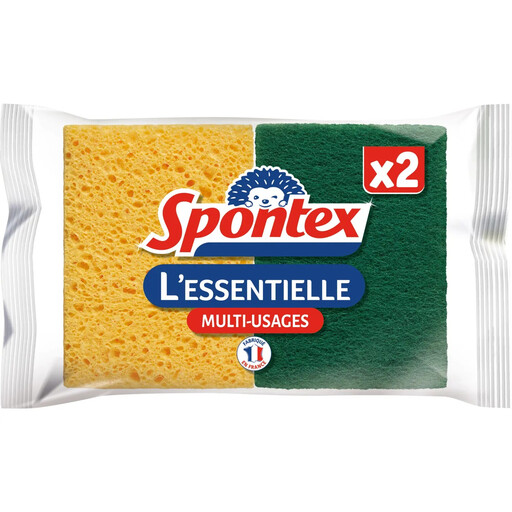
Why this choice suits this profile : This pack of two sponges covers everyday tasks in the kitchen and around the home. Their compact size makes it easy to reach corners and edges.
Each side has its own purpose: the scouring side tackles stubborn dirt, while the soft side is used for wiping and finishing the clean. That helps you avoid using an abrasive surface everywhere.
PEFC-certified vegetable sponge, double-sided design and a pack of two. The product information recommends replacing it approximately every two months.
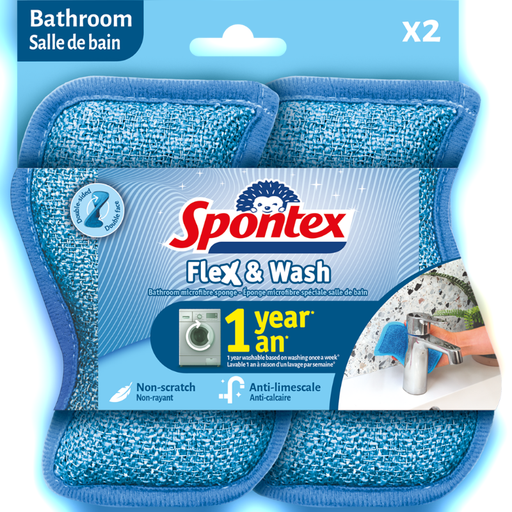
Why this choice suits this profile : This bathroom sponge is designed for people looking for an accessory dedicated to limescale, mirrors and glass surfaces.
Machine or dishwasher washing means you do not have to leave a damp sponge lying around indefinitely. The microfibre side and the scouring side have distinct functions.
Machine washable up to 52 times according to the product information, with recycled fibres stated by the manufacturer and an absorbent central foam layer. Wash at 40 °C without fabric softener.
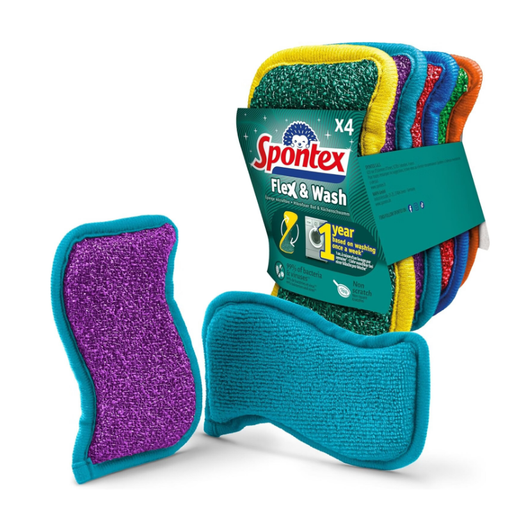
Why this choice suits this profile : Their flexible S-shape and pack of four make them suitable for households that regularly clean the kitchen, bathroom, car or awkward corners.
Its reusable design reduces the need for frequent replacements while retaining a microfibre side and a scouring side.
Up to 52 washes claimed, plastic-free packaging according to the product information and recycled fibres on both sides. Testing it first on sensitive surfaces is still recommended.
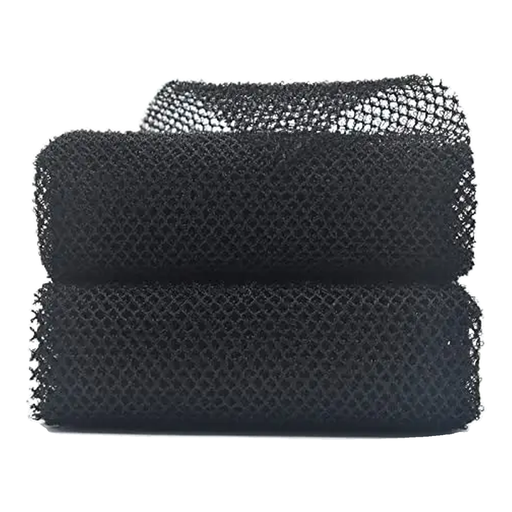
Why this choice suits this profile : This long net with a cord makes it easier to clean your back and shoulders, areas that are difficult to reach with a traditional shower sponge.
Its open mesh dries quickly when hung up, unlike some compact accessories that retain more water.
Open-mesh nylon, integrated cord and machine washable with a protective laundry bag. For external use only.
We have put together a complete, real-time updated list of products that meet these strict selection criteria and European safety regulations.
It all depends on its material, how often it is used and its drying conditions. Some product information recommends replacing it approximately every two months, while a machine-washable model can be used for several cycles. Visible wear and unpleasant odours remain the signs to take most seriously.
Not necessarily. Even a side described as soft may hold abrasive particles. Check the packaging and test the sponge on an inconspicuous area. For a non-stick frying pan, choose a soft surface and avoid any scouring side that is not explicitly designed for this type of coating.
Rinse it thoroughly after showering, gently wring it out, then hang it up in a well-ventilated place. Some models are machine washable, preferably in a laundry bag. Do not use the net on irritated or damaged skin, and stop using it at the first sign of discomfort.