
Livraison le jour même ou le lendemain

Qualité garantie

Débloquez vos offres de bienvenue: Livraison GRATUITE | Jusqu'à -80 % | 30 jours d'essai gratuits à JoyPlus
Téléchargez l'application
Buying a dish sponge might seem trivial, but the wrong choice often leads to scratched surfaces, questionable hygiene, and constant replacements. Faced with packaging that promises exceptional durability or "effortless" cleaning, it's easy to fall for marketing traps that end up costing you. Before you fill your cart, let's review the mistakes to avoid so you can make a truly informed choice.
Here are the two most common mistakes:
To stop choosing your sponge at random, focus on three key criteria that make all the difference in terms of effectiveness and longevity.
The abrasive part is crucial. Be aware that not all green scouring pads are created equal or suited for all tasks.
The sponge's absorbency and durability depend directly on its composition.
A washable sponge is a smart investment. Being able to put it in the washing machine (usually at 40?°C or 60?°C) or dishwasher allows you to disinfect it thoroughly, extend its lifespan, and save money. This is an essential criterion for an eco-friendly sponge, as it significantly reduces waste. Also, consider sponge multi-packs for better value, especially if you juggle multiple uses (dishes, countertops, bathroom sponge).
Rather than an endless list, we've matched user profiles with products that precisely meet their needs, based on their technical specifications.
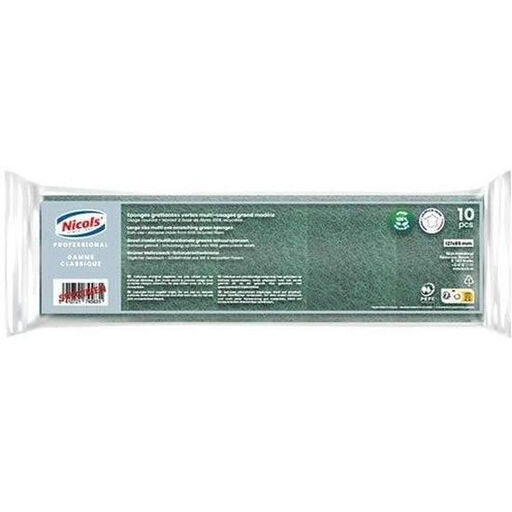
Why we chose it: For those looking for a simple, versatile, and economical solution for all household chores. This 10-pack ensures a comfortable stock for several months.
This product doesn't promise the world. It's a classic, reliable dual-sided sponge. The green side is clearly abrasive for heavy-duty jobs, while the yellow side is soft: it's foolproof.
Excellent value for money for daily use. Its dual-sided design offers good versatility for most non-delicate surfaces.
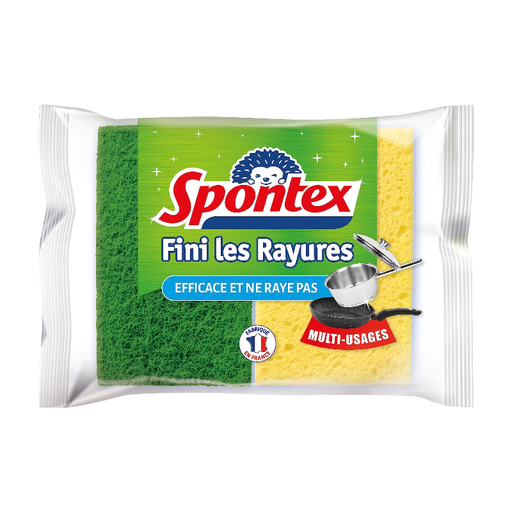
Why we chose it: The perfect solution for those with non-stick pans, ceramic hobs, or fragile dishware. Here, peace of mind is the priority.
This model directly tackles the "fake" non-scratch sponge trap. Its exclusive formula is designed to clean effectively without ever damaging surfaces, a promise validated by Tefal.
Cleaning that is both powerful and safe on all delicate surfaces. Its vegetable sponge side ensures excellent absorption.
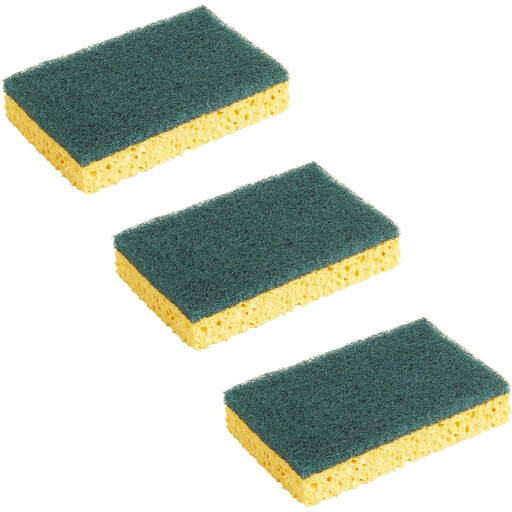
Why we chose it: For those who are tired of throwing away their sponges after just a few weeks. This model is designed to resist wear and tear and can be disinfected for prolonged, more hygienic use.
It tackles two major problems: premature disintegration and poor hygiene. Its reinforced structure ensures a longer lifespan, and the fact that it's machine washable up to 70 °C eliminates bacteria and bad odours.
Superior durability (advertised as 2x longer than a classic sponge by Spontex) and high-temperature washing for impeccable hygiene.
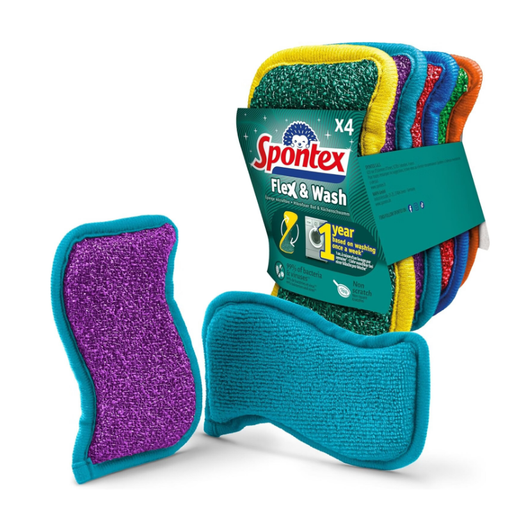
Why we chose it: For consumers who want to reduce their waste without sacrificing effectiveness. This sponge is designed to last and minimise its environmental impact.
This model directly tackles throwaway culture. Washable up to 52 times, it offers a truly durable alternative to classic sponges. Its plastic-free packaging and recycled fibres confirm its ecological commitment.
Very long lifespan (up to one year), washable, non-scratch, and made from recycled fibres. It's the complete solution for more responsible cleaning.
We've curated a complete selection of products that meet our strict selection criteria and current standards.
For optimal hygiene, most manufacturers, like Spontex, recommend replacing a standard sponge every two weeks or so. However, if you opt for a washable sponge, you can extend its life by cleaning it regularly. Throw it away as soon as it shows significant signs of wear, has persistent odours despite washing, or starts to fall apart.
The easiest method is to put it in the washing machine with your household linens, following the maximum temperature indicated on the packaging (often 40?°C or 60?°C). You can also place it in the top rack of your dishwasher. Another option is to soak it for a few minutes in a diluted bleach solution (follow the manufacturer's instructions), then rinse it thoroughly. In any case, always let it air dry completely between uses.
Yes, and extreme caution is advised. The magic eraser acts like an ultra-fine sandpaper. While it's fantastic for removing crayon marks from a matte white wall or scuffs from baseboards, it can also dull or scratch very glossy, lacquered, dark-painted, or polished plastic surfaces. It is therefore imperative to always test on a small, inconspicuous area before using it on a delicate surface.