
Livraison le jour même ou le lendemain

Qualité garantie

Débloquez vos offres de bienvenue: Livraison GRATUITE | Jusqu'à -80 % | 30 jours d'essai gratuits à JoyPlus
Téléchargez l'application
A sponge that loses its shape quickly, holds onto odours or scratches your hob can turn a small saving into a repeat purchase in no time. So when you’re choosing reusable cleaning sponges, it pays to look beyond the colour, the pack size or the efficiency claims printed on the packaging.
The most common mistakes come from confusing a scouring sponge with a non-scratch one, misjudging how to care for it, or using a product for the wrong task. A sponge designed for washing-up has no place on your skin. Likewise, a bathroom sponge needs to be suitable for glass, taps and grout alike.
A scouring side easily tackles burnt-on residue and baked-on grease. However, it can damage a non-stick pan, a painted surface or certain plastics. A non-scratch sponge is better suited to hobs, windows and delicate surfaces – provided you check the manufacturer’s recommendations.
How long a sponge lasts depends on the material, how often you use it and how you wash it. A sponge can be tough yet still need regular replacement for hygiene reasons. Machine-washable models usually state a maximum temperature or a number of cycles to follow – far more useful information than a vague promise of longevity.
A washing-up sponge, a limescale sponge and a body sponge all have different demands. To avoid transferring dirt or product, assign each sponge to a specific job. An African exfoliating sponge made from nylon, for example, is intended for external use on the body, not for cleaning the house.
Plant-based cellulose – made from cotton, wood pulp or flax – absorbs water well and is ideal for everyday tasks. It can be combined with an abrasive surface to tackle stubborn dirt.
For glass, mirrors, hobs and delicate pans, look for a side that is explicitly labelled non-scratch. Even then, test it on an inconspicuous area first and rinse the sponge thoroughly so no particles get trapped between the sponge and the surface.
A machine-washable sponge should be cleaned according to the instructions on its product page: 40 °C, 70 °C or another temperature depending on the model. Some can also go in the dishwasher. Avoid fabric softener if it’s not recommended – it can reduce the fibres’ absorbency.
After each use, rinse the sponge, squeeze it out without twisting it too hard and leave it to air-dry. An open-weave structure or a microfibre side can speed up drying, but nothing beats good ventilation.
A soft, compact sponge easily reaches into corners, around taps and inside small sinks. An ergonomic shape can also make long cleaning sessions more comfortable. For a grease-fighting sponge, check above all that the abrasive side rinses clean easily – trapped residue in the fibres quickly leads to bad smells.
In the bathroom, a double-sided sponge is especially handy: the scouring side tackles limescale, while a microfibre sponge finishes mirrors and shower screens without leaving streaks.
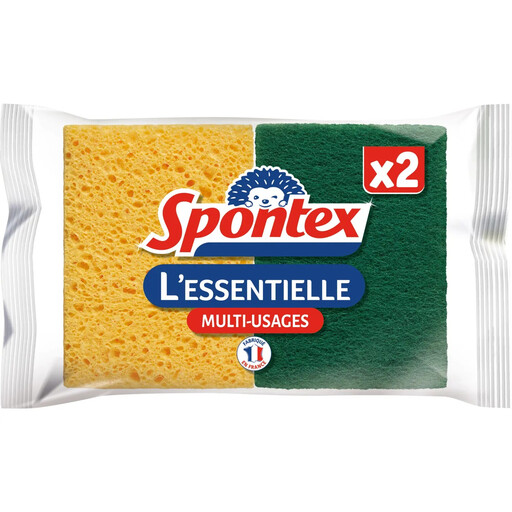
Why this suits this profile: Its double-sided design covers everyday kitchen and household tasks without needing lots of different accessories.
The two sides separate scrubbing from gentle cleaning, making it easier to avoid the abrasive side on a delicate surface.
A PEFC-certified vegetable sponge according to the product page, a compact size and a pack of two.
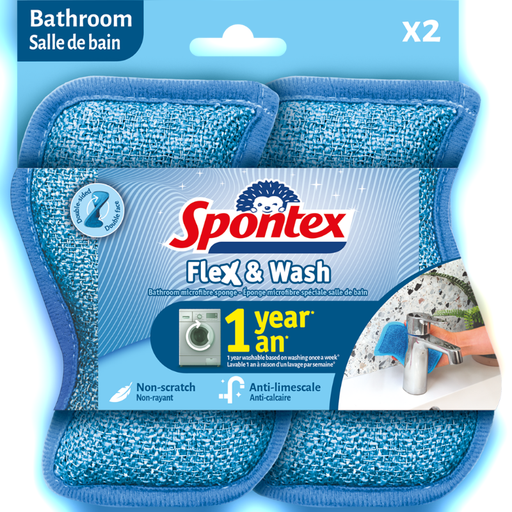
Why this suits this profile: Those who want to replace sponges less often will appreciate its machine-washable design and dedicated bathroom use.
The product page states up to 52 washes at a maximum temperature of 40 °C – a concrete figure to help you plan the care it needs.
A microfibre side for finishing touches and a scouring side described as non-scratch for limescale.
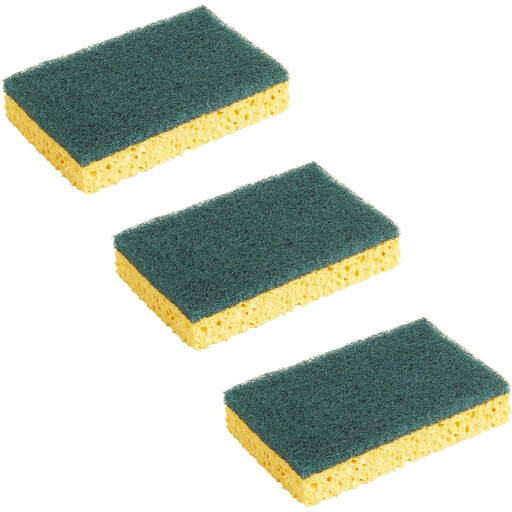
Why this suits this profile: This pack is built for a busy kitchen, handling daily washing-up and stubborn grime alike.
The abrasive surface should be reserved for tough dirt – it is not suitable for delicate coatings or non-stick surfaces.
Absorbent cellulose, machine washing at up to 70 °C and a pack of three sponges.
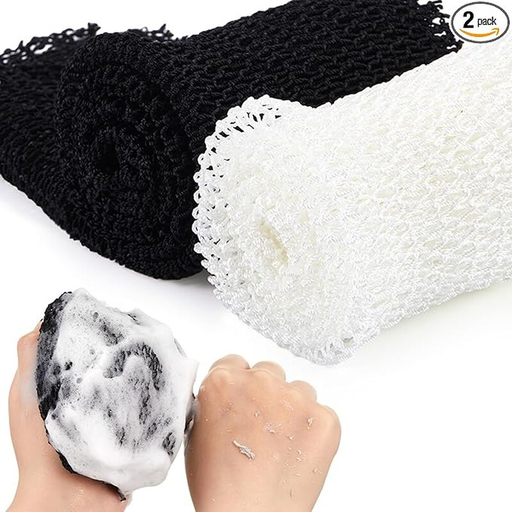
Why this suits this profile: Its long shape and rope make it easy to wash your back with soap or shower gel.
Its use is clearly different from a household sponge. The product page states it is an accessory for external use on the body.
A nylon mesh, open-weave structure, an integrated rope and machine washing recommended with a protective bag.
We’ve put together a comprehensive, real-time list of products that meet these demanding selection criteria as well as European safety regulations.
Replacement recommendations vary by model. Some product pages suggest changing the sponge roughly every two months, while reusable models state a specific number of washes. Treat these figures as care guidelines, not as a guarantee that applies in every home.
Choose a non-scratch sponge and check that the product page explicitly mentions delicate surfaces. Do not use the abrasive side of a scouring sponge, even if it seems gentle. Testing it on a small, inconspicuous area is a sensible precaution.
Washing makes care easier, but you still need to follow the recommended temperature, rinse the sponge before putting it in the machine and let it dry afterwards. A damp, poorly ventilated sponge can hold onto bad smells even with regular washing.
A vegetable sponge made from cellulose absorbs water well and is ideal for everyday tasks. Microfibre is mainly used for wiping and reducing streaks on certain surfaces. A model that combines both materials can separate scrubbing from finishing cleaning.