
Livraison le jour même ou le lendemain

Qualité garantie

Débloquez vos offres de bienvenue: Livraison GRATUITE | Jusqu'à -80 % | 30 jours d'essai gratuits à JoyPlus
Téléchargez l'application
A non-scratch scouring sponge needs to tackle grease, cooking residue and limescale without marking delicate materials. But the promises printed on the packaging aren’t always enough to make the right choice. A sponge described as “soft” can become abrasive if particles get trapped in its fibres. On the other hand, a model that’s too soft may lack the power to clean a heavily soiled pan.
Here are the criteria to check before you buy, along with a selection of models suited to the main household tasks.
A scouring side isn’t necessarily dangerous. It all depends on the type of fibres and particles it’s made from. Metal pads and very rigid fibres can leave marks on a ceramic hob, non-stick coating or decorated crockery.
To choose a non-abrasive washing-up sponge, look for a clear statement that it’s compatible with delicate surfaces and always follow the manufacturer’s instructions. Even a sponge advertised as non-scratch is worth testing on an inconspicuous area first, especially if the material is old, already weakened or has a special coating.
A washable sponge isn’t necessarily a long-lasting one. Its lifespan depends on how often you wash it, the type of dirt it encounters and how it dries between uses.
A claim like “up to 52 washes” refers to a limit stated under the manufacturer’s conditions, not a guaranteed lifespan for every household. Also check the washing temperature, whether fabric softener is prohibited, and the replacement recommendations.
Dishes, bathroom sealant, mirrors and worktops aren’t cleaned the same way. An anti-limescale bathroom sponge may have a structured side that’s effective at removing mineral deposits. However, that same side won’t necessarily be suitable for a screen, a shiny surface or a non-stick coating.
So your choice should depend on the main use, the texture and whether there’s a microfibre side.
For pans, sinks and very dirty surfaces, a non-metallic scouring fibre is often a good compromise. The product description should state its compatibility with hobs, frying pans and delicate materials.
On a sensitive surface, avoid pressing too hard. Embedded dirt can also contain mineral grains that may scratch the material, regardless of the sponge you use. So rinse both the surface and the sponge before you start scrubbing.
A microfibre sponge is particularly good for wiping windows, mirrors, taps and smooth surfaces. It helps to spread water and cleaning product while reducing streaks, provided you wring it out properly.
For multi-purpose use, a two-sided sponge lets you switch from everyday wiping to targeted cleaning of stubborn dirt. A practical design for a kitchen or small bathroom where every centimetre of storage space counts.
Before buying a washable reusable sponge, check the following points:
After each use, rinse the sponge thoroughly, wring it out and leave it to air dry. Replace it when the fibres become misshapen, bad smells persist or the scouring side loses its structure.
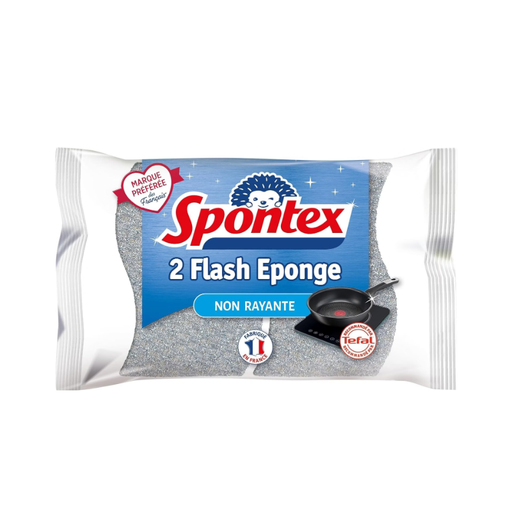
Why this choice suits this profile: This pack of two sponges is enough for everyday cleaning of dishes, hobs and pans, without needing lots of different accessories. The plant-based part is said to be made from cotton, wood pulp and flax.
The description mentions a non-scratch scouring side and recommends testing on an inconspicuous area first. That helps to avoid nasty surprises on different materials.
Non-abrasive side as stated, washable at 40°C and compatibility indicated with hobs, pans and delicate surfaces.
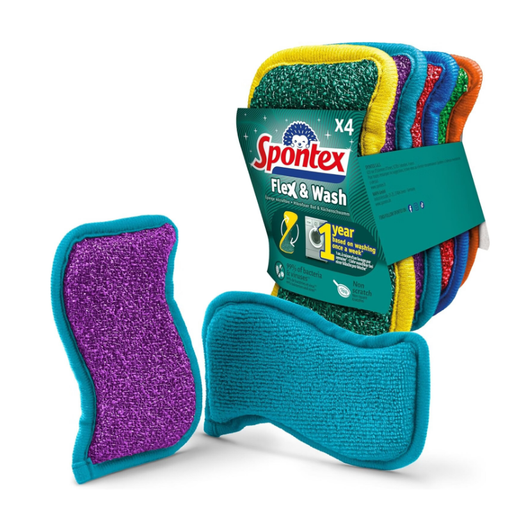
Why this choice suits this profile: Its S-shape and two sides make it ideal for households looking for a reusable accessory for the kitchen, bathroom and other surfaces around the home.
The manufacturer states up to 52 wash cycles and details the care conditions. That’s far more useful than a vague promise of longevity.
Four sponges, a microfibre side made from recycled fibres, a scouring side stated as non-scratch and a flexible shape for reaching hard-to-access areas.
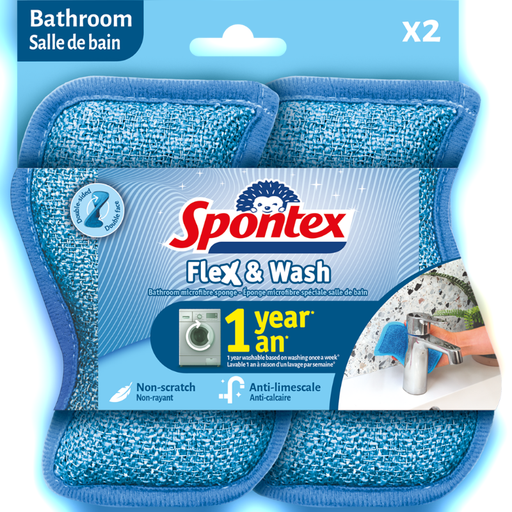
Why this choice suits this profile: This version is designed for bathrooms that are heavily exposed to limescale, with a scouring side and a microfibre side for windows and mirrors.
The description states that the scouring level is medium and recommends testing the colour and compatibility on a hidden area before use.
Up to 52 washes stated, suitable for washing machine or dishwasher, and two sides dedicated to limescale and wiping respectively.
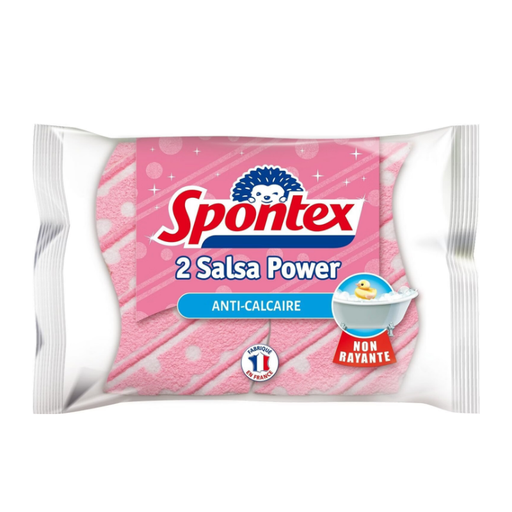
Why this choice suits this profile: Its format is ideal for taps, shower screens, baths, basins and mirrors, especially where limescale builds up quickly.
The description specifically targets bathroom surfaces and highlights enhanced action against limescale, with a recommended pre-test.
Two sponges, a design stated as non-scratch and made in France according to the product information.
We’ve put together a complete, real-time updated selection of products that meet these demanding criteria and comply with European safety regulations.
It may be designed for this use, but compatibility depends on the coating and its condition. Check the label, avoid pressing too hard and test on an inconspicuous area. Don’t use a sponge whose scouring side is worn or loaded with particles.
It all depends on how often and how intensively you use it. Some models claim up to 52 washes, while others recommend replacing them roughly every two months for hygiene reasons. In any case, change it as soon as it holds a smell, becomes misshapen or loses its effectiveness.
Choose an anti-limescale bathroom sponge with a moderately abrasive scouring side and, if possible, a microfibre side for mirrors and taps. On glass, shiny stainless steel and treated surfaces, always test the product in a discreet spot and rinse the sponge regularly.