
Livraison le jour même ou le lendemain

Qualité garantie

Débloquez vos offres de bienvenue: Livraison GRATUITE | Jusqu'à -80 % | 30 jours d'essai gratuits à JoyPlus
Téléchargez l'application
Choosing a sketchbook? Easy, in theory. In practice, the jungle of options can quickly become a headache. The wrong paper doesn't just stifle your creativity; it can completely ruin a piece of art. Between marketing claims and technical specifications, it's hard to know where to start. This guide is here to break down the essential criteria and help you find the ideal surface for your practice, whether you're a budding artist, an art student, or simply a sketch pad enthusiast.
Before you rush to the fine art supplies aisle, let's review the classic mistakes that lead to buyer's remorse.
To avoid these disappointments, focus on three characteristics that will make all the difference.
Paper weight, expressed in grams per square metre (gsm), is the most reliable indicator of a paper's thickness and durability.
Grain refers to the texture of the paper's surface. It influences how the medium adheres to the support.
The size and binding should, above all, suit your use and habits.
To move from theory to practice, here are our recommendations, categorised by artist profile.
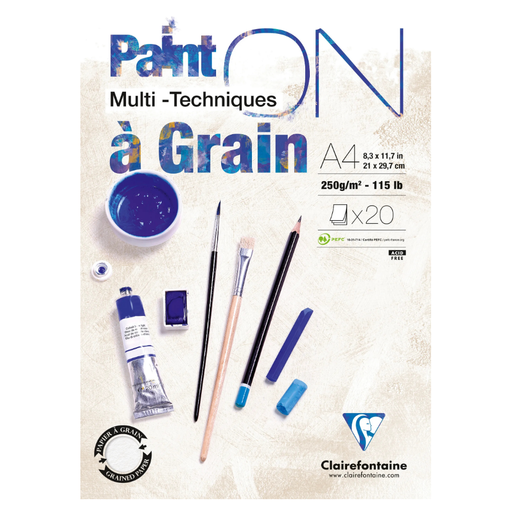
Why we love it: This pad is an excellent starting point. Its thick 250 gsm paper is a true all-rounder: it handles both dry and wet media (gouache, ink), making it an ideal surface for practice and experimentation.
Its heavy weight ends the nightmare of paper buckling with wet media. Its dual-sided surface (one grained side, one smoother side) allows you to experiment without having to buy two different pads.
A multi-technique paper par excellence, 100% cellulose and extra-white to make colours pop. The glued Clairefontaine pad format allows you to detach each sheet cleanly.
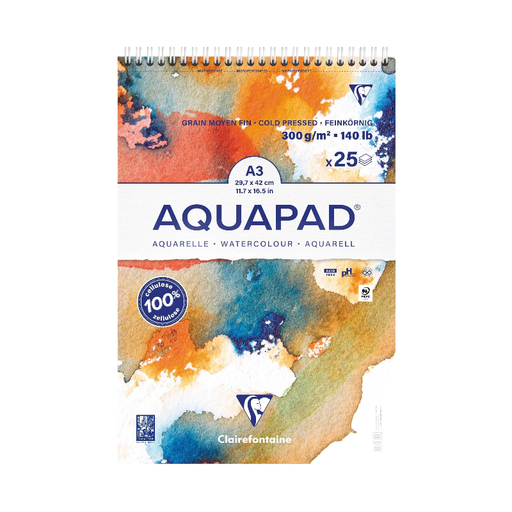
Why we love it: Specifically designed for watercolour, this pad offers a 300 gsm paper at a very accessible price. It's perfect for practising washes, glazes, and wet-on-wet techniques without fear of ruining the paper.
Its heavy weight and double sizing ensure excellent water resistance, preventing the paper from warping. It perfectly meets the need for a non-buckling surface, avoiding unpleasant surprises.
A studio-quality, acid-free watercolour paper for good conservation over time. The spiral binding, which allows the notebook to lie perfectly flat, is a real bonus for painting comfortably.
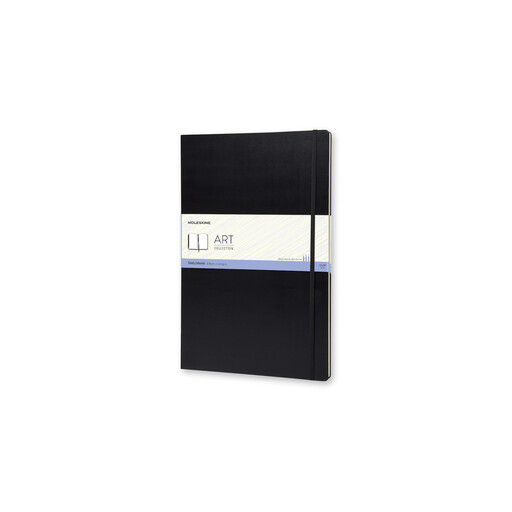
Why we love it: The Moleskine notebook is an icon, renowned for its durability and design engineered for mobility. With its 165 gsm paper and hardcover, it's the ideal travel companion for sketching on the fly, whether you're travelling or at the local café.
Its hardcover and elastic closure protect your creations from the hazards of transport. No more dog-eared pages at the bottom of your bag! The sewn binding is a guarantee of durability.
An acid-free, 165 gsm ivory paper that adapts to many media. You'll find the practical details that are the brand's signature: an inner pocket, a ribbon bookmark... it's all there.
Discover our full selection of sketchbooks that tick all the right boxes, whatever your style or budget.
In short: 80 to 100 gsm paper is sufficient for pencil sketching. For more advanced dry techniques (charcoal, pastel), aim for 120 to 160 gsm. If you're moving on to wet media like ink, gouache, or acrylic, a minimum of 200 gsm paper is necessary. Finally, for watercolour, 300 gsm paper is the standard to ensure the sheet does not warp.
Clairefontaine, the French benchmark, is renowned for the excellent quality and whiteness of its papers, with often unbeatable value for money in its fine art supplies range. Their papers are generally very smooth. Moleskine, the iconic Italian brand, focuses on its robust travel notebooks with their hardcover, elastic band, and famous ivory paper. It all depends on your priority: the sheer performance of the paper (advantage Clairefontaine) or durability and on-the-go style (advantage Moleskine).
Buckling is the watercolourist's nightmare! To limit it, the first step is to choose a watercolour paper of at least 300 gsm. For very wet techniques (large washes), the pro tip is to stretch the paper. The method: wet the sheet, place it on a rigid, flat support, then secure the edges with masking tape. As it dries, the paper will tighten and remain perfectly flat while you paint.