
Livraison le jour même ou le lendemain

Qualité garantie

Débloquez vos offres de bienvenue: Livraison GRATUITE | Jusqu'à -80 % | 30 jours d'essai gratuits à JoyPlus
Téléchargez l'application
A watercolour set can look complete at first glance. Yet the number of colours or the appearance of the box isn't enough to tell whether it really meets your needs. Pans, tubes, watercolour pencils or watercolour pens: each format is designed for a particular way of painting.
Before you place your order, it's worth keeping three common pitfalls in mind:
Pans are especially handy for travel sketchbooks and outdoor sessions. You simply reactivate them with a damp brush, then store them in a compact box. The Faber-Castell 24-pan set, for example, includes an easy-to-carry box, a mixing area and a brush.
Tubes are more suited to artists who want to prepare generous washes or work on larger formats. The paint is squeezed directly onto a palette before being diluted with water. The Talens Art Creation sets of 12 or 24 tubes (12 ml each) offer a palette designed for mixing and for techniques on wet or dry paper.
Watercolour pencils let you start with a precise drawing, then transform the lines with a damp brush. They work very well for illustrations, preparatory studies, and for those gradually moving from drawing to painting.
Finally, watercolour pens focus on speed and control of the line. They are particularly suited to lettering, creative cards and art journaling.
For beginners, check that the set covers the main colour families: yellow, red, blue, earth tones, green, plus a grey or black. Twelve colours can be more than enough for learning to mix. A set of 24 shades, on the other hand, offers more ready-to-use hues.
The number of colours should above all match your use:
The term "professional" should be taken with a pinch of salt. For advanced practice, focus instead on the concrete details: lightfastness, pigment type, format and recommended paper type.
Even the best watercolour paint will give disappointing results on paper that's too thin. For washes, paper that's thick enough helps prevent warping when wet. Its weight, texture and format should suit your technique.
Also remember to check:
For children, the manufacturer's recommendations must be followed. Some sets are suitable from age 3 with supervision, but the paints and brushes are obviously not intended to be ingested.
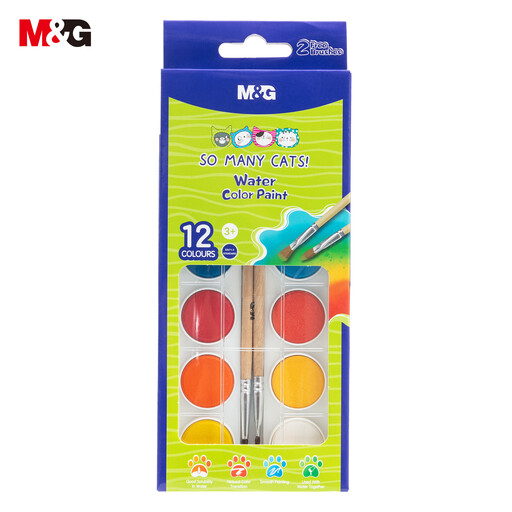
Why this choice suits this profile: With its 12 colours, a brush and solid pigments, this set lets you get started without having to buy lots of extras.
The set stays compact and doesn't rely solely on a never-ending list of shades. The solid paint also keeps mess to a minimum.
12 solid colours, a brush included, a stated weight of around 150 g and an easy-to-carry format.
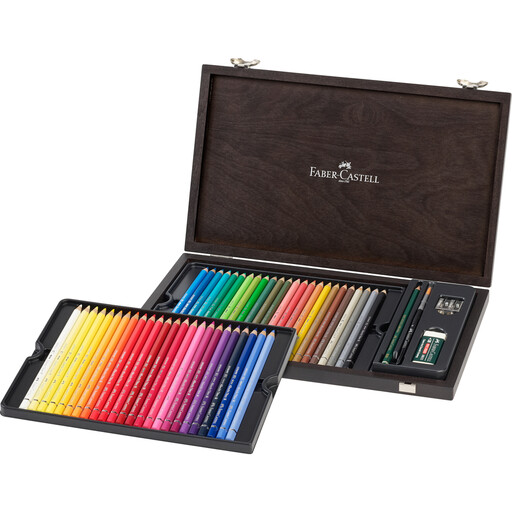
Why this choice suits this profile: Its wooden box and 48 pencils are aimed at lovers of detailed illustration who also want to keep their studio tidy.
It combines dry drawing with water activation. So you can detail your illustration before adding washes, without relying solely on a brush.
48 colours, 3.8 mm water-soluble leads, pigments stated to be lightfast, and a wooden case.
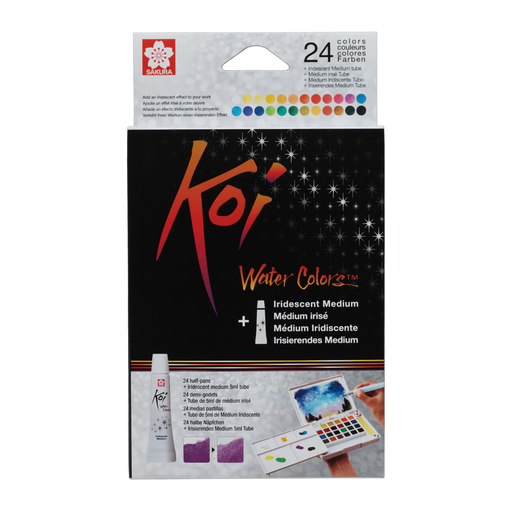
Why this choice suits this profile: Its pocket-sized format is ideal for travel sketchbooks, outdoor sketching and artists who regularly paint away from their studio.
The case includes a mixing area, and the half pans mean you don't have to carry open tubes or a bulky palette.
24 half pans, an iridescent medium, a compact case and an integrated palette for painting anywhere.
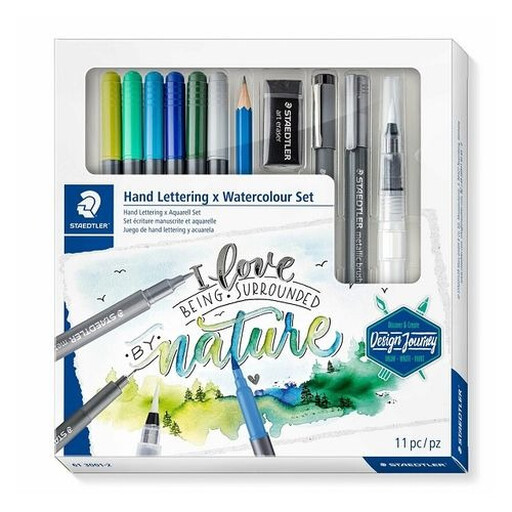
Why this choice suits this profile: This kit is designed for watercolour lettering and includes a water brush pen as well as a step-by-step guide.
It's not simply an assortment of watercolour pens: the instructions and accessories show you how to create blends and different effects.
Water-based pens, water brush pen, mixing accessories and an instruction booklet.
We've put together a comprehensive selection, updated in real time, of products that meet these exacting criteria as well as European safety standards.
A beginner's kit with 12 colours, a brush and a storage box is generally an excellent starting point. Pans are easy to carry and help you gradually get to grips with the amount of water. For detailed drawings, watercolour pencils offer a feel similar to coloured pencils.
It all depends on how often you use it, storage conditions and maintenance. Close the box once the palette is dry, avoid leaving it in a damp atmosphere, and rinse your brush after each session. The pans can be reactivated many times, but a colour contaminated by a poorly cleaned brush may lose its purity.
A complete set may include a brush, but you'll often need to get watercolour paper, a container for water and, possibly, an extra brush. For regular practice, several brush sizes and a separate mixing palette can make your sessions more comfortable, without you having to replace the set.