
Livraison le jour même ou le lendemain

Qualité garantie

Débloquez vos offres de bienvenue: Livraison GRATUITE | Jusqu'à -80 % | 30 jours d'essai gratuits à JoyPlus
Téléchargez l'application
Choosing a drawing pad might seem trivial, and yet… faced with a jungle of options, the task can quickly become a headache. Between technical jargon and marketing promises, it's easy to end up with paper that warps at the first drop of watercolour or causes markers to bleed. For any artist, student, or hobbyist, the choice of paper is no small detail: it's the very foundation of your future masterpiece.
Our mission: to help you see clearly. Let's cut through the jargon and get straight to the point to avoid the most common pitfalls and make the right choice, once and for all.
Before we dive in, let's review the two most common disappointments that spoil the creative experience:
To ensure you never make a mistake again, two criteria are set in stone: weight and grain.
Paper weight, expressed in grams per square metre (g/m?), is simply the most reliable indicator of a sheet's density and durability.
The grain is the texture of the paper's surface. It dictates the final look of your lines and how pigments adhere to it.
Leading brands like Canson or Clairefontaine organise their ranges according to these criteria, which greatly simplifies choosing based on your practice.
Rather than an endless list, we've selected three tried-and-true options, each suited to a different artist profile, to guide you more simply.
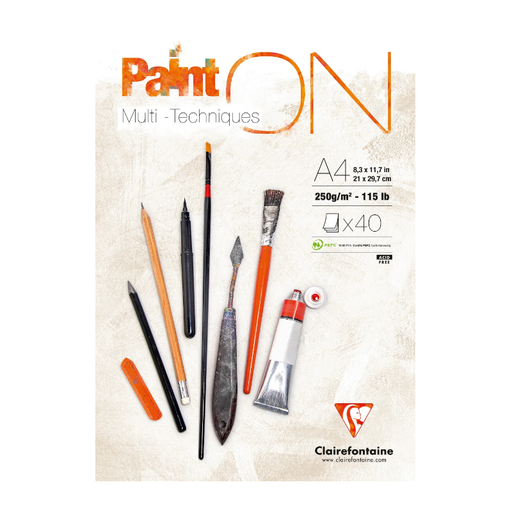
Why we love it: It's the Swiss Army knife of paper. It lets you switch from pencil to gouache or ink without changing your pad. Perfect for art students or creatives who love to do it all.
With its sturdy 250 g/m? weight, it doesn't just claim to be "multi-media"—it delivers. It handles light wet media beautifully, saving you from the frustrating buckling of thinner papers.
Its versatility is a real asset: a single pad is all you need to explore drawing, ink, gouache, and even acrylics. Its very fine grain preserves detail.
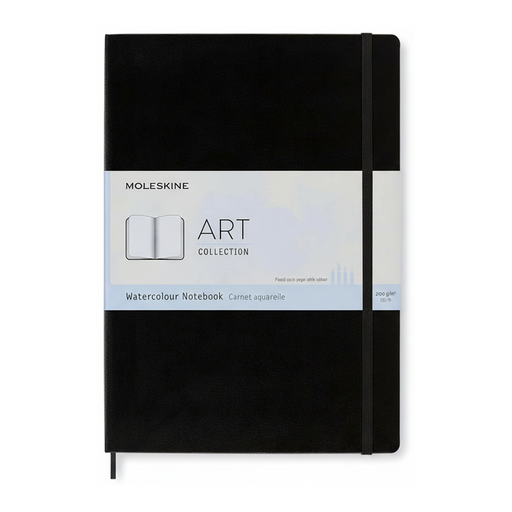
Why we love it: Designed for on-the-go watercolorists who demand a reliable surface in any situation. Its hardcover protects your work, and the notebook format is a model of practicality.
It directly solves the problem of insufficient weight. Its 200 g/m? paper, specially treated for watercolour, offers excellent water absorption and minimises warping.
The combination of suitable paper, a hardcover, and a lay-flat binding makes it a true pocket studio—durable and effective for watercolorists.
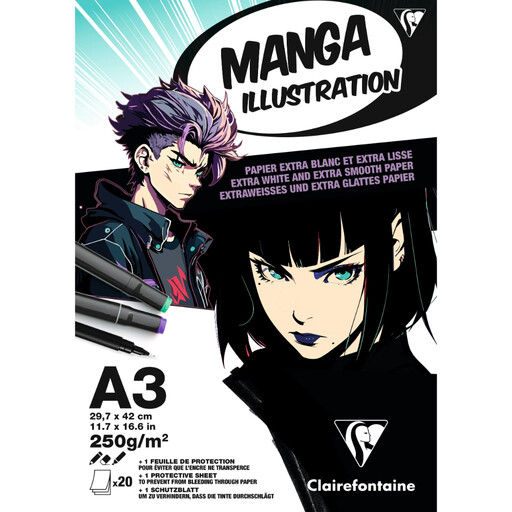
Why we love it: It was specifically developed for techniques that require an ultra-smooth surface and a bleed-proof barrier, like the alcohol markers beloved by mangakas and illustrators.
It tackles the nightmare of markers bleeding through the paper. Its secret? A smooth 250 g/m? Bristol paper and, most importantly, an included protective sheet to slip under your drawing. No more sacrificed pages!
Its extra-smooth surface ensures flawlessly clean colour fills and lines, without the marker tip snagging. Its high resistance to erasing is the icing on the cake.
We've curated a complete selection of products that meet our quality charter and the criteria in this guide.
It all depends on how you work. A glued pad is perfect for cleanly detaching sheets, ideal for scanning or framing. The spiral-bound pad, on the other hand, is the king of portability: it folds back on itself completely (360° opening), a great feature for drawing outdoors or on your lap. It also lets you keep all your creations in one place.
Far from it! It's actually a crucial factor for the longevity of your artwork. Acidic paper yellows and becomes brittle over time due to exposure to air and light. An acid-free (or pH-neutral) paper is the only guarantee that your creations will stand the test of time without losing their vibrant colours.
Absolutely. It all depends on the effect you're after. A watercolor pad often has a pronounced grain that can add a very interesting texture to a charcoal or pencil drawing. However, for high-precision work (technical drawing, detailed portraits), a satin or fine-grain paper will be more comfortable and ensure a much sharper line.