
Livraison le jour même ou le lendemain

Qualité garantie

Débloquez vos offres de bienvenue: Livraison GRATUITE | Jusqu'à -80 % | 30 jours d'essai gratuits à JoyPlus
Téléchargez l'application
Choosing fine art paper can quickly become overwhelming given the vast array of options. Weight, grain, size, composition... every detail matters and directly impacts the final look of your artwork. Whether you're a sketch artist, watercolourist, illustrator, or manga artist, finding the right surface is a key step in your creative process.
This guide is here to provide clear benchmarks and help you make sense of it all. We'll review the essential criteria to consider before buying, then present our selection of the best papers for every medium.
To make the right choice, three criteria need to be closely examined: weight, grain, and, of course, the medium you use.
Paper weight, expressed in grams per square metre (g/m?), refers to the paper's density. This determines its thickness, rigidity, and, most importantly, its ability to handle wet media.
The grain is simply the texture of the paper's surface. It plays a crucial role in how pigments (from pencils, paint, etc.) adhere to the surface and affects the final result.
The most popular sizes are undoubtedly A4 drawing paper (21 x 29.7 cm) and A3 drawing paper (29.7 x 42 cm). The portable and practical A4 size is ideal for sketches and small projects. The A3 size, on the other hand, gives more scope to your detailed works or ambitious compositions. It all depends on your habits and the scale of your creations.
Let's get practical! Here is our selection of paper pads that tick all the boxes, whether you're into multi-media, manga illustration, or watercolour.
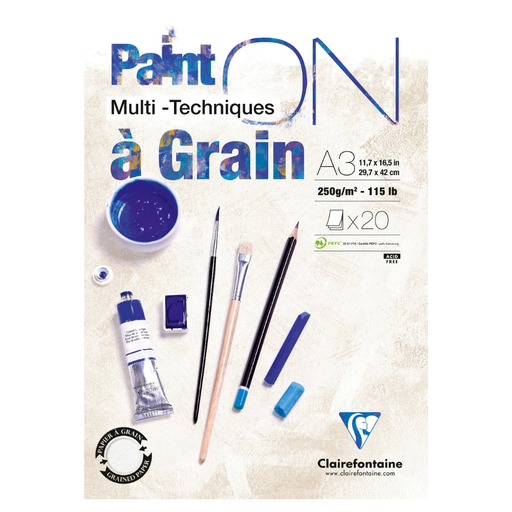
Why It Stands OutClairefontaine's Paint'ON is the Swiss Army knife of paper, the champion of multi-media paper. Its secret weapon?? A dual-grain surface: one side is textured for playing with effects, and the other is finer for precision work.
Pros
Who Is It For?? For artists and students who want a single drawing paper pad to do it all, without being weighed down by multiple types of paper. Its A3 size is a real plus for comfort.
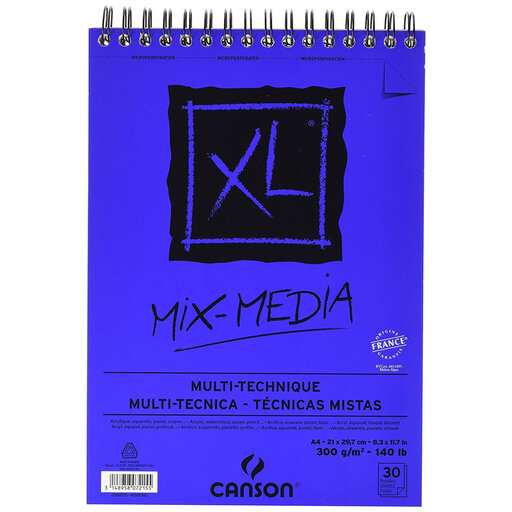
Why It Stands Out The XL range from Canson is a favourite among students and prolific artists for its excellent value for money (and quantity!). This Mix Media pad is available in several weights (notably 160 g/m? or 300 g/m?) to suit all uses. The little extra?? Its spiral binding, which is super practical for working completely flat.
Pros
Who Is It For?? For the jacks-of-all-trades who love to mix media, and for art students who need a reliable practice surface without breaking the bank.
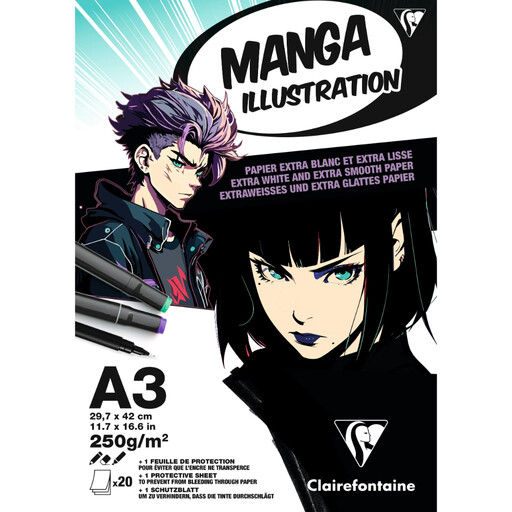
Why It Stands Out This manga paper has been designed down to the last detail for illustrators, comic artists, and mangakas. We're talking about a 250 g/m? Bristol paper, with a brilliant white and an ultra-smooth surface, ideal for lines with surgical precision. Its real advantage: the protective sheet to slip under your drawing so your alcohol markers don't bleed through and ruin the next page. Ingenious!
Pros
Who Is It For?? For mangakas, illustrators, and artists who swear by ink and markers, and who demand a flawless surface for a professional finish.
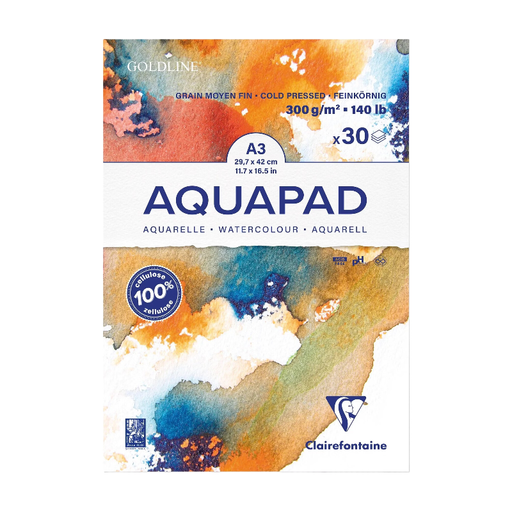
Why It Stands Out The Aquapad is an excellent student-grade watercolour paper, made of 100% cellulose. Its sturdy 300 g/m? weight and double sizing ensure it holds up very well to water, thus limiting buckling. Its fine grain is versatile, perfect for landscapes as well as more detailed illustrations. Bonus: it's acid-free and its production is certified vegan.
Pros
Who Is It For?? For beginners and watercolour students, but also for established artists looking for a quality paper for their studies, colour sketches, or travel journals.
Our selection is just a glimpse, as the world of art paper is immense. If you're looking for a specific size, grain, or composition (like the prestigious 100% cotton), dozens of other options are available to you.
To explore a wider range of papers, pads, and sketchbooks, take a look at our complete category. You're sure to find the surface that will bring your creations to life.
? Discover our full range of art pads to find the perfect surface for your creations.
1. What paper weight should I choose for pencil drawing?? For quick sketching, a lightweight paper (90 to 120 g/m?) works perfectly. For more advanced drawing with detailed shading and gradients, aim for a weight between 120 and 200 g/m?. It will better withstand repeated erasing without getting damaged.
2. What's the difference between a cold-press (fine grain) and a hot-press (smooth) paper?? Hot-press paper is ultra-smooth, making it perfect for high-precision lines (technical pens, ink, fine-liners). Cold-press paper, on the other hand, has a very subtle texture that "grips" the pigments just enough. It's the most versatile: it's suitable for pencil, charcoal, and pastel as well as light wet media.
3. How do I prevent watercolour paper from buckling?? Buckling is the watercolourist's nightmare! To avoid it, the first rule is to use a watercolour paper with sufficient weight (minimum 300 g/m?). For techniques that use a lot of water, the trick is to stretch your paper: secure it to a rigid support (a board, a thick piece of cardboard) with masking tape on all four sides before you start painting. Wait until your artwork is completely dry before carefully removing the tape.