
Livraison le jour même ou le lendemain

Qualité garantie

Débloquez vos offres de bienvenue: Livraison GRATUITE | Jusqu'à -80 % | 30 jours d'essai gratuits à JoyPlus
Téléchargez l'application
As the Fine Art Selection Expert at Joybuy, I see the same frustration every day from artists, whether they're beginners or seasoned pros: a piece of artwork spoiled not by a lack of talent, but by a poor choice of paper. Because buying quality materials is one thing. But choosing the surface perfectly suited to your technique is even better. Before you get started, here are a few common pitfalls to avoid so you can stop wasting your time and money.
Fortunately, you only need to master a few key concepts to make an informed choice and say goodbye to unpleasant surprises.
The world of fine art stationery can seem intimidating. However, three main criteria are all you need to guarantee 90% of your project's success.
Paper weight, expressed in grams per square meter (g/m?), indicates the paper's thickness and density. Be aware that it doesn't define its intrinsic quality, but rather its ability to handle different techniques without warping.
Grain refers to the texture of the paper's surface. The choice depends entirely on your tool and the effect you're aiming for.
While white paper remains the standard, other shades open up a world of possibilities. Black drawing paper, for example, is designed to make light colours, pastels, metallic inks, or white gouache truly pop. The composition (cellulose or cotton) also plays a major role. Cellulose is a versatile and affordable option, while 100% cotton paper is favoured for its exceptional archival quality and water resistance.
To put theory into practice, here are a few common artist profiles and the products that are a perfect match for them.
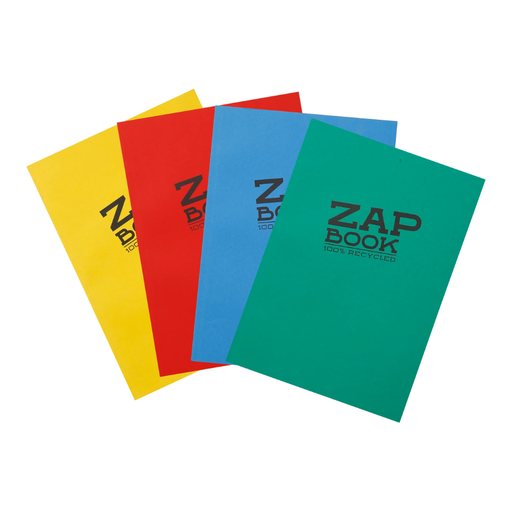
Why we chose it: Ideal for students and creatives who burn through pages for sketches, ideas, or notes. Its A4 drawing pad format and high sheet count make it a cost-effective and practical tool.
This sketchbook avoids paying a premium for an unnecessarily heavy paper weight. Its 80 g/m? paper is perfectly suited for light dry media, without the extra cost of a wet media paper.
Made of 100% recycled, acid-free, and pH-neutral paper, it ensures excellent preservation of your sketches, which won't yellow over time.
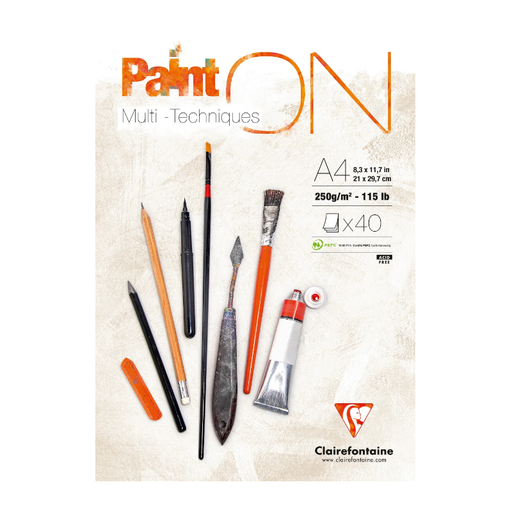
Why we chose it: For those who love to mix media (pencil, ink, gouache, acrylic) in a single piece. This Clairefontaine Paint'ON pad is a true Swiss Army knife for the artist who doesn't want to juggle multiple sketchbooks.
It solves the problem of paper buckling or tearing. Its heavy 250 g/m? weight and 100% cellulose composition guarantee excellent absorption and perfect stability.
Its very fine-grained surface is ideal for details, while its excellent liftability (correctability) allows you to erase or scrape away material without ever damaging the sheet.
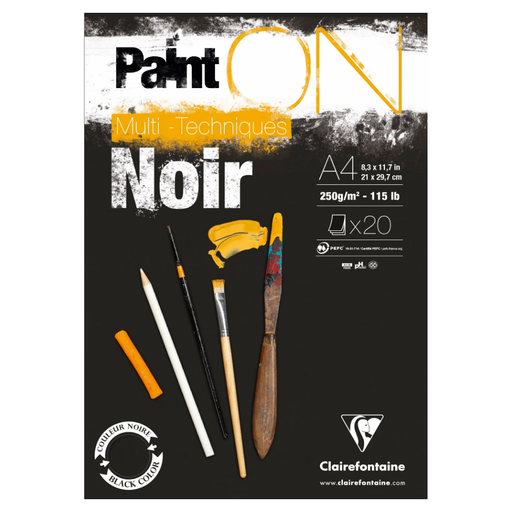
Why we chose it: Perfect for artists who work with light, white, or metallic media and are looking for strong visual impact. This black drawing paper provides an ideal base to make colours vibrate and create striking depth effects.
No more struggling to achieve true contrast on white paper! This pad provides the ideal base from the start. Its 250 g/m? weight also makes it compatible with wet media like gouache.
Its incredible versatility is its key strength: it's suitable for both dry media (pencil, marker) and wet media (ink, acrylic), offering great creative freedom on a dark background.
Explore our full selection of papers and sketchbooks, all chosen for their quality and performance, to find the ideal surface for your next projects.
100% cellulose paper is made from wood pulp. It's a very versatile and more affordable option, suitable for most techniques, from studies to final artworks. 100% cotton paper, made from cotton fibres, is considered the premium choice. More durable and absorbent, it offers exceptional archival quality (being acid-free, it doesn't yellow). It is often favoured by professional watercolorists for its ability to handle large amounts of water without buckling.
Buckling is a natural reaction of paper to water. To limit it, the first step is to choose a heavy weight, ideally 300?g/m? or more. For a flawless result, the gold-standard technique is to stretch the paper: moisten the sheet on both sides, place it on a rigid board, and secure the edges with masking tape or gummed tape. As it dries, the paper will tighten and remain perfectly flat throughout your work.
The choice depends on your use. The A5 (14.8?x?21?cm) format is compact and lightweight, making it the ideal companion for drawing while travelling or outdoors. The A4 (21?x?29.7?cm) format, or A4 drawing pad, offers a much more comfortable work surface for more detailed drawings, larger compositions, or for use in a studio or class. It allows you to develop ideas with more freedom.