
Livraison le jour même ou le lendemain

Qualité garantie

Débloquez vos offres de bienvenue: Livraison GRATUITE | Jusqu'à -80 % | 30 jours d'essai gratuits à JoyPlus
Téléchargez l'application
Buying Clairefontaine stationery and art supplies isn’t just about picking a size or a cover colour. Between a sketchbook, a drawing pad, a 300 g/m² watercolour paper and Clairefontaine school supplies, the needs and constraints can vary enormously.
A poor choice can lead to buckled sheets, ink bleeding through the paper, or a notebook that’s too bulky to carry. Here are the criteria to consider before ordering, followed by a selection tailored to different profiles.
Thick paper generally resists moisture better, but grammage alone doesn’t determine its use. Texture, sizing and composition matter just as much. A 250 g/m² paper can work for several techniques, while an 80 g/m² paper is better suited to writing, light sketching or markers with low ink load.
A4, A5 and A6 formats don’t serve the same purposes. A4 works for large drawings and extensive note-taking, whereas an A6 notebook slips easily into a bag, or even a pocket. Also think about the binding: a spiral often allows it to lie flat, while a glued binding offers a more classic, compact look.
A sketchbook designed for pencil isn’t necessarily suitable for watercolour or acrylic paint. For wet techniques, check the paper’s resistance and, if needed, fix the sheet to a board to minimise warping.
Grammage in g/m² indicates the paper’s weight, but not directly its quality. For everyday use, an 80 to 90 g/m² paper remains practical and lightweight. For dry drawing, a grammage of 120 to 140 g/m² withstands erasing and reworking better. For watercolour, a 300 g/m² watercolour paper will generally handle generous washes more comfortably.
Grain directly affects the finish:
For work you want to keep, choose acid-free paper and, where stated, pH-neutral paper. Several references in the Clairefontaine range have these characteristics. Recycled paper can also be part of a more responsible approach, like the Zap Book R.I. notebooks, which are said to be made from 100% recycled paper.
A certification such as PEFC tells you about the origin of fibres from forests managed in line with the requirements of the relevant scheme. It doesn’t replace checking the product’s other features, but it’s a useful indicator for comparing different options.
Before placing an order, check:
These details make a real difference to comfort of use and the notebook’s lifespan.
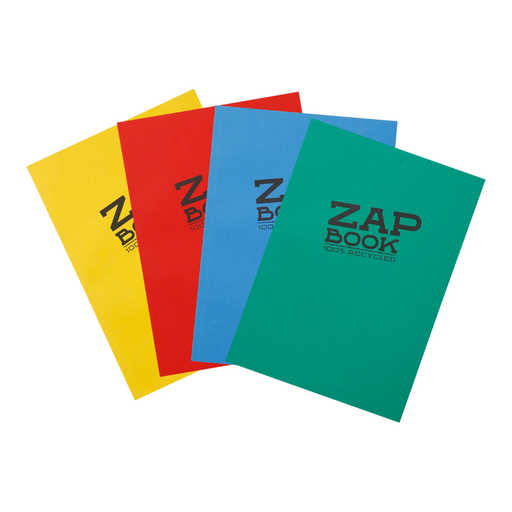
Why this choice suits this profile: its A5 format works for notes, sketches and everyday organisation, without taking up too much room in a bag.
With its 80 g/m² paper, it’s clearly intended for writing and everyday drawing, not heavy washes.
160 sheets of 100% recycled paper, acid-free and pH-neutral, with glued binding on the long side.
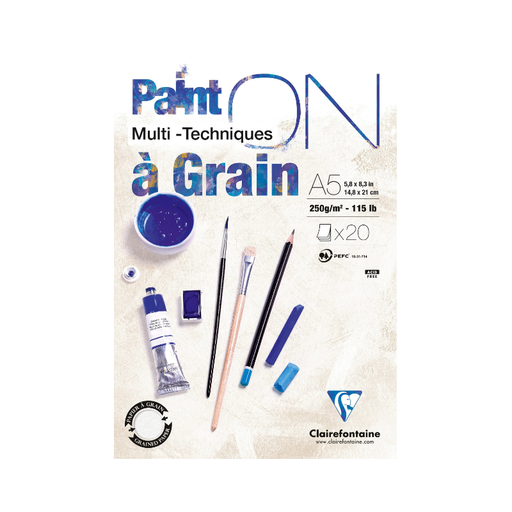
Why this choice suits this profile: this compact pad offers two distinct surfaces for varying finishes within the same project.
The product description clearly distinguishes the two sides: pronounced grain for texture and light grain for details.
100% cellulose paper, extra-white, compatible with pencil, ink, gouache and acrylic.
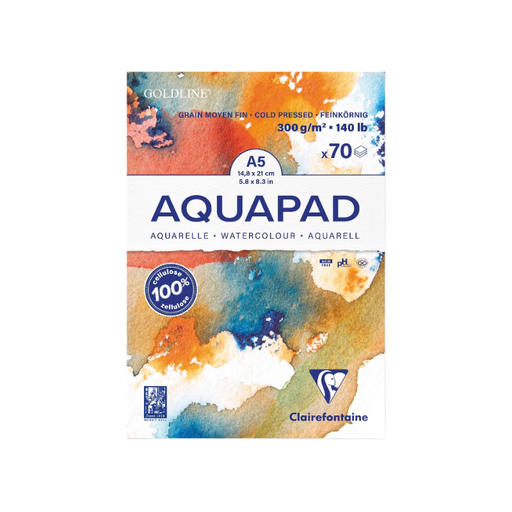
Why this choice suits this profile: watercolour enthusiasts and students alike get a pad designed for wet techniques and regular practice.
The 300 g/m² grammage and double sizing are designed to minimise water-induced warping.
Medium-fine grain, 100% cellulose paper, acid-free, suitable for watercolour, gouache and other wet media.
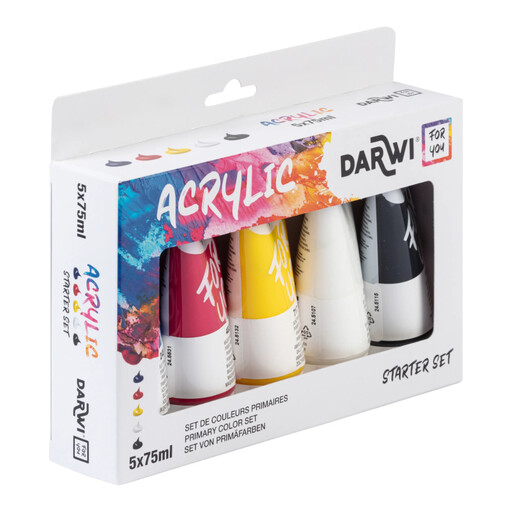
Why this choice suits this profile: this set is aimed at those who want to start or add to their materials with several colours to mix.
The composition, volume of each tube and number of shades are clearly stated, making it easier to assess your needs.
Five 75 ml tubes, a creamy texture and a miscible paint, suitable for brush or palette knife application.
We’ve put together a complete selection, updated in real time, of products that meet these exacting criteria and European safety regulations.
For washes and wet applications, check the grammage, grain and sizing. A 300 g/m² support, like the Aquapad, provides a much more suitable base than an 80 g/m² notebook. For heavy use, fixing or stretching the sheet helps to limit warping even further.
Yes, but it all depends on the paper you choose. The Zap Book notebooks in 80 g/m² are fine for notes and light sketches. For dry techniques that require frequent erasing, a 120 g/m² pad like the Cray’ON will offer more resistance. For ink or felt-tip pens, go for a smooth surface and check for bleed-through risk.
Store them flat, in a dry place, away from humidity and direct sunlight. Close acrylic paint tubes after each use and clean brushes with water while the paint is still fresh. These simple steps help to preserve the sheets, covers and accessories for longer.