
Livraison le jour même ou le lendemain

Qualité garantie

Débloquez vos offres de bienvenue: Livraison GRATUITE | Jusqu'à -80 % | 30 jours d'essai gratuits à JoyPlus
Téléchargez l'application
A good multi-purpose sponge is an essential ally in our daily lives. Yet, finding the perfect one can often feel like an uphill battle. Caught between marketing promises and harsh reality, we quickly end up with a product that falls apart after just a few washes or, worse, scratches our finest surfaces. Before you add one to your cart, let's review the common pitfalls to avoid.
The first pitfall?: false durability. A sponge that looks thick and sturdy on the shelf can have its scouring side peel off after only a few days. The second, far more serious trap is excessive abrasiveness. Many scouring sponges are far too aggressive for non-stick coatings, ceramic hobs, or stainless steel, and risk causing irreversible scratches.
To avoid these disappointments, it's crucial to focus on a few technical criteria that truly make all the difference.
Choosing a sponge isn't just about colour or price. The material, structure, and its intended use are decisive factors for effective cleaning without any unpleasant surprises.
The absorbent part of a sponge is primarily made from two materials, each with its own pros and cons?:
You'll also find a growing number of models that incorporate microfibres, which are great for degreasing and cleaning with minimal detergent. Others are designed as a machine-washable sponge, an increasingly popular option for its durability.
This is arguably the most critical factor, especially for kitchen cleaning. A classic scouring sponge (the famous green side) is formidable against caked-on residue but can also scratch more delicate surfaces. For modern cookware, it's better to opt for a non-scratch sponge.
These models use special fibres (soft plastic, sometimes coated in aluminium) that lift away dirt without damaging non-stick pans, ceramic hobs, or stainless steel. When in doubt, a quick test on an inconspicuous area is always the best precaution.
Not all sponges are created equal for every task.
To help you make a clear choice, we have selected products that meet specific needs, based on their technical features and design.
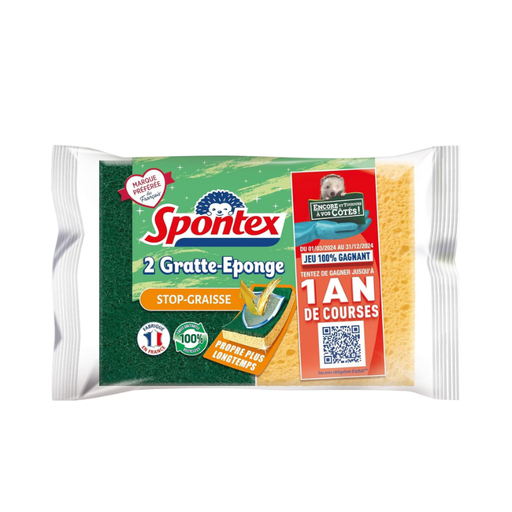
Why we chose it : Ideal for those tired of sponges that stay greasy and dirty after washing up. Its technology is designed for heavy-duty kitchen use.
Its exclusive Stop-Grease system prevents grease and grime from getting trapped in the fibres. No more sponges that quickly become unusable and smelly !
The sponge stays cleaner and more effective for longer. Its scouring side is non-scratch, making it compatible with most kitchen surfaces.
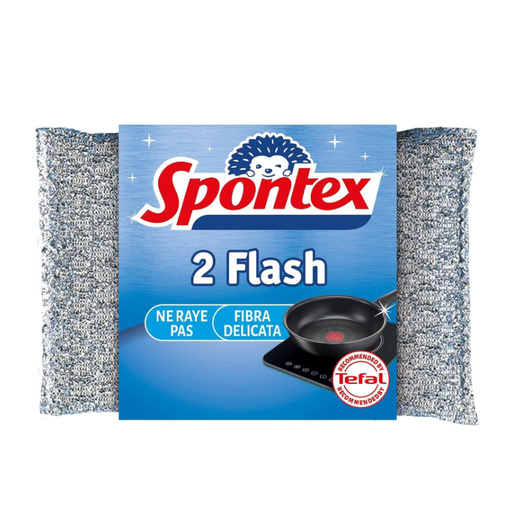
Why we chose it : For anyone who treasures their non-stick pots and pans and fears scratching them. This pad is specially designed to scour without being abrasive.
It eliminates the risk of scratches thanks to its unique structure : soft plastic loops coated in aluminium, woven around a foam core. A mark of trust : it's recommended by Tefal.
Effective scouring with zero risk of scratching, even on the most delicate surfaces. Its design also makes it easy to rinse, helping it stay clean for longer.
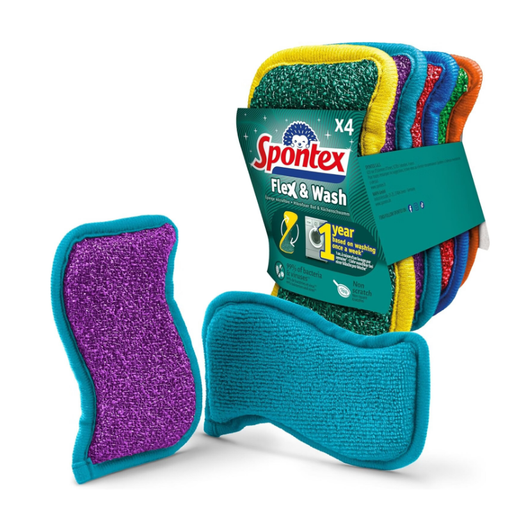
Why we chose it : For heavy users and anyone looking for a more cost-effective and eco-friendly solution. This sponge is made to last and reduce waste.
It directly tackles the pitfalls of false durability and waste. Machine washable up to 52 times, it remains effective for a year (according to the manufacturer), putting an end to constant replacements.
A versatile dual-sided design : a non-scratch scouring side for tough dirt and a microfibre side that deep-cleans. Its ergonomic shape is a bonus for reaching into every corner.
Explore our full selection of products that meet strict quality and safety standards.
How often should you change your sponge?? For hygiene reasons, it's advisable to replace a kitchen sponge every two to eight weeks, depending on its use. Don't wait?: change it as soon as it develops an odour, is visibly damaged, or no longer rinses clean.
Can you wash a sponge to reuse it?? Yes, some sponges are specifically designed for this. Models like the Spontex Flex & Wash washable sponge can be put in the washing machine (usually at 40?°C), which extends their lifespan and ensures better hygiene. Just remember to check the manufacturer's instructions on the packaging.
What kind of sponge should I use for a non-stick pan?? It is essential to use a non-scratch sponge. Look for products that are explicitly labelled as such or are recommended for delicate surfaces. Sponges with scouring sides made of soft plastic fibres, microfibre, or with specific technologies (like aluminium-coated loops) are the safest choices to preserve your pan's coating.