
Livraison le jour même ou le lendemain

Qualité garantie

Débloquez vos offres de bienvenue: Livraison GRATUITE | Jusqu'à -80 % | 30 jours d'essai gratuits à JoyPlus
Téléchargez l'application
A sponge that falls apart after a few days, holds onto odours or leaves marks on a pan can quickly turn a simple purchase into a real disappointment. Yet not all scouring sponges are created equal, and they aren’t all suited to the same tasks. The type of abrasive, the absorbent material and the care instructions can vary considerably from one model to the next.
To choose the right sponge, it’s worth keeping three common pitfalls in mind:
A double-sided sponge typically combines a soft part, designed for absorbing and wiping, with a scouring side for tackling stubborn dirt. The absorbent part can be made from plant-based cellulose, foam or microfibre.
For everyday washing-up, a cellulose absorbent sponge is handy for rinsing plates, glasses and worktops. The abrasive side should be reserved for the residue it can handle safely. On a non-stick pan or a delicate surface, choose a non-scratch sponge whose product details clearly state its intended use, then carry out a test first.
A sponge’s lifespan doesn’t depend solely on its thickness. Be sure to check:
A washable sponge can help you buy replacements less often, but it still needs to be replaced when it frays, loses its shape or holds onto odours. Some models claim an extended lifespan or a specific number of wash cycles: these figures are product-specific and should be interpreted according to the manufacturer’s instructions.
A multipack of sponges lets you reserve each model for a specific job: washing-up, the sink, the bathroom or general household cleaning. A small sponge can more easily reach into corners, around taps and between the grooves of a utensil.
A multi-purpose sponge can be used in several rooms, but it’s still best not to use the same one for washing-up and for cleaning the bathroom. In a home where cleaning is done frequently, a pack of three or four units makes it easier to rotate and replace them regularly.
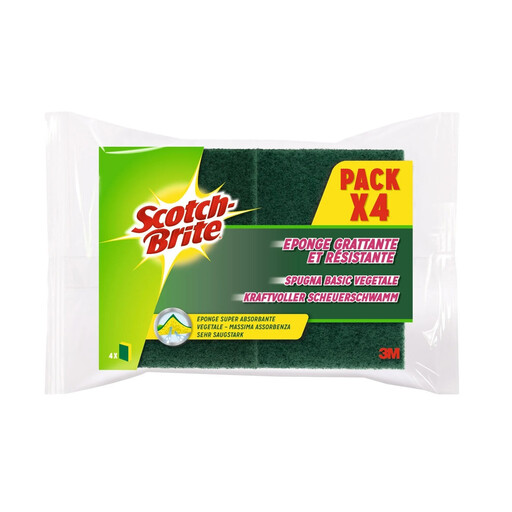
Why this choice suits this profile: This pack of four sponges is ideal for everyday kitchen tasks and gives you several units to start rotating them from the off.
The clear distinction between the green scouring side and the cellulose side reduces the risk of confusion during cleaning. The instructions do, however, recommend avoiding delicate surfaces and carrying out a test first.
Two distinct textures, absorbent cellulose and a pack of four for washing-up and everyday household cleaning.
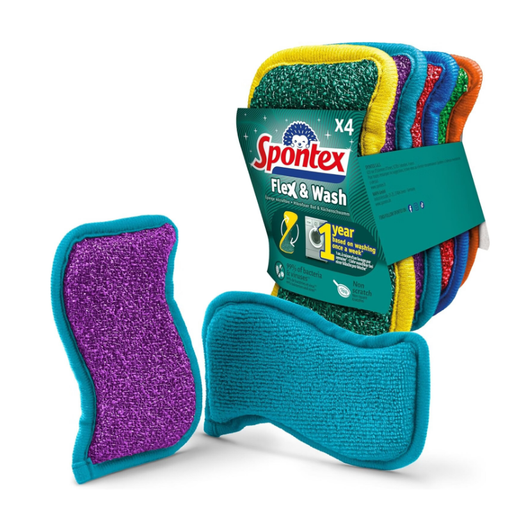
Why this choice suits this profile: Their reusable design and flexible shape are aimed at households that want to cut down on replacements while reaching tricky spots more easily.
According to the product details, they can withstand up to 52 machine wash cycles, which avoids the problem of sponges with a very short lifespan. You still need to rinse and dry them after each use, though.
Four sponges, a microfibre side and a scouring side, machine washable and a flexible format suitable for the kitchen, bathroom or car.
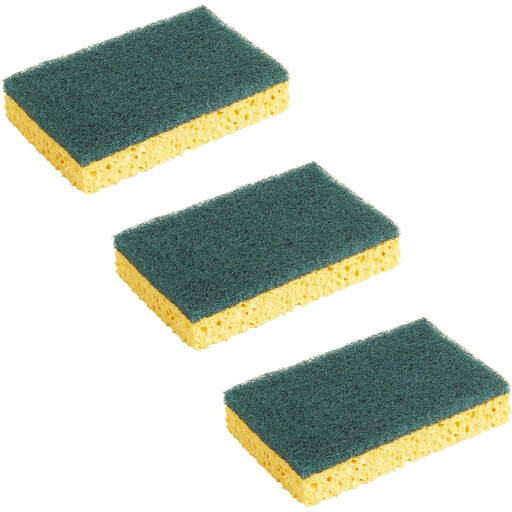
Why this choice suits this profile: This pack is aimed at people who regularly clean their dishes, pans and particularly grimy surfaces.
The product details state that the surface can be machine washed at up to 70 °C and specify that the scouring side should not be used on non-stick or delicate coatings.
Three pieces, absorbent plant-based cellulose, a protected scouring side and machine care in line with the manufacturer’s instructions.
We’ve put together a full, real-time updated selection of products that meet these demanding criteria and European safety standards.
After each clean, rinse the sponge thoroughly to remove washing-up liquid, grease and residue. Squeeze it out without twisting it harshly, then leave it to dry in a well-ventilated spot. Avoid leaving it at the bottom of the sink.
For a sponge intended for the kitchen and bathroom, it’s best to use separate units. Never use it on your skin, heating elements or a hot surface. Most manufacturers recommend replacing standard sponges regularly, often around every two months, or sooner if they show signs of wear.
Choose a side that is explicitly described as non-scratch and test it first on an inconspicuous area. Don’t automatically use a standard green abrasive sponge: some instructions advise against, or even forbid, its use on non-stick coatings.
It depends on the material, how often you use it and the drying conditions. Replace it as soon as it frays, loses its shape, holds onto an odour or becomes difficult to rinse. To maintain hygiene, follow the recommendations on the packaging as a priority.
It can reduce the number of replacements, especially if it can withstand several wash cycles. However, the real cost depends on the pack price, its actual lifespan and the care it needs. Compare these factors rather than relying solely on a promise of longevity.