
Livraison le jour même ou le lendemain

Qualité garantie

Débloquez vos offres de bienvenue: Livraison GRATUITE | Jusqu'à -80 % | 30 jours d'essai gratuits à JoyPlus
Téléchargez l'application
A sponge may seem like a trivial purchase. Yet a poor choice can quickly leave scratches, trap unpleasant odours, or force you to replace it far too often. For washing dishes, cleaning the kitchen, the bathroom, or everyday maintenance, Spontex sponges come in numerous versions, each designed for a specific purpose.
Before filling your basket, focus on three key criteria: the level of abrasion, absorbency, and washability. Here are the points to examine to avoid ill-suited models.
A non-abrasive sponge reduces the risk of scratching, but that does not mean it is suitable for all materials without reservation. Non-stick coatings, glass, hobs, stainless steel, or painted surfaces can react differently.
Even when a sponge is presented as soft, it is best to test it on an inconspicuous area. Dirt particles trapped between the sponge and the surface can also leave marks.
A scouring sponge designed for burnt-on residue, oven racks, or heavily encrusted dishes is not necessarily suitable for non-stick pans and delicate surfaces. A high-performance scouring side can even prove too aggressive for daily cleaning.
The most practical compromise is often to choose a double-sided sponge: the soft side for wiping and the scouring side only when soiling requires it.
Even a sponge designed to last depends on how it is maintained. If poorly rinsed, kept constantly damp, or used with incompatible products, it can quickly lose its qualities.
Rinse it after each use, wring it out thoroughly, and let it air dry. The replacement recommendations indicated on the packaging should also be taken into account to maintain good hygiene.
For washing dishes, a sufficiently absorbent Spontex sponge makes applying washing-up liquid and wiping up splashes easier. Models incorporating a plant-based sponge made from cellulose, cotton, wood pulp, or flax are designed to retain water effectively.
Shape also plays a role. An ergonomic and flexible model is generally more comfortable to hold and slips more easily into the corners of a sink, around a tap, or at the bottom of a saucepan.
Start by looking at the recommended use:
A grease-fighting sponge with a treatment that facilitates rinsing can limit the build-up of residue in the fibres. This does not exempt you from rinsing it thoroughly after washing up.
If you are looking for a machine-washable sponge, check the maximum allowed temperature. Some Spontex models can be washed in a washing machine or dishwasher at 40°C, while others withstand up to 70°C, depending on the product sheet.
Microfibre sponges are often intended for cleaning windows and mirrors, while a scouring side can tackle deposits in the bathroom. Do not use fabric softener if the product's care instructions forbid it, and avoid the tumble dryer when the packaging advises against it.
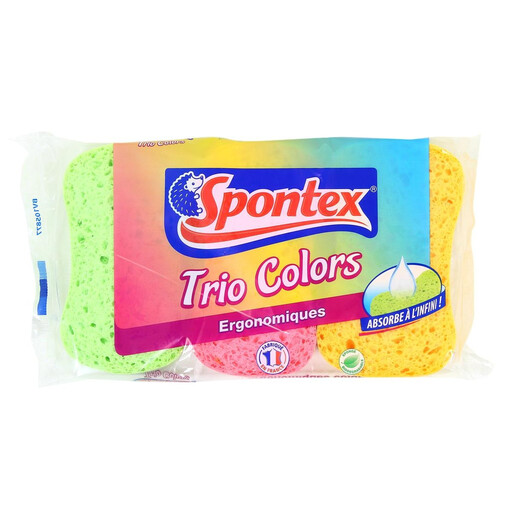
Why this choice suits this profile: Its ergonomic shape and pack of three sponges are perfectly suited to daily tasks, whether in a kitchen or a small home.
The product sheet mentions a highly absorbent polyurethane material and specifies that it should not be used on non-stick surfaces, which could be scratched.
An ergonomic grip, high claimed absorbency, and versatile use in the kitchen, bathroom, and for everyday cleaning.
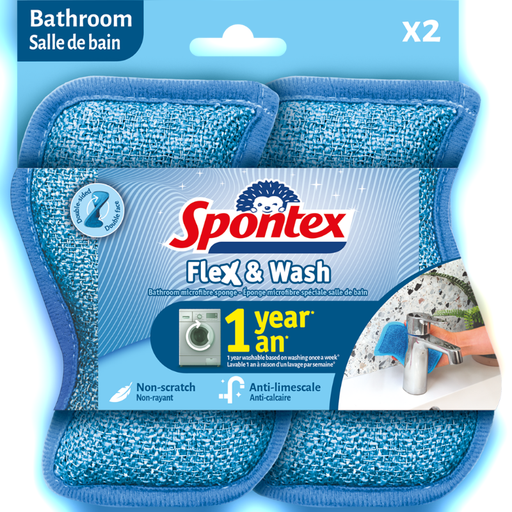
Why this choice suits this profile: This model combines a microfibre side for windows and mirrors with a scouring side for limescale deposits in the bathroom.
The product sheet claims up to 52 washes, limiting premature sponge replacement. A preliminary test is still recommended on delicate surfaces.
A microfibre side made from recycled fibres, an absorbent foam core, and machine washing up to 40°C, according to the manufacturer's instructions.
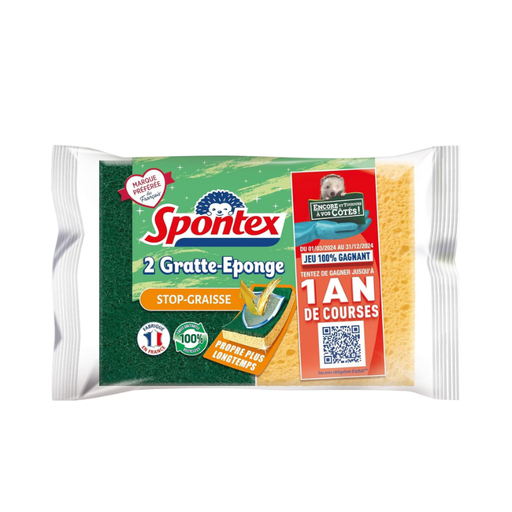
Why this choice suits this profile: This model is aimed at households that regularly wash dishes, pots, and surfaces marked by grease.
The Stop-Grease system is presented as facilitating the rinsing of scouring fibres. However, the abrasive side should not be used on delicate surfaces or non-stick utensils.
A plant-based part made from cotton, wood pulp, and flax, machine washable at 40°C, and reportedly manufactured in France.
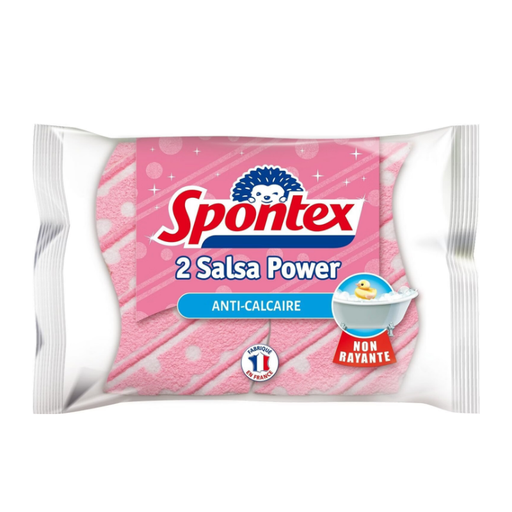
Why this choice suits this profile: Its design targets taps, shower walls, bathtubs, sinks, and mirrors, especially when limescale reappears quickly.
The product sheet designates it for limescale deposits while indicating a non-scratching use. Depending on the material, still test the sponge in an inconspicuous corner.
A format suitable for hard-to-reach areas, machine washable at 40°C, and plant-based materials for the sponge part.
We have compiled a comprehensive, real-time updated list of products that fully meet these strict selection criteria and European safety regulations.
It all depends on the model and how often you use it. Several references recommend replacement approximately every two months for hygiene reasons. Washable models can be maintained at the indicated temperature but should be changed as soon as they are worn, deformed, or become difficult to rinse.
In the bathroom, choose a reference designed for limescale deposits, such as an anti-limescale sponge with a side suitable for cleaning taps, sinks, and walls. For mirrors and windows, a microfibre side will be more appropriate. In any case, test it on a small area before proceeding.
Some references can be washed in a washing machine or dishwasher, generally at 40°C, while others display a different temperature. Consult the product label, rinse the sponge before washing, and let it dry after each use. Instructions can vary from one model to another: do not automatically transpose them.