
Livraison le jour même ou le lendemain

Qualité garantie

Débloquez vos offres de bienvenue: Livraison GRATUITE | Jusqu'à -80 % | 30 jours d'essai gratuits à JoyPlus
Téléchargez l'application
A cleaning sponge may seem like an unimportant purchase. Yet between a washing-up sponge that loses its shape after a few days, a scouring model that is too abrasive and one that stays damp all day, it is easy to make the wrong choice. For the kitchen, bathroom or body care, the right model mainly depends on the surface to be cleaned, how often it will be used and how it can be maintained.
An abrasive side can remove baked-on food residue, but it is not necessarily suitable for non-stick pans, glass or painted surfaces. Even a sponge described as non-scratch should be tested first on an inconspicuous area when used on a delicate surface.
For everyday washing-up, a dual-sided sponge is often the most practical choice: the scouring side tackles stubborn dirt, while the soft side is used to wash, wipe and rinse more delicate surfaces.
How long a sponge lasts also depends on rinsing, wringing and drying. A household sponge that remains soaked with water or cleaning product can quickly develop an unpleasant smell, even if its structure is durable. Check whether it is machine washable, at what temperature and according to which instructions.
A sponge intended for washing-up should not be used to clean the toilet or bathroom fittings, while an exfoliating sponge should never be used on household surfaces. Household cleaning accessories generally indicate their intended use: follow these instructions, particularly to avoid contact between cleaning products, skin and sensitive cookware.
An absorbent sponge made from plant cellulose is suitable for washing and soaking up liquids. Models combining cellulose, foam and microfibre can offer several textures and prove more versatile.
Microfibre is particularly useful for mirrors, glass and streak-free finishes. However, it does not replace a scouring side when burnt-on food or limescale needs to be removed.
The texture should be suited to the task:
The “non-scratch” claim does not remove the need for a preliminary test. Particles trapped between the sponge and the surface can leave marks, even with a texture designed to minimise scratching.
A small sponge is easier to fit into corners, around taps and inside narrow containers. A flexible shape can also make it easier to clean curved surfaces and hard-to-reach areas.
After each use, rinse the sponge thoroughly, wring it out without twisting it excessively and leave it to air-dry. For reusable models, check the permitted washing temperature: 40 °C, 70 °C or a specified number of cycles are not interchangeable instructions. Replace the sponge when its material starts to fray, loses its shape or retains a smell despite washing.
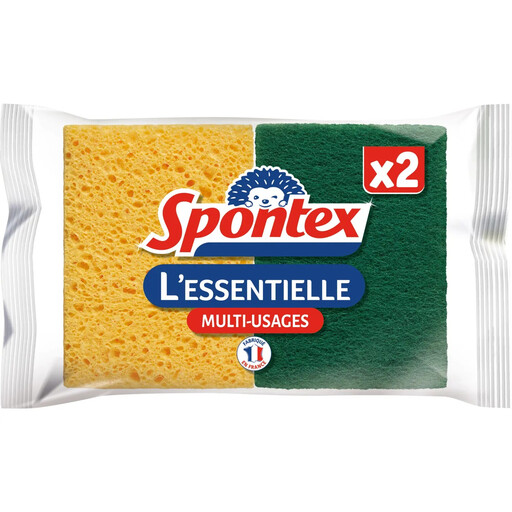
Why this choice suits this profile : This pack of two sponges is suitable for everyday tasks in a kitchen or small home. Their compact size makes it easier to reach corners.
The separate scouring and soft sides help prevent an abrasive surface being used on all your washing-up. The product details also mention PEFC-certified plant cellulose.
Two sides, two sponges and manufacturing stated as being in France. The manufacturer recommends replacing them approximately every two months.
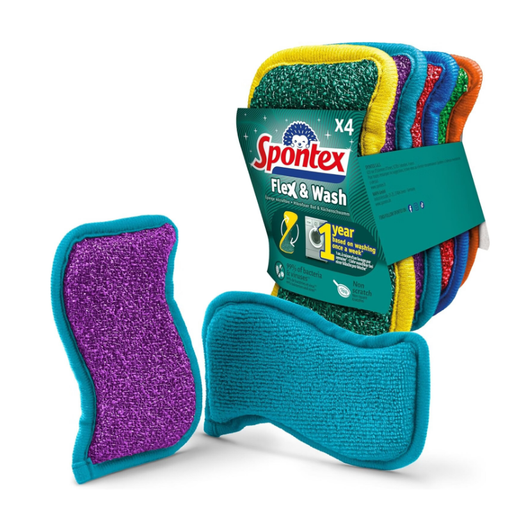
Why this choice suits this profile : Households that prioritise quality, reusability and ease of use may appreciate their flexible S-shaped design.
Rather than making a vague claim about lifespan, the product details state that the sponges can withstand up to 52 machine washes and recommend replacing them after approximately one year.
Four sponges, one microfibre side and one scouring side made partly from recycled fibres. A preliminary test is still recommended on delicate surfaces.
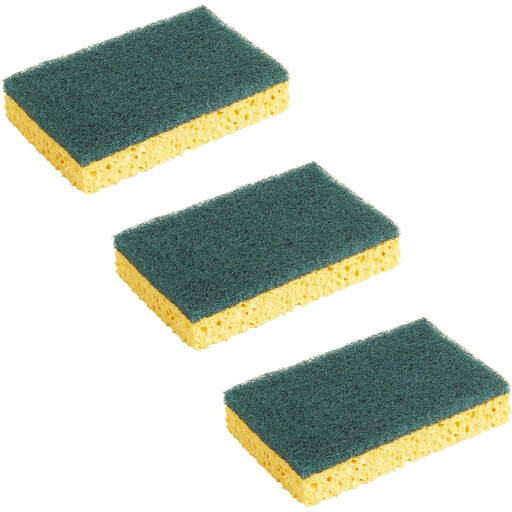
Why this choice suits this profile : For a family or anyone who does a lot of washing-up, this pack combines absorbency, a scouring surface and machine-washable care.
The washable design comes with a precise, measurable instruction : machine wash at 70 °C. However, avoid using the scouring side on non-stick coatings and delicate surfaces.
Three sponges, absorbent plant cellulose and manufacturing stated as being in France. The product details mention resistance to diluted bleach.
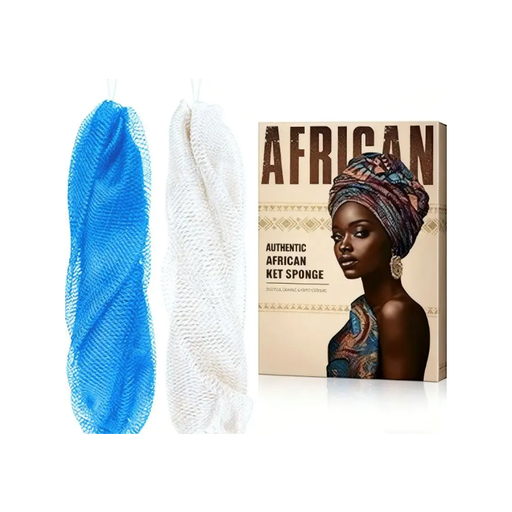
Why this choice suits this profile : Its long shape and cords make it easier to clean your back and shoulders, where a small body sponge can struggle to reach the skin.
Its open structure dries quickly when hung up. Use it only on intact skin, applying light pressure, then rinse it after every use.
African nylon bath net, integrated cords and machine-washable care according to the product details. Do not use it on irritated or damaged skin.
We have compiled a complete, real-time updated list of products that meet these demanding selection criteria and European safety regulations.
To keep a reusable or standard sponge in good condition:
A long-lasting sponge can reduce how often you need to shop for replacements, but its true cost depends on the initial price, the number of permitted washes and the actual lifespan achieved.
A dual-sided washing-up sponge is generally the most practical option: use the soft side for plates and glasses, then use the scouring side only on stubborn residue. For a non-stick pan, choose a side explicitly compatible with this coating and always carry out a careful preliminary test.
Yes, when authorised by the manufacturer. The temperature varies by model: some sponges can be washed at 40 °C, while others can be washed at 70 °C. Follow the instructions precisely and avoid fabric softener when the label prohibits it, as it may affect the properties of the microfibre.
A bath net or exfoliating sponge provides mechanical exfoliation. Use it gently and do not rub irritated, sensitive or damaged skin. Rinse it after every shower and allow it to dry completely before putting it away.