
Livraison le jour même ou le lendemain

Qualité garantie

Débloquez vos offres de bienvenue: Livraison GRATUITE | Jusqu'à -80 % | 30 jours d'essai gratuits à JoyPlus
Téléchargez l'application
A Pattex or Loctite multi-purpose adhesive can be used to bond, fix, repair or install all kinds of materials. But choosing a product simply because it is marketed as a strong glue can lead to peeling, unsightly marks or insufficient grip.
Before you head to the checkout, it is worth checking compatibility with the surface, the setting time and the conditions of use. Here are the criteria to examine when comparing different options, without getting swept away by marketing promises.
An adhesive can hold two pieces in place after a few seconds without having reached its maximum strength. Depending on the formula, the initial set can occur in 5 minutes, while full curing typically takes up to 24 hours.
Removing a clamp too early or putting weight on a freshly applied wall fixing can weaken the bond. Be sure to distinguish between:
The term "multi-material" does not mean the adhesive is compatible with every surface. Several Pattex and Loctite adhesives are not suitable for polyethylene (PE), polypropylene (PP) or PTFE. Some formulas also exclude flexible PVC, acrylic, copper or brass.
Testing on an inconspicuous area is a sensible precaution, especially on painted, varnished or porous surfaces.
An adhesive designed for indoor use is not necessarily suitable for a bathroom, a covered terrace or a façade. For both indoor and outdoor use, look for precise information on:
A rigid formula can crack when two materials expand at different rates. Conversely, a flexible adhesive is not automatically designed to support a heavy load.
For a wood glue, surfaces must be clean, dry, degreased and perfectly fitted. Pattex Classic and Express adhesives are intended for assembling, veneering and laminating wood. The Express version claims an initial set of around 5 minutes, while the Classic version has a drying time of 15 to 40 minutes depending on the project and conditions.
For fixing a skirting board, a shelf or a panel, a construction adhesive or a no-nails, no-screws glue will generally be more appropriate. However, check whether one of the surfaces needs to be porous and whether the load requires temporary support.
A tube is suitable for small repairs and is easy to store. A cartridge of 290 to 470 g usually requires a caulking gun, but allows you to apply the adhesive evenly, in beads or dots. For a large area, such as a floor covering, a flexible floor adhesive supplied in a 6 kg bucket makes uniform application with a notched trowel much easier.
Choose the quantity based on the area to be covered, not just the price of the container. A small tube may cost more per gram, but it will avoid waste for a one-off repair.
A clear adhesive can be suitable for mirrors, glass and certain decorative items, provided you respect the exclusions stated on the product datasheet. For filling a gap or rebuilding a missing part, an epoxy adhesive or a repair putty will be more suitable than a liquid glue.
The stated strength values, such as 15, 25 or 40 kg/cm², correspond to the manufacturer's test conditions. They do not replace a proper assessment of the load being supported, especially for a wall or ceiling fixing.
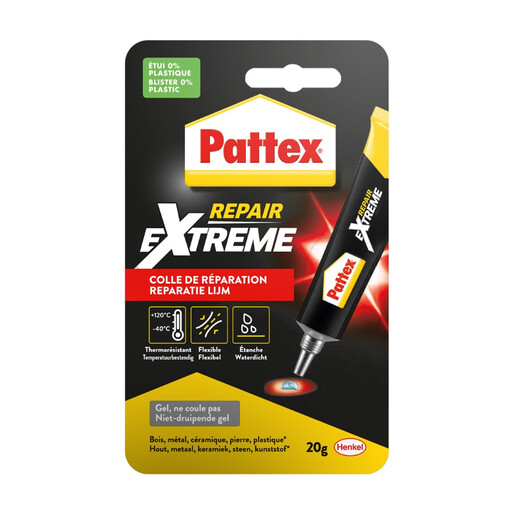
Why this choice suits this profile: Its compact format is ideal for small household repairs on porous or non-porous surfaces, indoors and outdoors.
Its gel texture limits drips on vertical surfaces and saves you from having to get out a bulky cartridge for a one-off job.
A solvent-free formula, claimed instant grip and usability on wood, glass, ceramic, textile, stone and several plastics.
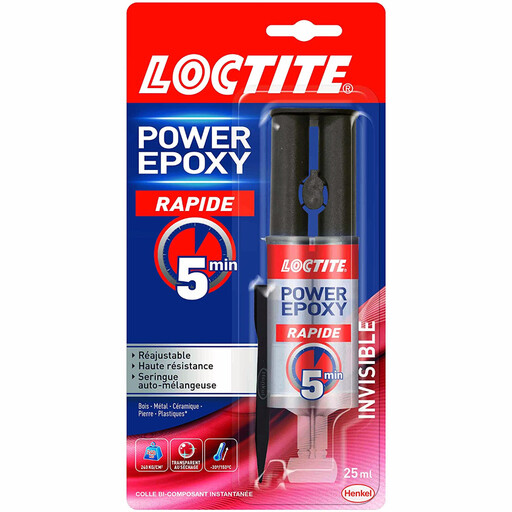
Why this choice suits this profile: Its self-mixing syringe and clear finish lend themselves to clean, precise repairs on a wide variety of materials.
The epoxy formula fills small gaps and reduces the risk of dosing errors thanks to the integrated mixing system.
Claimed resistance to water, oil and common solvents, sets in 5 minutes and fully cures in 24 hours.
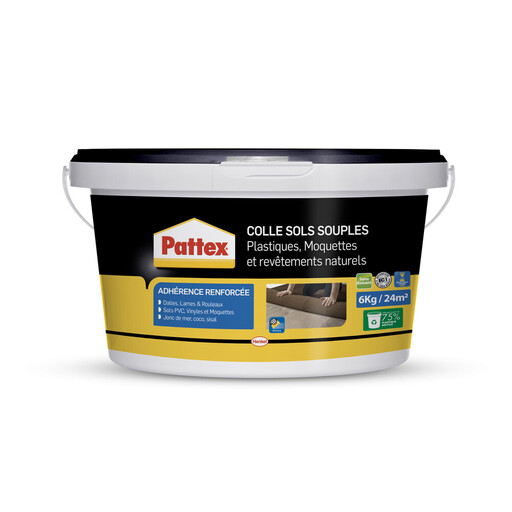
Why this choice suits this profile: Its large format is designed for laying carpet, vinyl, PVC, textile or natural fibres on concrete, cement or wood.
It is designed to be applied with a notched trowel, rather than misusing a construction adhesive intended for small objects.
A solvent-free formula, enhanced adhesion and claimed compatibility with underfloor heating, provided the installation instructions are followed.
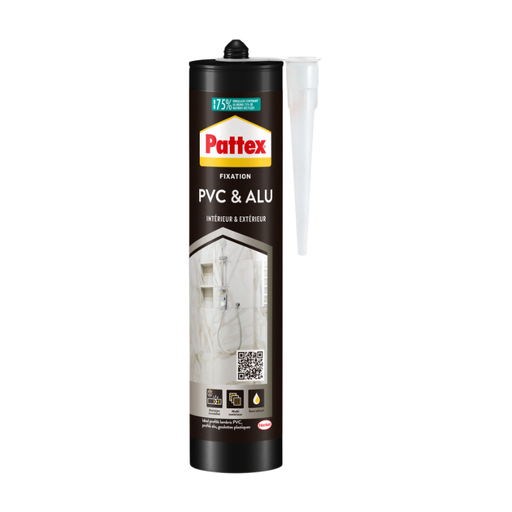
Why this choice suits this profile: It is suitable for PVC panels, ducting, skirting boards and decorative elements fixed to rigid or porous surfaces.
Its stated operating range of -30 °C to +90 °C, along with its moisture resistance, sets it apart from an adhesive intended only for dry indoor assemblies.
Flextec technology, a flexible bond and a claimed capacity of up to 25 kg/cm² under the conditions defined by the manufacturer.
We have put together a comprehensive, real-time updated selection of products that meet these demanding criteria as well as European safety regulations.
With a repair putty, mix the two components until you get a uniform colour. Pattex epoxy putties designed for metal can then be sanded, painted or drilled after curing, in line with the manufacturer's instructions. Wear gloves and consult the safety data sheet for professional use.
A construction adhesive from Pattex in a cartridge is suitable for skirting boards, shelves, panels and decorative items. Check the porosity of the surface, the intended load and exposure to moisture. For glass or a mirror, a clear formula can preserve the appearance of the surface, but materials excluded by the manufacturer must be strictly avoided.
Yes, an epoxy metal adhesive or a repair putty for metal can be suitable for iron, steel, aluminium, copper or zinc, depending on the indications on the product datasheet. Surfaces must be degreased and perfectly stable. For a structural part or one subject to high stress, adhesive does not replace an appropriate mechanical fixing.
It all depends on how well the container is sealed, storage conditions, temperature and the state of the nozzle. Immediately close the tube or cartridge, then store the product in a dry place, away from heat and sunlight. Also respect the expiry date and the conditions stated on the packaging.