
Livraison le jour même ou le lendemain

Qualité garantie

Débloquez vos offres de bienvenue: Livraison GRATUITE | Jusqu'à -80 % | 30 jours d'essai gratuits à JoyPlus
Téléchargez l'application
A versatile DIY glue can feel like a one-stop solution. Yet no single product works for every material or every situation. Fixing a shelf, repairing a metal part, assembling wood, or doing a craft project at school all call for very different properties.
Three mistakes crop up time and again when buying adhesive:
The right choice therefore depends on the material, the load, the time you have, and where you’ll use it – not just on a general promise printed on the pack.
Wood, plaster, brick, and stone are generally porous. A construction adhesive can work well if at least one of the surfaces lets the glue penetrate. The Pattex No Nails No Screws Extra Strong model, for example, is designed for wood, brick, stone, and plaster indoors. However, it is not suitable for PE, PP, PTFE, silicone, or surfaces that are constantly damp.
For glass, metal, ceramic, or certain plastics, it’s better to look for a clear glue, a hybrid adhesive, or a super glue that is compatible. The phrase “multi-material” never lets you off checking the list of accepted surfaces: PE, PP, PTFE, flexible PVC, and acrylic glass are regularly excluded.
A contact adhesive is usually applied to both surfaces, then needs a waiting time before assembly. It gives a fast initial grab but leaves little room to adjust the position. Hot glue sticks let you work quickly with a compatible 11 mm glue gun, though you are handling high temperatures.
For a small repair, a 3 to 64 g tube limits waste. For fixing a shelf, a skirting board, or working regularly on a job site, a 260 to 380 g cartridge, or even a 300 g format, will be more practical. In every case, surfaces must be clean, dry, degreased, and free of dust.
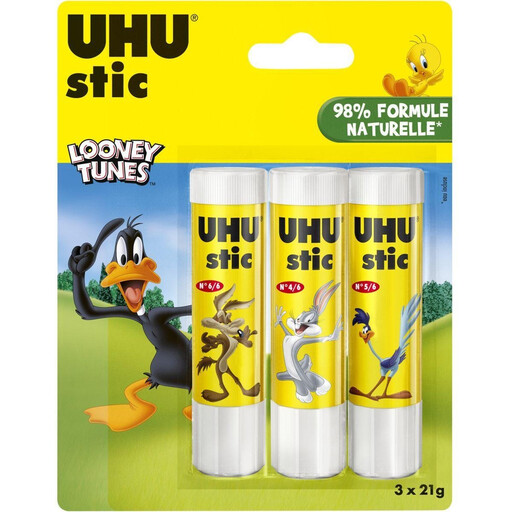
Why this choice suits this profile: This pack is ideal for homework, creative activities, paper collages, and small office tasks, without needing to invest in specialist equipment.
Its solvent-free, cold-water-washable formula stops you reaching for an oversized liquid glue on lightweight materials.
Three 21 g sticks, a formula made from 98% naturally derived ingredients according to the product sheet, and a screw-on cap.
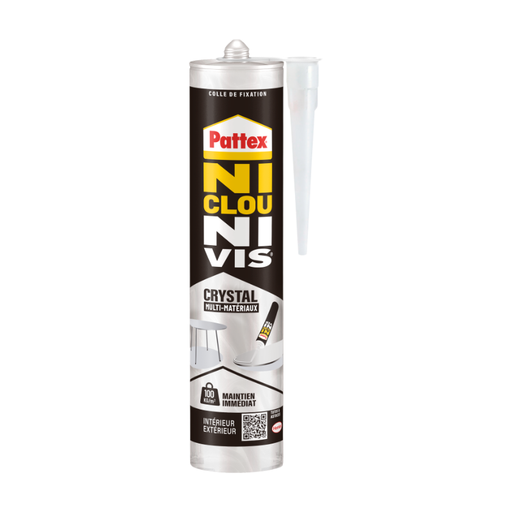
Why this choice suits this profile: Its ultra-clear finish is aimed at decorative projects where the fix needs to stay discreet, indoors and in sheltered outdoor areas.
The product sheet clearly states the limitations regarding PE, PP, PTFE, acrylic glass, and total immersion. So the transparency does not let you skip checking compatibility with the surface.
A formula claimed to be solvent-free and odourless, UV and moisture resistance, and a temperature range of -30 °C to +80 °C according to the specifications.
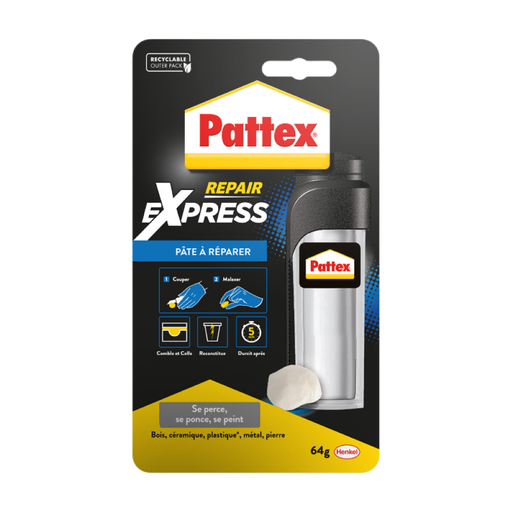
Why this choice suits this profile: This epoxy paste lets you fill, repair, or rebuild items made of wood, metal, glass, ceramic, stone, or cement.
It is not just for bonding two surfaces: its malleable texture also lets you fill a hole or rebuild a missing part. However, it remains incompatible with PE, PP, and PTFE.
A claimed set time of 5 minutes, final strength achieved after 24 hours, and the ability to sand and then paint after curing.
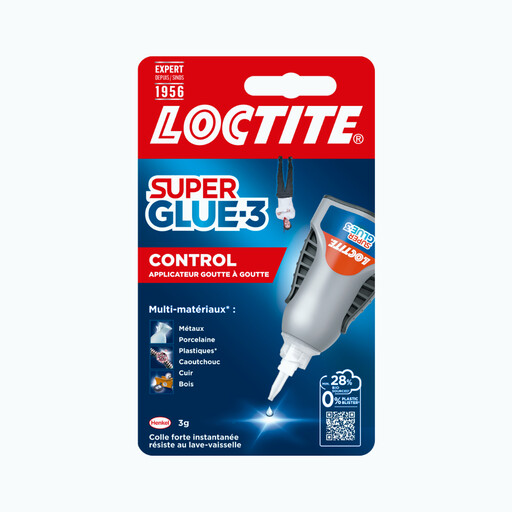
Why this choice suits this profile: Its controlled dispensing system is ideal for small repairs on porcelain, metal, wood, rubber, leather, or certain plastics.
The controlled-flow bottle limits excess on small parts. However, you must still exclude PE, PP, and PTFE, even though the product is presented as versatile.
A clear cyanoacrylate adhesive, a nozzle with a control button, and claimed resistance to water and the dishwasher according to the product sheet.
For cardboard, a glue stick or a specialist paper and cardboard glue works for lightweight assemblies. For wood, choose a wood glue and check its class, D2 or D3, depending on the moisture level the assembly will face. A construction adhesive can be used to fix a wooden piece to a wall, provided at least one surface is porous and the load remains compatible.
No. The clarity refers to the appearance of the bond, not its moisture resistance. For a fix exposed to water, look explicitly for a mention of water resistance, weather resistance, or UV resistance. Also check whether the product only handles occasional dampness or prolonged exposure.
It depends entirely on the formula, the cap, and storage conditions. A super glue can degrade quickly after opening, while a well-sealed cartridge will keep for the period stated by the manufacturer. Store each product in a cool, dry place away from heat and sunlight, and check the label before use.