
Livraison le jour même ou le lendemain

Qualité garantie

Débloquez vos offres de bienvenue: Livraison GRATUITE | Jusqu'à -80 % | 30 jours d'essai gratuits à JoyPlus
Téléchargez l'application
Repairing a handle, fixing a shelf without drilling, assembling wood or decorating a school project: a multi-purpose adhesive glue can come in handy in many situations. But just because a formula claims to be versatile doesn't mean it's suitable for every surface and every use.
Three common mistakes people make when choosing:
The right choice therefore depends on the surface, the environment, the format and the type of assembly you have in mind.
Start by identifying exactly the two surfaces you need to join: wood, metal, glass, tiles, PVC, concrete, fabric or cardboard. A glue advertised as compatible with metal, glass, wood and plastic won't necessarily perform equally well on each of these materials.
Hybrid polymer glues, particularly certain adhesive sealants, are designed to bond with multiple surfaces. They can be suitable for wood, tiles, PVC, aluminium, glass, metal and concrete, provided you respect the exclusions stated on the packaging. PE, PP, PTFE and bitumen require special attention and, in many cases, a test on an inconspicuous area.
For wood, choose a wood glue that complies with EN 204 standard. Class D2 offers moisture resistance suitable for many indoor uses. Class D3 is more appropriate for damp environments, such as a kitchen, bathroom or sheltered outdoor space. These classifications don't replace the need to follow the manufacturer's recommendations, however.
A glue intended for both indoor and outdoor use must withstand the conditions it will actually be exposed to: humidity, temperature fluctuations, UV rays or vibrations. A transparent formula can be useful for visible repairs, while an elastic adhesive sealant will better absorb the movement of certain surfaces.
Check the stated temperature range. The UHU POLY MAX EXTRA STRONG INVISIBLE, for example, is rated for use from -40°C to +100°C, with water and UV resistance according to its product sheet. The Pattex Ni Clou Ni Vis Crystal, meanwhile, is rated for -30°C to +80°C. It resists humidity, but is not designed for total immersion.
A small tube of a few grams is enough for a minor repair. For fixing skirting boards, panels or carrying out joints and larger assemblies, it's better to go for a cartridge of 290 to 300 g. This format is typically used with a caulking gun.
Initial grip doesn't mean the bond is fully dry. The Pattex Crystal requires pressure for around 15 seconds, remains repositionable for 15 minutes and reaches its final strength after 24 hours. For a no-nail, no-screw fix, therefore, respect the stated holding time and avoid putting the object under stress immediately.
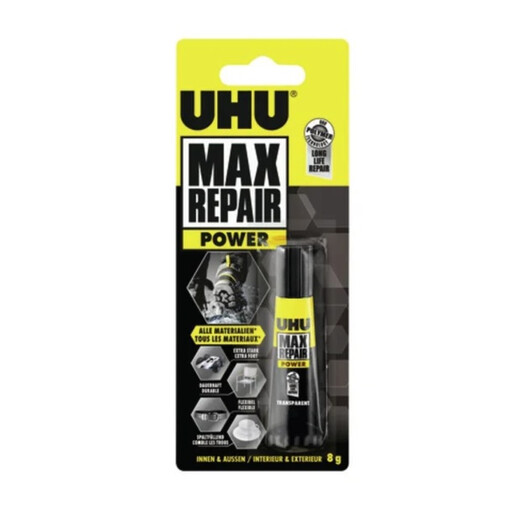
Why this choice suits this profile: Its 8 g tube is ideal for small household repairs, everyday objects and occasional DIY tasks.
The product sheet specifies the compatible materials as well as resistance to water, impact and UV: you can therefore check that the product is suitable before applying it.
Solvent-free formula, transparent finish after drying and the ability to adjust the bond for around 5 minutes.
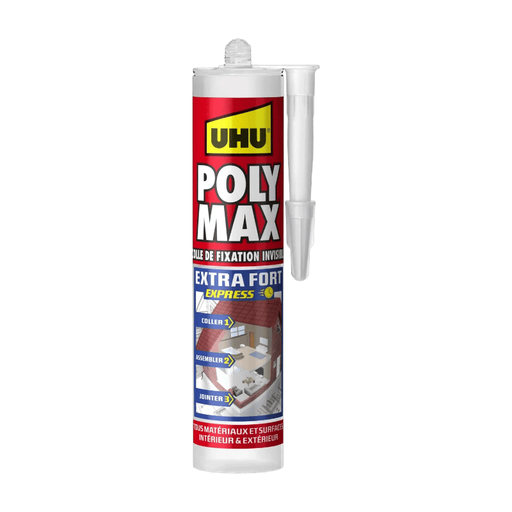
Why this choice suits this profile: With its 300 g, this cartridge is aimed at assembly, bonding and sealing jobs that require a discreet finish.
Its product sheet mentions the exclusions regarding PE, PP, PTFE and bitumen, as well as the application temperature range of +5°C to +40°C.
MSP hybrid polymer, permanent elasticity, stated UV and water resistance, and can be overpainted with acrylic paint.
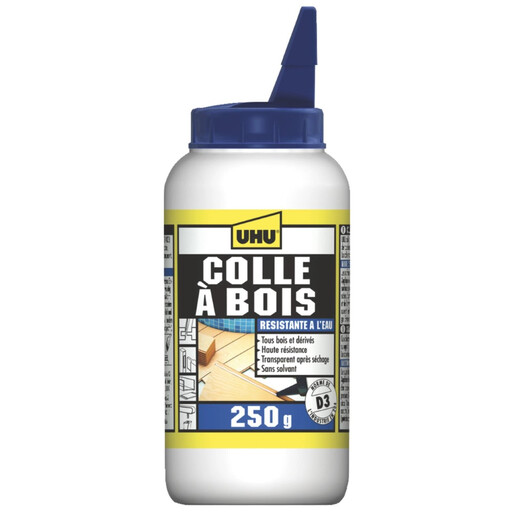
Why this choice suits this profile: This wood glue is designed for assemblies, veneering and joinery work carried out in damp rooms or under cover.
The D3 rating indicates superior moisture resistance compared to a standard indoor glue, without presenting the product as suitable for permanent immersion.
Class D3 according to the product sheet, initial grip stated at 10 minutes and dries clear.
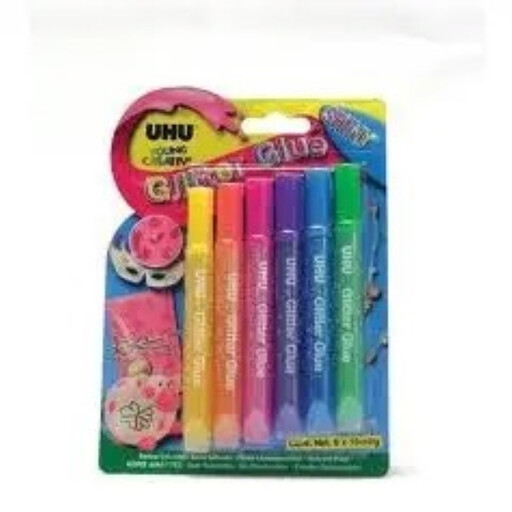
Why this choice suits this profile: The six 10 ml tubes are perfect for creative activities, cards, decorations and school projects on paper or card.
The formula is stated as washable with water, but its use is limited to paper and card: it does not replace a repair glue.
Precision nozzles, six glitter colours and full drying stated at around 4 hours.
We've put together a comprehensive, real-time updated selection of products that meet these demanding criteria as well as European safety regulations.
Adhesive pads offer a practical solution for lightweight objects or items you want to reposition. However, avoid using them on wallpaper, freshly painted surfaces or fragile surfaces without carrying out a test first.
A no-nail, no-screw glue is suitable primarily for objects and surfaces compatible with its technical data sheet. For a transparent fix on glass, a mirror or metal, a hybrid polymer formula can be a good choice. For a shelf or a heavy object, be sure to check the load capacity, the nature of the surface and the time to wait before applying weight.
No. Transparency refers to the appearance of the bond, whereas water resistance depends on the formula used. Some transparent glues can withstand humidity, but not full immersion. Check the usage range and restrictions specified by the manufacturer.
It all depends on how well the container is sealed, storage conditions, temperature and the formula. Keep the glue tightly closed, in a cool, dry place. A product that has thickened, separated or whose nozzle is blocked should not be used without first checking the manufacturer's recommendations.