
Livraison le jour même ou le lendemain

Qualité garantie

Débloquez vos offres de bienvenue: Livraison GRATUITE | Jusqu'à -80 % | 30 jours d'essai gratuits à JoyPlus
Téléchargez l'application
Putting up a skirting board, assembling furniture, fitting a decorative panel or repairing an object doesn’t always mean reaching for the drill. An extra-strong grab adhesive can make DIY jobs much easier, provided you choose a formula that suits the surface and the conditions it will be used in.
The most common pitfall is relying on the words “strong adhesion” alone. They don’t tell you which materials the adhesive is suitable for, whether it can withstand moisture or how long you need to wait before putting the bond under strain. To avoid buying the wrong product, here are the things to check before choosing a no-nails adhesive, grab adhesive or multi-material adhesive.
Some adhesives hold an item in place quickly, but only reach their full strength after several hours. So even if a bond feels solid after a few seconds, you may still need to hold or support the item in place.
Always check the guidance on initial grab, repositioning and full curing time. Several products in this selection state that they reach full strength after 24 hours.
Wood, plaster, tiles, glass, metal, PVC and concrete all have different levels of porosity. A mounting adhesive designed for absorbent surfaces may not be suitable for bonding two smooth, non-porous surfaces.
Materials such as PE, PP, PTFE, some flexible PVC and acrylic glass are frequently excluded from manufacturers’ recommendations. If you’re using the adhesive on plastic, we strongly recommend testing it on an inconspicuous area first.
An adhesive designed for a dry room shouldn’t be used on an exterior wall, in a bathroom exposed to frequent splashes or on a surface subject to significant temperature changes. A water-resistant adhesive or an indoor-outdoor adhesive should offer suitable protection against moisture, UV rays and temperature fluctuations.
For fitting skirting boards, battens or shelves to a wall, a formula designed for wood, brick, stone or plaster may be suitable when one of the two surfaces is porous. For example, Pattex No Nails No Screws Extra Strong is described as suitable for porous materials and indoor use.
For bonding glass, metal, a mirror or tiles, it’s best to choose a hybrid polymer or multi-material adhesive that clearly states it is suitable for non-absorbent surfaces.
A grab adhesive intended for outdoor use should specify the conditions it can withstand. Resistance to moisture doesn’t necessarily mean a product can be permanently submerged.
For example, UHU POLY MAX is described as resistant to water, UV rays and temperatures from −40 °C to +100 °C, according to the product information. Pattex No Nails No Screws Water Resistant, meanwhile, states a temperature range of −30 °C to +80 °C, as well as resistance to moisture. These details help you compare products, but they don’t replace the application instructions.
An 8 to 20 g tube is suitable for small repairs and occasional jobs. A 290 to 470 g cartridge, used with a caulking gun, lets you apply even beads or dabs to a panel, skirting board or larger surface.
For wood, liquid glue in a bottle makes it easier to join tenons, mortises, grooves, veneers and furniture components. Initial drying time can vary depending on the wood’s moisture content, the temperature and the pressure applied.
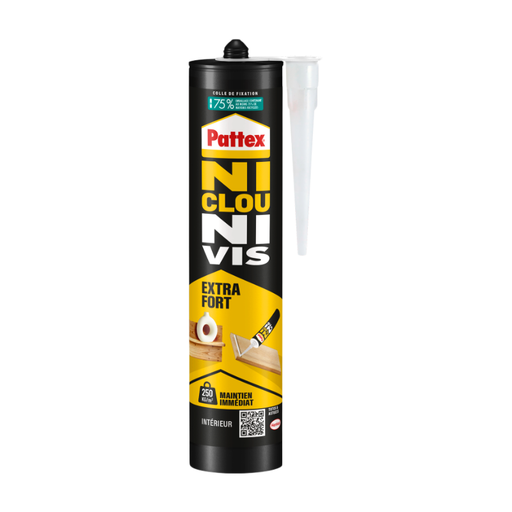
Why it suits this type of user : The cartridge is ideal for your first indoor fixing jobs, whether you’re putting up skirting boards, hooks, battens or shelves.
The product information specifies that one of the two surfaces must be porous and advises against use in areas with constant moisture, helping you avoid mistakes.
Solvent-free formula, suitable for indoor use, with full strength stated to be reached after 24 hours.
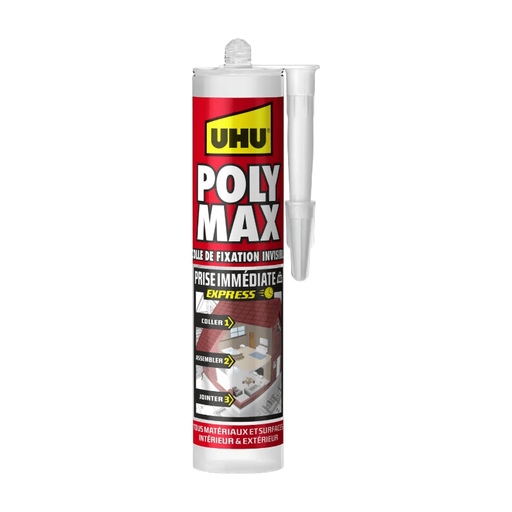
Why it suits this type of user : Its transparent finish is ideal when appearance matters, particularly on glass, metal, tiles or decorative features.
The product information lists compatible surfaces and explicitly excludes PE, PP, PTFE and bitumen.
MSP hybrid polymer, 300 g cartridge, permanently flexible, and stated to resist water, UV rays and temperature changes.
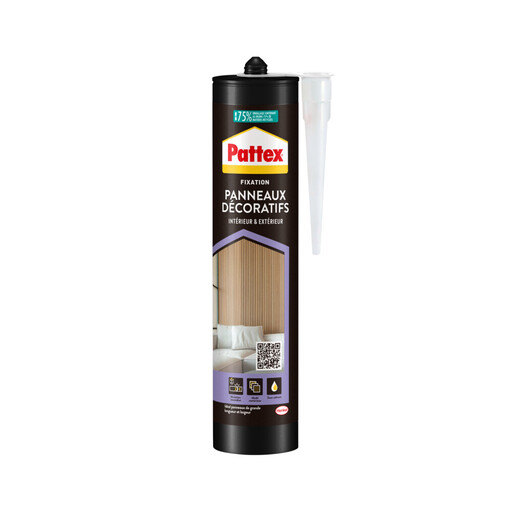
Why it suits this type of user : The cartridge and nozzle make it easy to apply even beads when fitting acoustic panels, battened wall panelling and wall coverings.
It’s clearly intended for decorative panels, rather than making vague claims about being suitable for every type of project.
470 g format, solvent-free formula, stated to be suitable for slightly damp surfaces, and can be covered once dry.
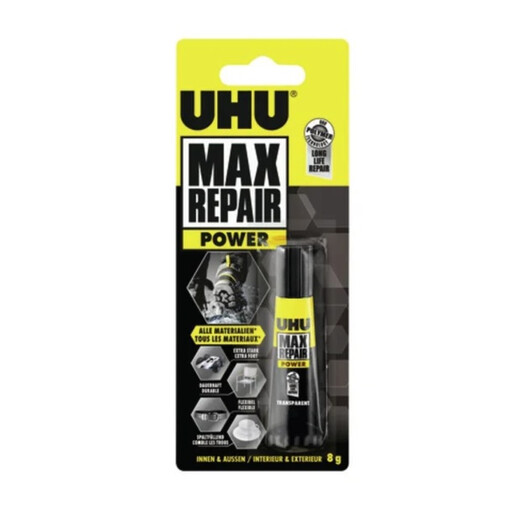
Why it suits this type of user : The small tube is easy to store in a toolbox and helps prevent waste when tackling everyday repairs.
The product information lists the surfaces it isn’t suitable for and recommends applying it to a clean, dry, grease-free surface.
Transparent, flexible adhesive, stated to resist water, impact, UV rays and temperatures from −40 °C to +120 °C.
We’ve put together a comprehensive list, updated in real time, of products that meet these exacting selection criteria and comply with European safety regulations.
When using wood glue, the material’s moisture content and the pressure applied both matter. The product information for Pattex Wood Glue Classic and Express recommends using clean, dry, grease-free wood with a moisture content of no more than 8 to 12 %.
Choose a formula that clearly states its resistance to moisture. Check whether it’s suitable for occasional splashes or continuous exposure to water. Never use a product for immersion unless it is expressly designed for that purpose.
It may be suitable for some decorative assemblies or repairs, but the load, contact area and type of surface are all important. For a heavy item or one subject to repeated stress, follow the manufacturer’s load guidance and provide temporary support.
Initial grab may occur within a few seconds or minutes, while full strength often takes 24 hours. Temperature, humidity, surface porosity and bead thickness all affect this time. Always follow the product instructions rather than relying on general estimates.