
Livraison le jour même ou le lendemain

Qualité garantie

Débloquez vos offres de bienvenue: Livraison GRATUITE | Jusqu'à -80 % | 30 jours d'essai gratuits à JoyPlus
Téléchargez l'application
Draughts near windows, a door that lets the cold in, and a heating bill that climbs for no apparent reason are common problems for many households. Yet, a well-chosen door and window insulation seal is often the simplest and most cost-effective solution to improve your home's thermal and acoustic comfort. But in a market saturated with products making tempting promises, how can you be sure to make the right choice? We'll explain how to avoid the most common pitfalls.
Before you grab the first adhesive roll you see, keep in mind the flaws that can render a seal completely ineffective in just a few months.
To make the right choice, three criteria must be examined closely: the material, the type of fastening, and the fit to the surface.
The choice of material directly impacts the durability and effectiveness of your insulation.
Before any purchase, the first thing to do is measure the space to be filled. The simplest trick? Slide a stack of coins into the gap until it's filled to estimate the required thickness. Once you have this measurement, consider the installation type.
Some situations require specific products. A door bottom for uneven floors is often equipped with a soft brush or a flexible PVC lip that conforms to the floor's imperfections. For a garage door seal, you need a product capable of filling much larger gaps (sometimes up to 15-20 mm) and withstanding much harsher conditions (moisture, friction, etc.).
To help you see more clearly, here is our selection of products that tick all the boxes, each meeting a specific need.
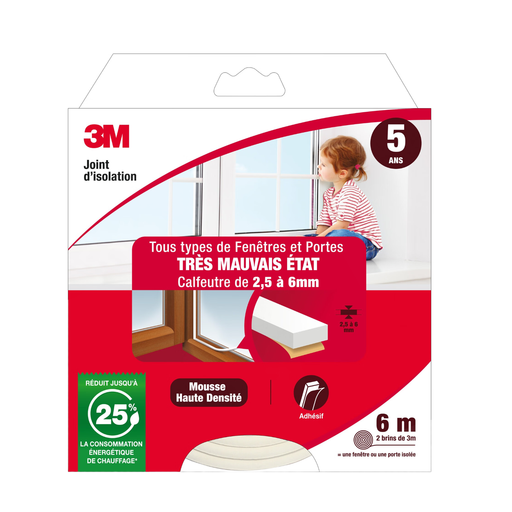
Why we chose it: For those who want a quick, effective, and economical solution for wood, PVC, or aluminium windows with a moderate gap. The perfect product for a hassle-free weather-sealing project.
Its high-density foam adapts to gaps from 2.5 to 6 mm and retains its flexibility over time. The 3M adhesive ensures much better adhesion than generic products, limiting the risk of premature peeling.
Simple and ultra-fast installation. The manufacturer claims up to 25% reduction in heating-related energy consumption.
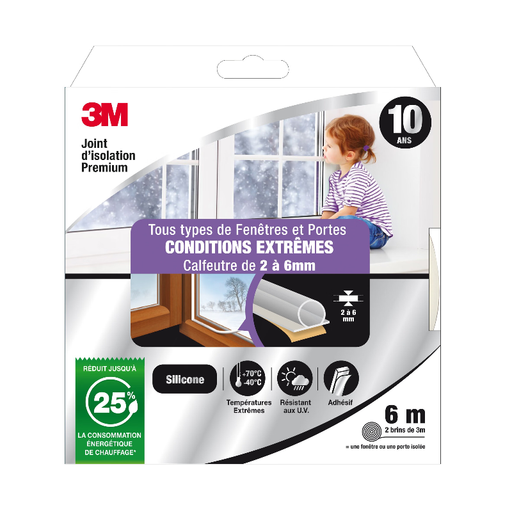
Why we chose it: The ideal "install it and forget it" solution. Silicone is the material of choice for durable insulation, with consistent performance against weather, sun, and wide temperature swings.
Its silicone composition resists UV rays and extreme temperatures (from -40°C to +70°C), preventing cracking and loss of elasticity. The manufacturer claims a lifespan of at least 10 years under normal conditions. A true guarantee of serenity.
Unmatched performance and durability. Its transparency makes it nearly invisible on most window and door frames.
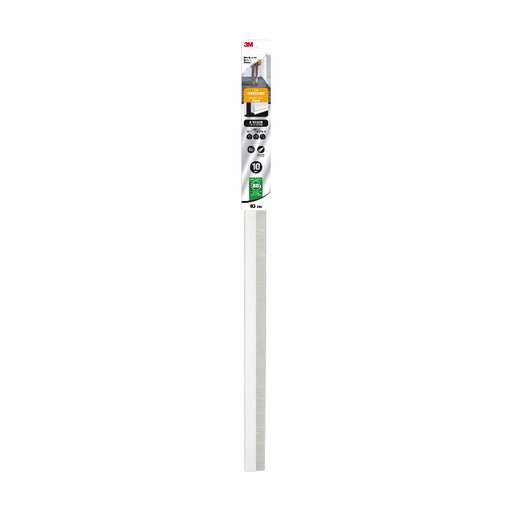
Why we chose it: THE solution for door bottoms leading to old tile, a patio, or a garage floor that isn't perfectly level. Its screw-on fastening ensures a heavy-duty mechanical hold where a simple adhesive would fail.
Specifically designed for this purpose, its double row of nylon bristles and thin membrane conform to the floor's imperfections to seal gaps up to 15 mm. The seal remains perfect.
Robust and invisible screw-on fastening for a flawless finish. Its aluminium structure can be easily cut with a saw to perfectly fit the width of the door.
To explore further, we have gathered a complete selection of products that meet our quality criteria and current standards.
It all depends on the material and, most importantly, the quality of the adhesive. An entry-level foam seal will likely need to be replaced after 1 to 2 years. A quality rubber seal or silicone seal, properly installed on a clean surface, can last from 5 to over 10 years.
Several signs are unmistakable: if you feel a stream of air when you run your hand along the frame on a windy day, the seal is shot. Inspect it visually: if it's cracked, dry, flattened, or peeling, it's time to change it. A seal in good condition should feel supple to the touch and instantly spring back to its shape when pressed.
Yes, and the impact can be significant. By eliminating air leaks, you prevent cold air from getting in and warm air from escaping. Your heating system therefore works less hard to maintain a comfortable temperature. According to data from manufacturers like 3M, proper weatherstripping for windows and doors can help reduce your heating bill by up to 25%. It's a small investment that pays for itself very quickly.