
Same-day & Next-day Delivery

Quality Guaranteed

Unlock Your Welcome Offers: FREE Delivery | Up to 80% OFF | Free 30-day JoyPlus trial
Download the APP
A door draught excluder helps reduce draughts, dust entering your home and some moisture ingress. However, you need to choose a suitable model: if it is the wrong size, it may obstruct opening, come loose within a few days or let air through despite careful installation. Before buying a draught-proof door bottom seal, three mistakes are particularly common.
A door seal designed for a gap of 2 to 4.5 mm will not be suitable for a 15 or 25 mm gap. Conversely, a seal that is too thick may rub against the floor and make the door harder to open. Measure the gap in several places: it may vary between the hinge side and the lock side.
An adhesive door draught excluder can be fitted quickly, but it requires a clean, dry, degreased and sufficiently even surface. On a dusty, porous or very rough floor, screw fixing will generally provide a more reliable hold. Also consider the door material: wood, PVC, aluminium and metal do not all react to adhesives in the same way.
A rigid strip delivers good results on a level floor. For a rough concrete slab, tiles with height differences or natural stone, it is better to choose soft brushes, a flexible membrane or a hinged profile. A simple strip stuck to the bottom of the door is not always enough to absorb changes in height.
Measure the height of the gap beneath the door in millimetres, then measure the width of the door leaf. Available models are often between 80 and 93 cm long, while some are sold in rolls several metres long. A cut-to-size model allows you to adjust the length, but the cutting method varies by product: a blade, scissors or a fine saw.
For a wide opening, garage door or several windows, a roll of window insulation seal or foam may be more practical than a 93 cm strip. The extra-compressible polyurethane foam in reference 3M, designed for large gaps, is stated to suit gaps of 2 to 15 mm. It is supplied in a 6.50 m roll, divided into two 3.25 m strips.
Adhesive allows quick installation without drilling, but preparing the surface remains crucial. Screw-fixed models require more tools, in exchange for a more durable mechanical fixing. In a rented home, an adhesive or removable system can help you avoid permanent alterations. However, check that it can be removed without pulling off the paint or damaging the floor covering.
Protection against the cold, dust and moisture also depends on the seal being continuous. Do not stretch the adhesive strip during installation: it could shrink or come away. Close the door after fitting and make sure it does not catch or require extra force.
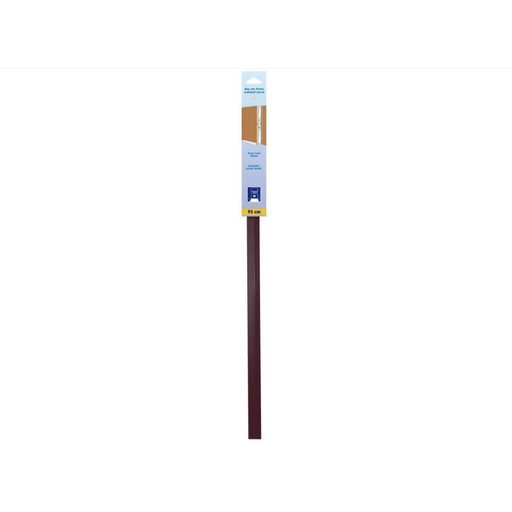
Why this choice suits this profile : This adhesive door draught excluder is suitable for an interior door installed on a smooth floor, with a stated gap of up to 15 mm. Its drill-free installation is ideal for a first purchase or a rented property.
The product description specifies a rigid PVC profile with a flexible lip, to be fixed to a smooth surface. It should therefore not be chosen for a very uneven floor.
A length of 93 cm, a flexible lip and the option to cut it to adjust the width.
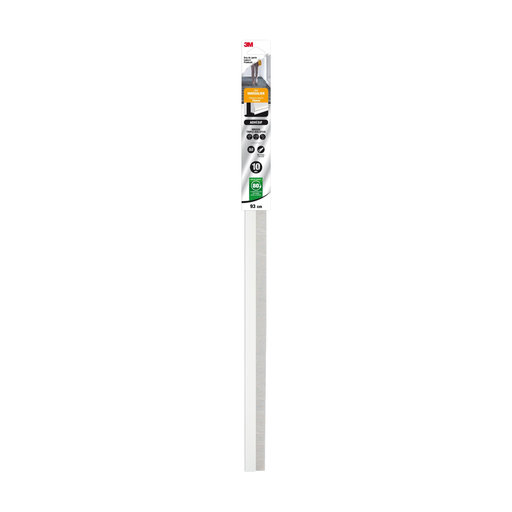
Why this choice suits this profile : Its painted aluminium profile and flap designed for uneven floors make it suitable for entrances, workshops and garages where finish quality and compatibility with the surface really matter.
It is designed for uneven floors and gaps of up to 25 mm. However, the door surface must be cleaned thoroughly before adhesive installation.
An aluminium profile, a cut-to-size length and stated compatibility with wooden, PVC or metal doors.
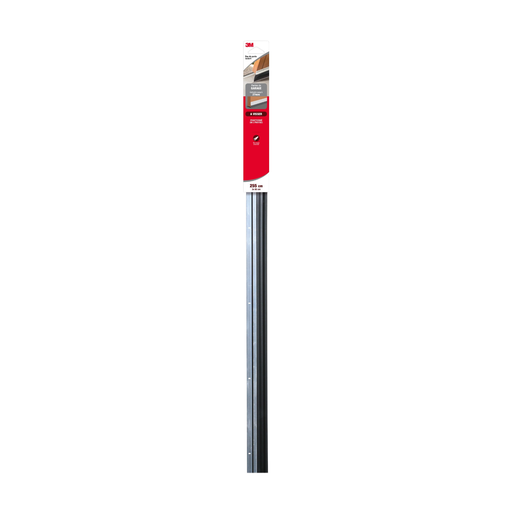
Why this choice suits this profile : This garage door seal is designed for wide doors and floors with changes in level. Its hinged profile follows the movement of the door, while its rubber flap is designed for gaps of up to 27 mm.
Its hinged design adapts better to an uneven floor than a rigid strip. Even so, measure the total length and follow the manufacturer's fixing instructions.
An aluminium profile, a flexible rubber flap and a set made up of three 85 cm sections.
Wipe the brushes or flap regularly with a damp cloth. Replace the seal when it becomes brittle, deforms or no longer makes proper contact with the floor. The service life stated by manufacturers varies according to the material, exposure and number of cycles. It is therefore not a guarantee that applies to every home.
Choose an uneven-floor seal fitted with soft brushes, a flexible membrane or a hinged profile. Measure the maximum gap, as different models do not all cover the same height.
Yes, provided the installation surface is clean, dry and compatible with the adhesive. For a door exposed to moisture or used very frequently, check the stated durability and consider mechanical fixing where the configuration allows it.
It can limit draughts around the door and improve thermal comfort. However, the result depends on the overall condition of the opening, walls, windows and heating system. Any savings percentages mentioned in a product description reflect the measurement conditions communicated by the brand; they do not guarantee the same result in your home.