
Same-day & Next-day Delivery

Quality Guaranteed

Unlock Your Welcome Offers: FREE Delivery | Up to 80% OFF | Free 30-day JoyPlus trial
Download the APP
A draught beneath the door, dust finding its way into the garage or a cold feeling near the entrance could all indicate an inadequately sealed gap. However, choosing a 3M draught excluder is not simply a matter of selecting a 93 cm model. The type of floor, the height of the gap and the fixing system are the real criteria that make the difference.
Before placing your order, here are the pitfalls to avoid and the points to check when choosing between a door-bottom brush, an adhesive door-bottom seal and a door draught excluder.
A rigid seal or short lip may be perfectly suitable for tiles, parquet or polished concrete, yet allow air through on a rough slab, gravel or natural stone. For a draught excluder for uneven floors, it is better to choose a soft brush, a flexible membrane or a hinged profile.
A length of 93 cm suits many doors, but it must be compared with the actual width of the door leaf. A draught excluder that is too short will leave gaps at the sides. A longer model can generally be trimmed, provided you use the right tool and follow the manufacturer’s instructions.
Phrases such as ‘thermal door insulation’ or ‘draught-proof’ are not enough on their own. Above all, check the maximum gap the product can seal. Depending on the model, this may range from 15 mm to 30 mm, or even more for certain systems. A brush that is too short will not reach the floor, while a seal that is too thick may obstruct the door.
Measure the gap between the bottom of the door and the floor at several points, with the door closed. If the floor is uneven, use the area with the largest gap as your reference, while checking that the system will not rub excessively.
An adhesive door seal requires a clean, dry, degreased and sufficiently smooth surface. Depending on the model, the tape may adhere to wood, PVC or metal, but its durability depends directly on how well the surface has been prepared.
On a very rough surface, screw fixing or a hinged profile will often be the more suitable option. Conversely, on a smooth indoor floor, an adhesive model avoids drilling and makes installation considerably quicker.
Rigid PVC combined with a soft lip provides a discreet solution for interior doors and even floors. Painted aluminium offers greater rigidity for entrance doors, workshops or garages. A double row of brushes absorbs small changes in level more effectively, but it must remain flexible enough not to slow the door down.
Also remember to check the cutting instructions, compatibility with an outward-opening door and the care recommendations. Whatever the model, clean the lip or brush regularly to remove dust and small debris.
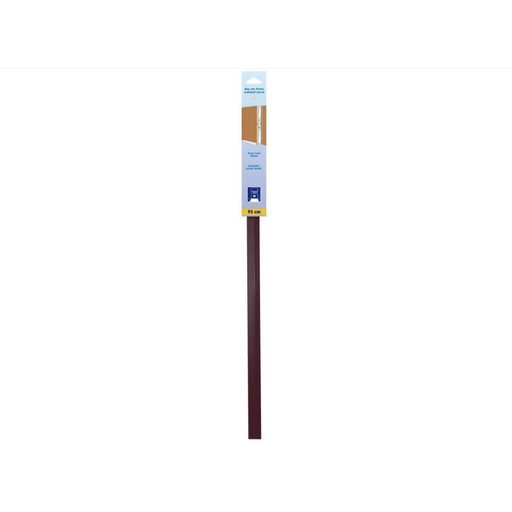
Why this choice suits this profile: this adhesive draught excluder is suitable for wooden, PVC or metal doors installed on smooth floors such as tiles, parquet, laminate or polished concrete. Its 93 cm length can be adjusted.
Its stated sealing capacity of up to 15 mm helps prevent you from choosing an oversized model for a small gap. However, adhesive installation requires a thoroughly cleaned surface.
PVC profile, integrated flexible lip, high-adhesion 3M adhesive and can be cut with a saw or suitable cutter.
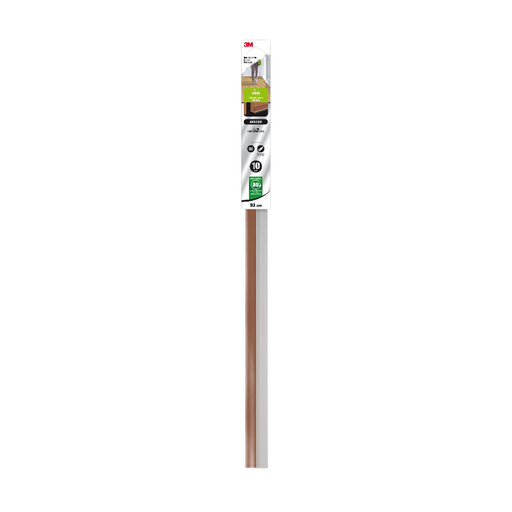
Why this choice suits this profile: its brown finish and transparent flap blend discreetly with dark doors and even floors. It is particularly suitable for a bedroom, office or indoor entrance.
It is clearly intended for smooth floors and gaps of up to 15 mm. This indication reduces the risk of installing it on a rough slab or heavily uneven surface.
93 cm format, self-adhesive fixing, flexible flap and a stated minimum lifespan of 10 years in the product information.
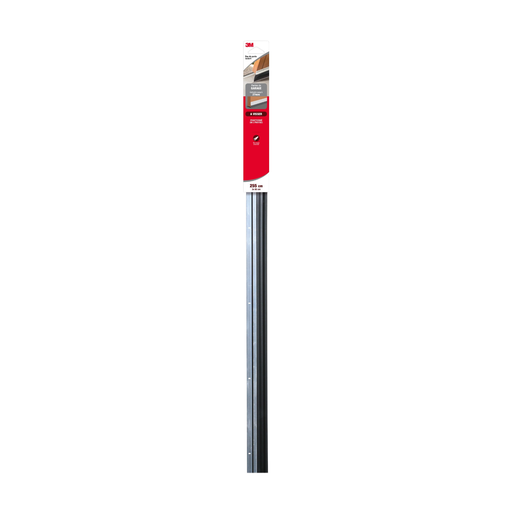
Why this choice suits this profile: this garage door seal is designed for doors and surfaces with changes in level. Its hinged aluminium profile follows the door as it closes on an uneven floor.
Its design means it is not intended for simple indoor use: the product information states that it adapts to uneven surfaces and can seal a gap of up to 27 mm.
Hinged aluminium profile, flexible rubber flap and total length of 3 × 0.85 m, suitable for installation on a garage door.
For an adhesive model, follow these steps:
Wear suitable gloves when cutting a rigid profile. A long component that has not yet been installed should also be kept out of children’s reach. To maintain the effectiveness of the draught excluder, regularly wipe the lip or brushes with a damp cloth. Avoid abrasive products on adhesive parts.
We have put together a complete, real-time updated list of products that meet these demanding selection criteria, as well as European safety regulations.
Many interior or entrance doors are close to this width, but measuring is still essential. A 93 cm model can be trimmed if its design allows it. Make sure you measure the door leaf, not just the frame.
For a rough slab, gravel or natural stone, look for a draught excluder for uneven floors equipped with a soft brush, flexible membrane or hinged profile. Models designed for smooth floors do not necessarily compensate for significant changes in level.
Its lifespan depends on how often the door is opened, humidity, temperature and the quality of the surface. Some product information gives a minimum or theoretical lifespan, but these figures do not replace proper installation or regular care. If the fixing comes away quickly, it is often a sign that the surface was not prepared correctly or that the model is being used in conditions for which it was not designed.