
Livraison le jour même ou le lendemain

Qualité garantie

Débloquez vos offres de bienvenue: Livraison GRATUITE | Jusqu'à -80 % | 30 jours d'essai gratuits à JoyPlus
Téléchargez l'application
Maintaining a car, stabilising a caravan or setting up a home gym involves more than comparing prices. Car lifting equipment and strength-training accessories have very different requirements, from load capacity and height to size, stability, frequency of use and compatibility with your vehicle or equipment.
The right choice depends first and foremost on how you plan to use it. Here are the common pitfalls to avoid, the criteria to check and some options to suit different needs.
A 2-tonne hydraulic jack is designed to lift a vehicle, but it should never be the only thing supporting it while you work underneath. Once the vehicle is at the right height, fit axle stands rated for the load and positioned at the designated support points.
The stated capacity usually refers to a maximum load under specific conditions. It doesn’t mean you can lift any vehicle without checking its weight, how the weight is distributed and whether the ground is strong enough.
A standard jack may not fit beneath a lowered car, a sports saloon or a vehicle with a flat tyre. On the other hand, an extra-low model may not reach high enough to give you proper access underneath the vehicle.
An extra-low car jack with a starting height of between 85 and 120 mm is better suited to vehicles with low ground clearance. For a family car or small van, a wider lifting range is often a better choice.
A high maximum capacity won’t make up for a base that’s too narrow, poor positioning or uneven ground. The strength of the frame, the quality of the wheels, the locking system and the contact surface all matter just as much.
The same applies to lifting straps: a material described as strong doesn’t mean you can skip checking them before every session. Frayed stitching, peeling non-slip coating or a poorly made fastening can cause the bar to slip.
Before choosing lifting equipment, measure your vehicle’s ground clearance and locate the lifting points specified by the manufacturer. Then check:
A folding scissor jack can easily be stored in the boot for the occasional wheel change. For regular work, a wheeled hydraulic model is generally more comfortable and stable. For a motorbike, a motorcycle lift or table with a support column must be compatible with the frame width and the bike’s weight.
Products marked as compliant with EN 1494 or bearing the CE mark must still be used in accordance with their instructions. These markings don’t remove the need to check the equipment’s condition or the work surface.
Steel is well suited to regular use in a workshop or garage, while aluminium helps keep the weight down if you need to move your equipment often. For axle stands and supports, check the quality of the welds, the adjustment mechanism and the shape of the saddle.
For an adjustable caravan support leg, the height, load capacity of each leg and protection at the contact point are all important. A set of four supports can help distribute the load more evenly when a caravan is parked for a long time. A pair may be enough in some setups, provided you follow the manufacturer’s guidance.
For a 180 cm weightlifting bar, check the sleeve diameter — 50 mm in this case — so you can choose compatible weight plates. Also check the usable length, grip diameter and stated maximum load.
Non-slip lifting straps are designed for pulling exercises such as deadlifts and rows. They don’t replace grip training with bare hands and may not be suitable for Olympic weightlifting movements, where you need to be able to release the bar quickly.
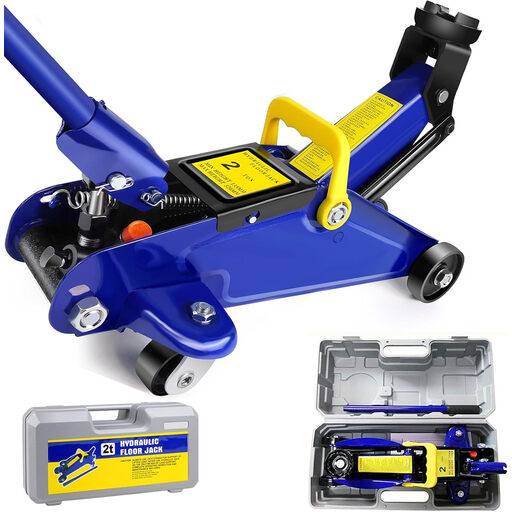
Why it suits this type of user : With a 2-tonne capacity and an easy-to-carry design, it’s suitable for routine jobs on a car or small van in a home garage.
Its lifting range of 135 to 320 mm helps you avoid choosing equipment based on maximum capacity alone. The product details also mention a safety valve and a release valve.
Steel frame, swivelling rear wheels, carrying handle and portable case.
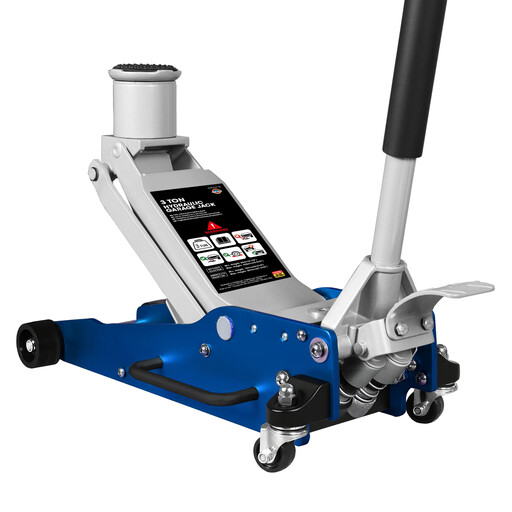
Why it suits this type of user : This model is for anyone looking for a higher capacity, a low starting height and equipment that’s easier to move around a workshop.
With a stated starting height of 85 mm, it’s suitable for low vehicles. Its lifting arm then extends the available height range.
3-tonne capacity, twin pump, aluminium alloy frame, with EN 1494 and CE references stated in the product details.
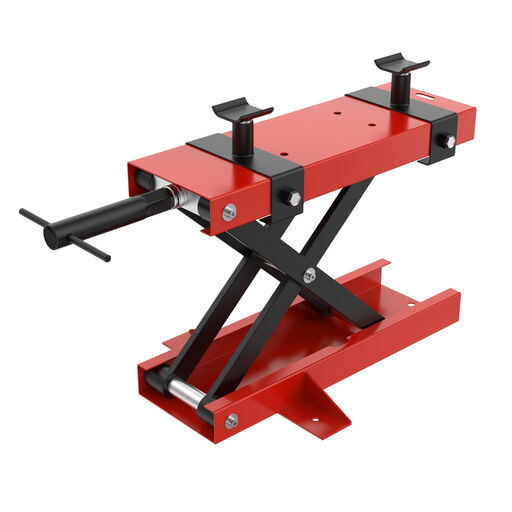
Why it suits this type of user : Its adjustable working height makes it a good choice for motorcyclists and workshops that regularly maintain motorbikes, quads or off-road vehicles.
Its stated 500 kg load capacity and support column make it easier to check that it’s suitable for your machine’s weight, rather than choosing a motorbike lift by guesswork.
Adjustable from 9.5 to 35 cm, with a non-slip platform and metal construction stated to be 3.2 mm thick.
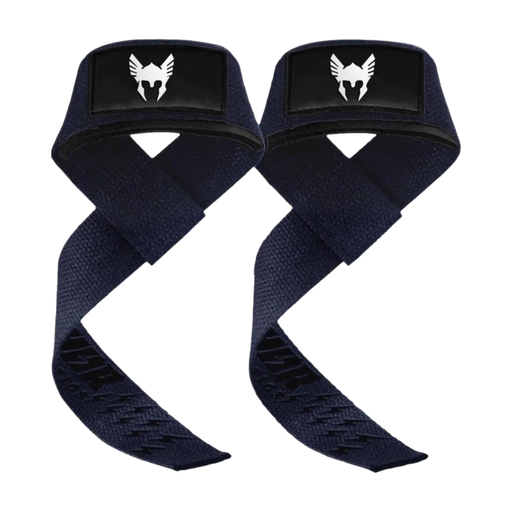
Why it suits this type of user : These straps are for lifters who want to train with heavy pulls while taking some of the strain off their grip, without giving up on learning to hold the bar with bare hands.
The product details specify that these straps are for strength training and exclude Olympic weightlifting. Check the stitching, cotton and coating before every session.
Cotton pair, neoprene padding, non-slip coating and a stated width of 3.8 cm.
A hydraulic jack is generally more comfortable for regular use and easier to position thanks to its wheels. A folding scissor jack is more compact and convenient to keep in the boot, especially for the occasional wheel change. In both cases, separate supports are essential to keep the vehicle secure during repairs.
Two axle stands are commonly used to support an axle, but the number and positioning depend on the job. Check your vehicle’s manual, make sure each stand has the right load rating and confirm that the ground is stable. For a caravan, adjustable supports are mainly used to stabilise it and distribute the load while it’s parked; they don’t replace the designated lifting equipment.
No. They’re mainly designed for certain pulling and strength-training exercises, such as deadlifts and rows. Don’t use them for Olympic weightlifting movements if the manufacturer advises against it, and don’t treat them as a safety device that can compensate for poor technique.