
Livraison le jour même ou le lendemain

Qualité garantie

Débloquez vos offres de bienvenue: Livraison GRATUITE | Jusqu'à -80 % | 30 jours d'essai gratuits à JoyPlus
Téléchargez l'application
A car jack isn’t chosen on price or stated capacity alone. A model that’s too low won’t fit under an SUV, while a jack with sufficient capacity may still be unusable if it can’t lift the wheel clear of the ground. Whether you’re changing a wheel, working in a garage or maintaining a van, there are several technical details worth checking before you buy.
The total weight shown on the vehicle registration document doesn’t directly correspond to the load borne by a single lifting point. A 2-tonne jack may suit many cars, but it must never be used to lift a vehicle whose specifications exceed its rated capacity. For an SUV, van or motorhome, check the jack’s safe working load and the lifting points specified by the manufacturer.
The minimum height is crucial for low-slung cars and sports models. Conversely, if the maximum height is too low, you may not be able to remove a wheel from a vehicle with high suspension. An extra-low-profile jack with a height of 85 to 120 mm makes it easier to reach beneath low chassis, while a bottle jack or pneumatic model generally offers a greater lifting range.
A base that’s too narrow, an ill-fitting saddle or awkward castors can make positioning difficult. Also check for a safety valve, overload protection, a wide base or a self-locking mechanism. If you’re working under a vehicle, a jack must never replace axle stands.
Always compare the minimum and maximum heights with your vehicle’s actual ground clearance. A hydraulic jack or trolley jack is better suited to garage use, while a scissor jack or small compact jack is easier to store in a boot.
A trolley jack with castors is easy to move across a hard, level surface. A bottle jack takes up little space, but its base and height must be compatible with the chassis. A 5T electric jack can make roadside repairs easier thanks to its 12 V power supply, but it relies on the battery and you’ll need to keep the cable secure. A pneumatic jack, meanwhile, requires a supply of compressed air or a suitable compressor.
A reinforced steel frame offers good durability for regular use, while aluminium helps reduce the weight of some garage jacks. Look for a non-slip saddle, a stable base, a controlled lowering mechanism and overload protection. Where stated by the manufacturer, EN 1494 certification and the CE marking are among the details to check in the technical specifications and accompanying documentation.
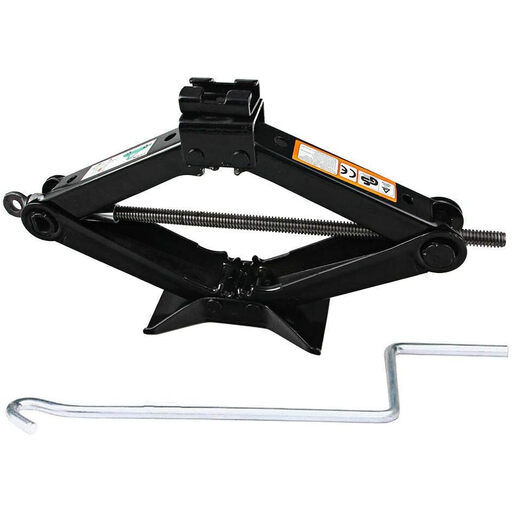
Why it suits this type of user : Weighing around 2.1 kg, this steel scissor jack is suitable for occasional wheel changes on compatible cars, SUVs and MPVs.
Its stated lifting range of 11.5 to 39 cm makes it easy to check compatibility before buying, rather than relying on the 2-tonne capacity alone.
Maximum height of 39 cm, chrome handle, stated 360° rotation and compact storage.
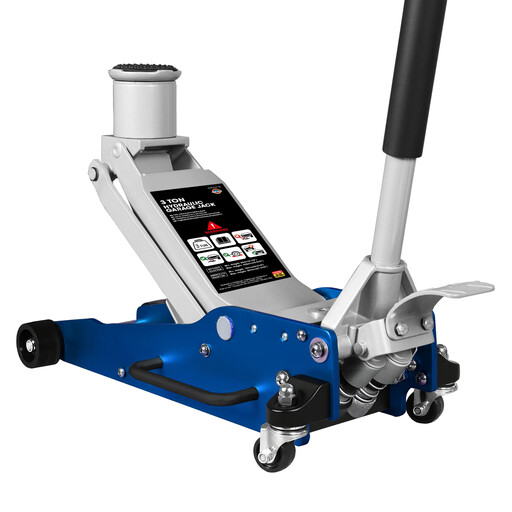
Why it suits this type of user : Its aluminium and steel construction, dual-pump system and height adaptor make it a comfortable, versatile option for garage users.
Its stated minimum height of 85 mm suits low vehicles, while the extension allows it to reach 541 mm, depending on the set-up.
Stated 3-tonne capacity, dual-mode lifting, dual pump and EN 1494 and CE certifications stated by the manufacturer.
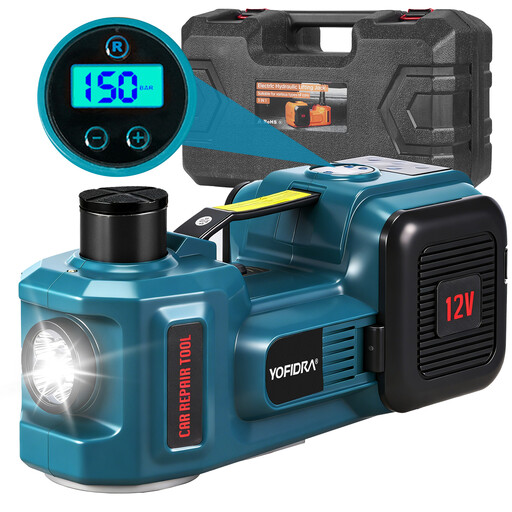
Why it suits this type of user : This 5T electric jack is designed for car and SUV drivers who want a versatile piece of equipment for roadside emergencies.
The product details specify a 12 V power supply, a lifting range of 150 to 450 mm and a self-locking mechanism. However, check the battery condition before use.
Stated 5-tonne capacity, digital display, power cable, carry case and built-in inflation pump, depending on the version.
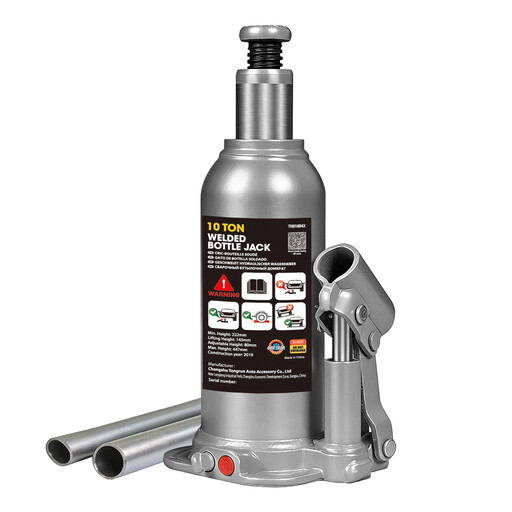
Why it suits this type of user : This bottle jack is designed for workshops, heavy vehicles and jobs requiring a stated capacity of 10 tonnes.
Compare its 222 to 448 mm lifting range and forged base with the lifting points on the lorry, bus or equipment you’re working on.
Chrome-plated piston, safety valve for overload protection, non-slip saddle and fine adjustment screw.
We’ve put together a comprehensive list, updated in real time, of products that meet these demanding selection criteria and comply with European safety regulations.
A 2-tonne jack may suit many cars, but the right choice depends on the vehicle’s weight, ground clearance and the manufacturer’s guidance. A 3-tonne model may be more suitable for an SUV or van, but you’ll still need to check the technical specifications.
A hydraulic jack can be used at the roadside as long as it’s compact and stable enough. An electric model is more convenient, but relies on a 12 V power supply. For occasional use, a scissor jack or small hydraulic jack is often easier to carry.
How long you can use a jack depends on how often it’s used, how it’s stored and how well it’s maintained. Keep it in a dry place, regularly inspect the welds, castors, saddle and hydraulic components, and follow the instructions in the manual. Any jack showing signs of a leak, deformation or irregular operation should be taken out of service.