
Livraison le jour même ou le lendemain

Qualité garantie

Débloquez vos offres de bienvenue: Livraison GRATUITE | Jusqu'à -80 % | 30 jours d'essai gratuits à JoyPlus
Téléchargez l'application
Lifting a vehicle, whether for a simple oil change, a wheel swap, or a major repair, is an operation that leaves no room for error. For professional mechanics and discerning enthusiasts alike, the safety and reliability of automotive lifting equipment are absolute priorities. But faced with an overwhelming number of options, how can you navigate the market and distinguish robust, reliable equipment from a potentially dangerous gadget??
This guide is designed to arm you with clear, objective selection criteria. The goal?: to help you choose the hydraulic jack and jack stands perfectly suited to your needs, based on concrete technical data, not marketing hype.
Before you even start comparing models, it's crucial to master the three fundamental criteria that will ensure your safety and the effectiveness of your work.
The rated capacity, expressed in tons, indicates the maximum weight the equipment can lift or support. Golden rule?: never choose a jack with a capacity that is just equal to your vehicle's weight.
The jack's design directly determines its use and practicality.
The lifting range (minimum and maximum height) is an equally critical criterion. Verify that the jack's minimum height allows it to fit under your vehicle and that its maximum height is sufficient to lift the wheel well off the ground and allow for the placement of a jack stand.
A jack is for lifting; a jack stand is for securing. This is a mantra you must never forget?: never work under a vehicle supported only by a jack. The equipment's stability, meanwhile, depends directly on its design and the materials used.
To illustrate these principles, our editorial team has analysed the market to identify equipment that meets strict standards of robustness and safety. Here is a selection of products from BIG RED TORIN, a brand renowned for its equipment designed for heavy-duty use.
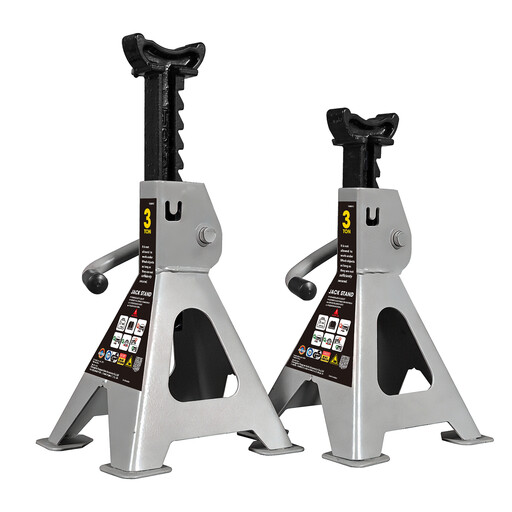
Why this model stands out?: These 3-ton jack stands are for those who make no compromises on safety. Their 3-ton capacity per pair offers a considerable safety margin for the majority of passenger vehicles, including SUVs. Compliance with the EN?1494 standard and independent GS certification are solid guarantees of reliability. Finally, the thick steel structure and fully welded base ensure rock-solid stability.
Advantages?:
Who is it for?? Safety-conscious mechanics and enthusiasts, as well as garages performing work on light vehicles and SUVs.
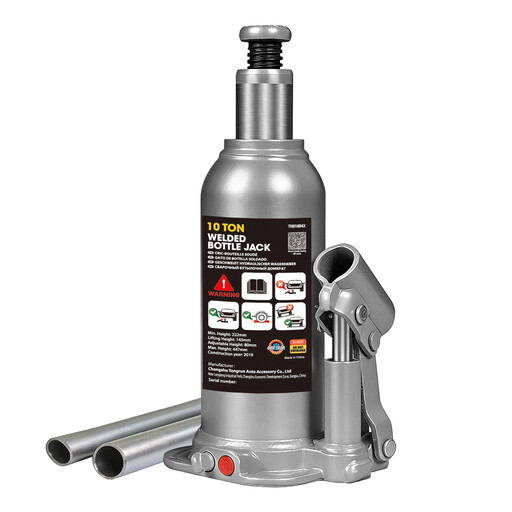
Why this model stands out?: This 10-ton jack is an industrial-grade tool, designed for lifting heavy loads. Its forged steel base and fully automated welding technology give it the robustness needed for the most demanding conditions. The chrome-plated piston resists rust, while the adjustable safety valve prevents any risk of overload. It is the go-to choice for lifting trucks, buses, or construction equipment.
Advantages?:
Who is it for?? Heavy-duty vehicle mechanics, truck and bus fleet managers, and maintenance services for industrial or construction equipment.
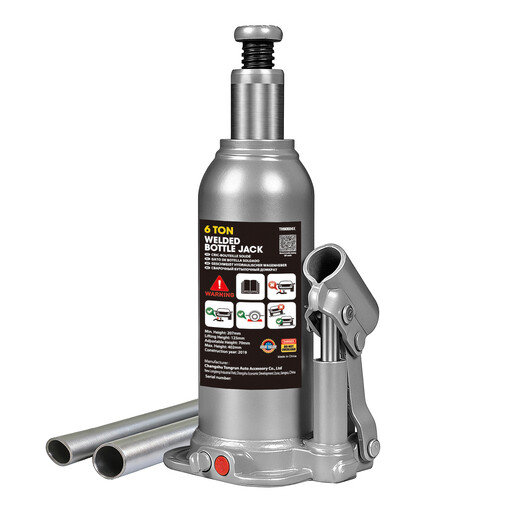
Why this model stands out?: The 6-ton jack is the perfect balance for heavy vehicles that don't fall into the heavy-duty truck category. It shares the same robust construction as its 10-ton sibling, with a forged steel base and a safety valve. Its 6,000?kg capacity is perfectly sized for large SUVs, pickup trucks, and light commercial vehicles, offering reliable and secure lifting power.
Advantages?:
Who is it for?? Owners of large SUVs, 4x4s, and pickups, as well as workshops specialising in LCVs (light commercial vehicles).
Our selection focuses on robust equipment for demanding applications. If your needs are different or if you're looking to explore other types of equipment, many other options exist.
If the stability of a steel-based design is your number one criterion, discover a full range of equipment that meets this requirement.
This is a fundamental question for your safety. A hydraulic jack is a lifting tool, designed to raise a vehicle temporarily. Its hydraulic system is not fail-safe. A jack stand, in contrast, is a fixed mechanical support, whose role is to hold a heavy load stably and safely over time. The golden rule is simple?: you lift with a jack, you secure with jack stands before getting under the vehicle.
For a jack, aim for a capacity of about 75% of your vehicle's total curb weight. For example, for a 1.8-ton car, a 1.5-ton jack is the bare minimum; a 2-ton model will offer a much more comfortable safety margin. For a pair of jack stands, their combined capacity must be greater than the vehicle's total weight. Therefore, for a 2-ton vehicle, a pair of 3-ton jack stands (rated at 1.5 tons each) is a wise choice.
Its maintenance is simple but essential to ensure its longevity and reliability. Remember to regularly check the hydraulic oil level and top it up with a specific jack oil. Keep the piston and moving parts clean and lightly lubricated to prevent corrosion. After use, if the lifting feels "spongy," purge the air from the system. Finally, always store the jack vertically to preserve the seals.