
Livraison le jour même ou le lendemain

Qualité garantie

Débloquez vos offres de bienvenue: Livraison GRATUITE | Jusqu'à -80 % | 30 jours d'essai gratuits à JoyPlus
Téléchargez l'application
Getting your hands dirty brings the satisfaction of DIY and significant savings. But diving into car repair without the right equipment can quickly turn into a nightmare. The market is flooded with tool cases and kits making tempting promises, but they are far from equal. Before you invest, it's crucial to know how to avoid the most common pitfalls that can jeopardise your safety and your wallet.
As expert editors, our mission is to help you see clearly. Let's cut through the marketing jargon and focus on what's essential. Here are the two classic mistakes to avoid when buying a car mechanic tool kit?:
ratchet wrench or common socket sizes are either flimsy or missing entirely.tyre change or working underneath the vehicle, jack stands are essential. Unfortunately, many budget models feature exaggerated load capacities and fail to meet any European safety standards, posing a deadly hazard to the user.To build a safe, long-lasting tool collection, it's better to prioritise the quality of core components over sheer quantity. Here are the points you must absolutely check.
When you lift a vehicle, the jack is only for lifting; it's the jack stands that ensure your safety. One of the leading causes of serious accidents in amateur mechanics is the use of non-compliant jack stands.
Before any purchase, demand clear certifications. The European standard EN 1494 is a mark of quality that governs mobile or movable lifting equipment. The independent GS (Geprüfte Sicherheit) mark, issued by German organisations, certifies that the product has undergone rigorous testing for strength and reliability. A wide, fully welded base also guarantees far greater stability than a bolt-together assembly.
A good complete socket set is the cornerstone of DIY car maintenance. Its quality rests on two pillars: the material and the mechanism.
ratchet wrench is measured by its mechanism. A 72-tooth model requires only a 5-degree swing arc to turn a bolt or nut, a major advantage when working in tight engine bays. Having multiple drive sizes (1/4", 3/8", 1/2") ensures maximum versatility to cover every need, from the smallest screws to wheel nuts.Rather than a random list, we've matched specific products to user profiles to help you find the equipment that truly fits your needs.
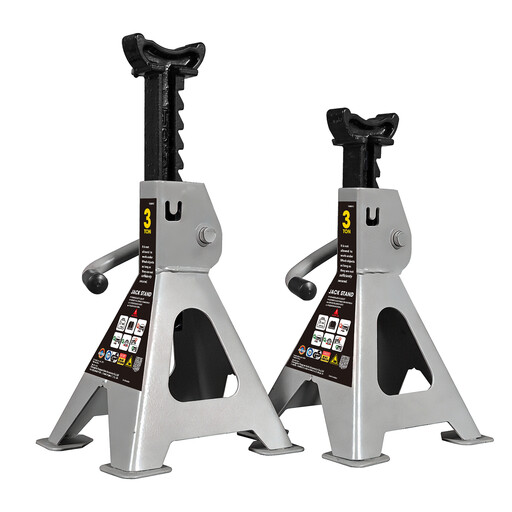
Why we chose it: For anyone working under an SUV, a sports car, or on the chassis, safety is non-negotiable. This user profile is looking for total peace of mind.
Unlike products with vague promises, this model clearly displays its compliance with the EN 1494 standard and its GS certification. Its 3-ton capacity is therefore real and tested, not just a marketing claim.
Thick steel construction with a fully welded base for maximum stability. An adjustment range of 276 to 420 mm makes it compatible with both low-profile chassis and SUVs.
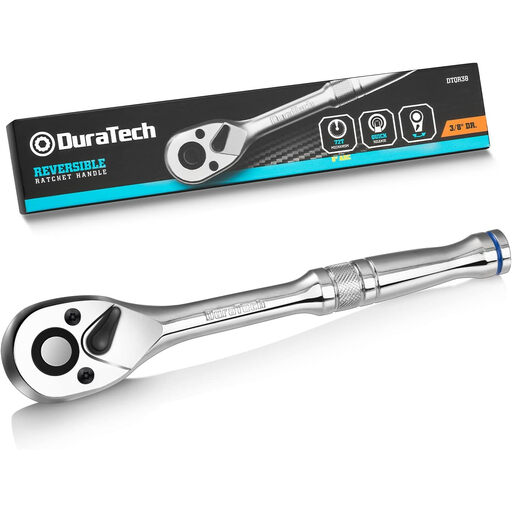
Why we chose it: The typical profile of someone who wants to optimise their time and garage space. They need a versatile, high-performance tool to stop juggling different wrenches.
Instead of a case filled with tools of inconsistent quality, this single handle combines the three most common drive sizes (1/4", 3/8", 1/2"). Its CR-MO head ensures durability that is leagues beyond entry-level ratchets.
72-tooth mechanism, perfect for tight spaces. Its 3-in-1 design replaces three separate wrenches and frees up space in the toolbox.

Why we chose it: Today's mechanic has their laptop or tablet at hand: to run an OBD2 diagnostic, follow a video tutorial, or order a part on the spot.
Rather than investing in yet another mechanical gadget, this accessory solves a very real problem: a lack of ports. It transforms a simple computer into a true garage workstation and ends the frustration of impossible connections.
Ultra-comprehensive connectivity: 4K HDMI output for a large-screen display, 100W PD fast charging so you never run out of battery, and 3 USB 3.0 ports to connect a scanner, mouse, and hard drive simultaneously.
We've curated a complete selection of products that meet our quality criteria and current safety standards.
Do I really need jack stands for a simple tyre change? Yes, absolutely. The jack included with your car is an emergency tool, not garage equipment. It offers no stability and should never be used to hold the vehicle up while you are working on it, even for a quick job. Using certified jack stands is a non-negotiable safety precaution.
What is the lifespan of a good mechanic's tool kit? It all depends on the quality of the steel. An entry-level kit will show its limits (wear, rust, breakage) after just a few uses. In contrast, tools made from Cr-V or Cr-Mo steel, when properly maintained (cleaned and stored in a dry place), are an investment that will last for many years of car repair.
How do I choose the right ratchet size (1/4", 3/8", 1/2")? Each size has its purpose: