
Livraison le jour même ou le lendemain

Qualité garantie

Débloquez vos offres de bienvenue: Livraison GRATUITE | Jusqu'à -80 % | 30 jours d'essai gratuits à JoyPlus
Téléchargez l'application
Knowing how to change a tyre yourself is an invaluable skill, whether for an emergency roadside repair or for swapping your summer/winter tyres at home. But to ensure the job doesn't turn into a nightmare, you need the right equipment. Faced with technical jargon and marketing hype, it's easy to make a mistake. This guide is here to help you choose the tools that are genuinely suited to your needs and to avoid the most common pitfalls.
Before you start, here are three classic mistakes that can turn your purchase into a fiasco, or even a safety hazard:
To assemble a tyre-changing kit that is both effective and durable, let's review the essential criteria. Far from being mere details, these technical specifications are your guarantee of compatibility, safety, and user comfort.
The jack is the centerpiece of your kit. There are two main types, each with its own strengths.
Regardless of the type, you must check these two points:
Once the vehicle is in the air, it's time for the nuts.
For two-wheelers (bicycles, scooters), specific tools like a set of composite tyre levers are necessary to avoid damaging the rims. Crucially: never work under a vehicle supported only by a jack. Always use safety jack stands and remember to chock the wheels that remain on the ground.
To guide you, we have selected three tool configurations designed for distinct profiles. Everything you need to change your own tyres with complete peace of mind.
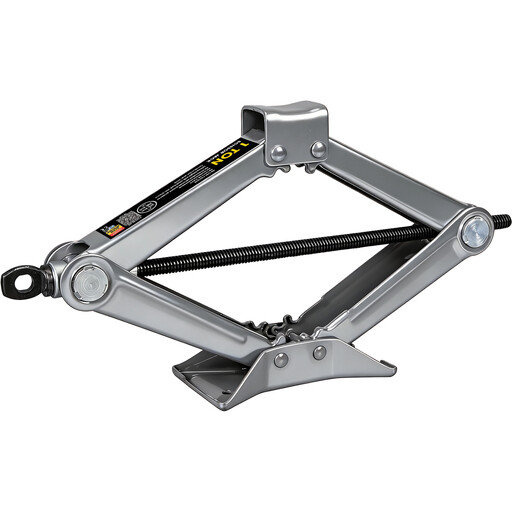
Why this choice: The ultimate compact and reliable emergency solution. It fits neatly in the spare wheel compartment, and its simplicity makes it ready to use in a pinch.
Its minimum height of 88 mm makes it compatible with most saloons, even those with low ground clearance. No more falling into the trap of a jack that won't fit under the chassis.
Foldable structure for minimal storage space. Wide base for superior stability compared to factory-supplied models.
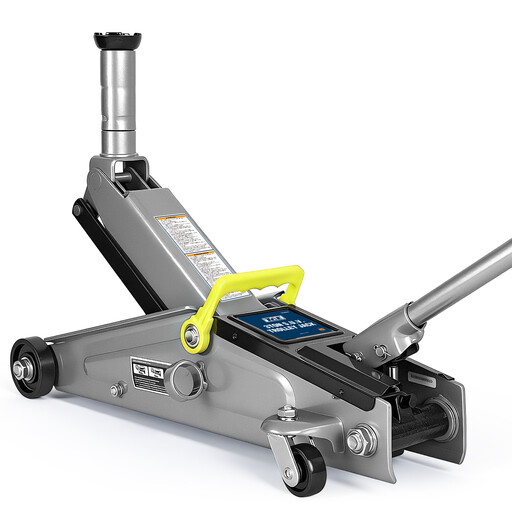
Why this choice: The perfect partner for regular garage maintenance. Its 3-tonne capacity and wide lifting range make it versatile enough for saloons, SUVs, and MPVs. The hydraulic system cuts the effort and time in half.
Its robust steel construction, CE certification, and integrated safety valve eliminate any risk associated with overloading or low-quality equipment.
3-tonne capacity for heavy vehicles. Fast and effortless lifting thanks to the hydraulic pump.
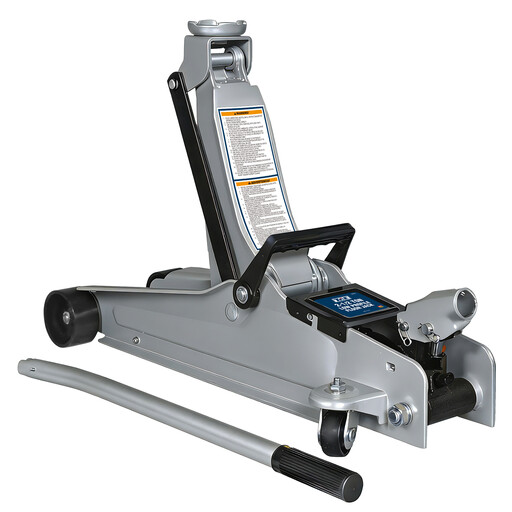
Why this choice: The essential tool for owners of sports cars, coupés, or any lowered vehicle. Its ultra-low entry height is its main selling point.
With its minimum height of 85 mm, it slides in where standard jacks fail, saving you from making a completely useless purchase.
Extra-low profile for easy access. 2.5-tonne capacity, ideal for the majority of cars, including sports saloons. Compliant with EN 1494 and CE safety standards.
Discover our complete selection of equipment that meets our selection criteria and European safety standards.
Refer to the Gross Vehicle Weight Rating (GVWR) indicated in your vehicle's manual. The rule of thumb: the jack's capacity should be more than half of this weight. For a 2-tonne SUV, a 1.5-tonne jack is the absolute minimum. Opting for a 2.5 or 3-tonne model will give you a much better safety margin and more stability.
No, maintenance is very simple. You just need to check the hydraulic oil level from time to time, inspect for leaks, and keep the moving parts (wheels, pump) clean and lubricated. Stored in a dry place, a quality hydraulic jack will last you for many years.
Yes, but with great caution. A cordless impact wrench is formidable for loosening. For tightening, however, the best practice is to use it to snug up the nuts without applying full force, and then perform the final tightening with a torque wrench. This is the only way to guarantee the application of the exact torque recommended by the manufacturer and to avoid damaging the threads or overtightening the wheels.