
Livraison le jour même ou le lendemain

Qualité garantie

Débloquez vos offres de bienvenue: Livraison GRATUITE | Jusqu'à -80 % | 30 jours d'essai gratuits à JoyPlus
Téléchargez l'application
A glass pendant light can transform a room, elevating it from a simple light source to a true centrepiece. The problem? The market is flooded with models that look stunning in photos but often disappoint in reality. As a product expert at Joybuy, my mission is to guide you beyond the lure of marketing to make a truly informed decision. Let's break down the common traps to avoid and the criteria that really matter for finding that perfect piece.
Before falling for a design, it's crucial to know the flaws that can turn a love-at-first-sight purchase into a daily regret.
To avoid these disappointments, here are the technical points that make all the difference, both aesthetically and practically.
The choice of glass is decisive: it sculpts the light and defines the room's atmosphere.
The size of the pendant should be proportional to the room and the furniture it hangs above. It's all about balance.
Glass rarely stands alone. The materials that accompany it set the tone. A brass and glass pendant evokes Art Deco elegance or a boudoir vibe, while pairing it with black metal or raw wood creates an industrial or Scandinavian style.
Here are a few models that check all the boxes, meeting specific needs while sidestepping the common pitfalls.
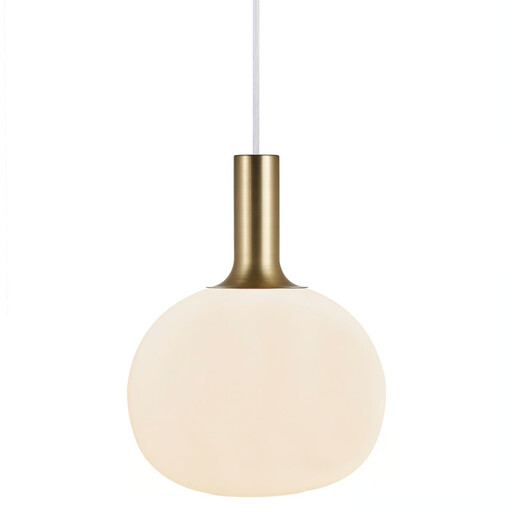
Why we chose it: With its round, clean shapes, this model is the quintessence of Nordic design: simple and functional. It's perfect for creating a soft, warm atmosphere in a living room or over a table.
Its white opal glass ensures perfectly even light diffusion, eliminating any risk of glare. The glass is mouth-blown, a mark of character and a quality far superior to standard industrial glass.
It diffuses a soft, enveloping light, ideal for a room's general lighting. Its timeless design integrates effortlessly into many interiors.
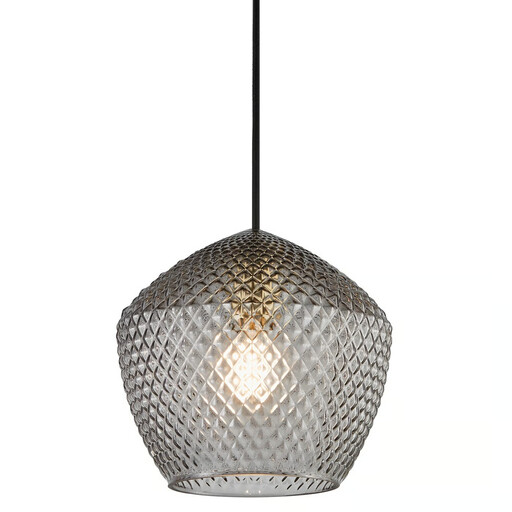
Why we chose it: This designer glass chandelier is a true statement piece. The combination of brushed brass and diamond-patterned smoked glass recalls the glamour of the Art Deco era. It's a focal point that's sure to turn heads.
The smoked glass and its patterns don't just dim the light; they sculpt it. The result is a unique play of reflections that prevents harsh light while creating a visual spectacle.
It generates a highly decorative lighting effect and a sophisticated ambiance. The brass and glass combination remains a timeless choice for elevating an interior.
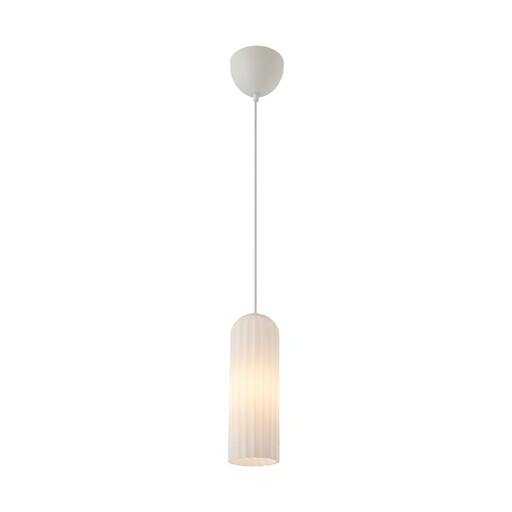
Why we chose it: Its understated design and ribbed glass make it a solution that is both modern and elegant. Its elongated shape is perfect for functional lighting over a countertop or island, especially when several are hung in a row.
The ribbed glass subtly breaks up direct light, which softens the illumination without sacrificing brightness. Bonus: its compatibility with a simple ceiling hook makes installation much easier.
Ideal for creating a custom row of lights over a kitchen island or bar. Its modern design blends seamlessly into the decor with great ease.
1. How high should I hang a pendant light over a dining table? As a general rule, leave a space of 75 to 90 cm (30 to 36 inches) between the lowest point of the fixture and the tabletop. This ensures the surface is well-lit without obstructing the line of sight of your guests.
2. How do I clean a glass pendant without leaving streaks? First rule: always turn off the power supply before any work. For dust, a simple dry microfibre cloth is sufficient. For more stubborn stains, use another cloth lightly dampened with a mixture of water and white vinegar. Clean gently, then immediately wipe with a clean, dry cloth for a streak-free finish.
3. Are glass pendants compatible with LED bulbs? Yes, absolutely. Almost all modern pendants are designed for LED bulbs. You just need to check the socket type (usually E27 or E14) and the maximum wattage supported by the fixture. The LED bulb is, in fact, the best choice for its low energy consumption and exceptional lifespan. For transparent glass models, an LED filament bulb will add a very nice decorative touch.