
当日/次日达

品质保障

开启新人专享福利: 全场免邮 | 低至 2 折 | 免费试用 30 天 JoyPlus 会员
下载 Joybuy
Far more than a simple light fixture, a designer pendant light is often the centrepiece that shapes the atmosphere of a living room, dining room, or kitchen. The catch? The market is flooded with models that look great but often lack in quality. To help you see things more clearly and navigate past deceptive marketing, here are the common pitfalls to avoid and the essential criteria to check before making a purchase.
It's easy to fall in love with a design and overlook practical details that can become major sources of frustration day-to-day. Here are the most common mistakes.
With these pitfalls in mind, let's get down to the specifics. To make a truly informed choice, there are three technical aspects to scrutinise.
The longevity and final appearance of your pendant light depend directly on its components.
In any room, proportion is key. Visual harmony is no exception.
A great designer light fixture isn't just beautiful; it's also flexible and adapts to your needs.
To illustrate these criteria in practice, here are a few models that tick all the boxes for different user profiles.
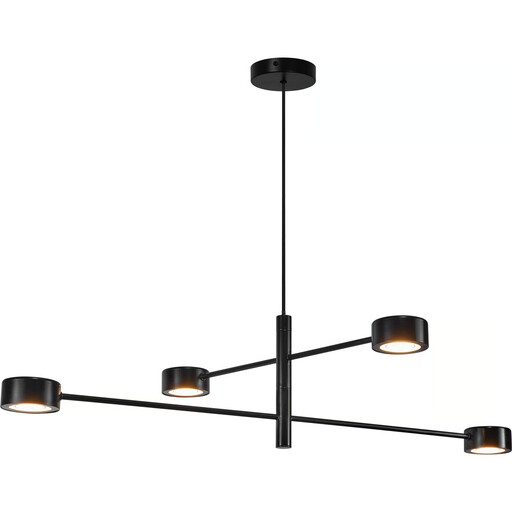
Why it's a great choice: Ideal above a kitchen island or a large table, its minimalist design and airy structure keep the line of sight open. It's the epitome of Scandinavian style, blending clean aesthetics with maximum functionality.
It avoids the glare pitfall thanks to its adjustable heads and integrated Moodmaker function, which allows you to cycle through 3 brightness levels with a standard wall switch.
Its integrated LED with a memory function and dimming. Its rotating arms let you sculpt the light to your liking.
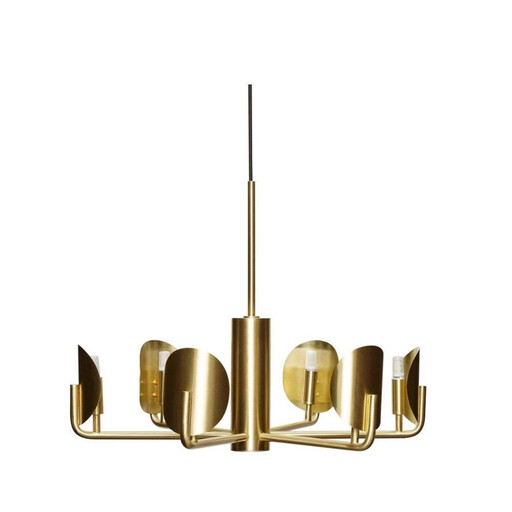
Why it's a great choice: Perfect for those who want a sculptural chandelier that makes a statement in a living room or grand entryway. Its six-arm structure delivers strong visual impact and an assertive presence, typical of character pieces.
It avoids the low-quality material pitfall with its robust metal construction, enhanced by a durable vintage brass finish. The perfect blend of aesthetics and longevity.
Its sculptural six-arm design, which makes an immediate style statement. The lighting remains soft and uniform, with no glare.
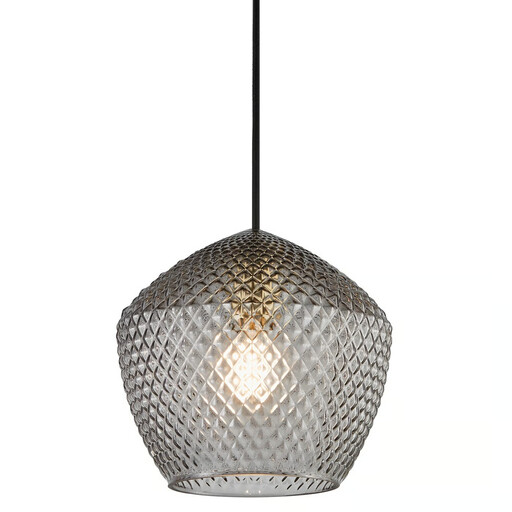
Why it's a great choice: Ideal for those seeking a touch of exclusive elegance. The combination of brushed brass and diamond-patterned smoked glass evokes Art Deco interiors and creates fascinating plays of light.
Its mouth-blown glass, while transparent, is textured and smoked. This softens the light and avoids the unflattering "bare bulb" effect. The diamond pattern diffuses light subtly and elegantly, never harshly.
Its mouth-blown, diamond-patterned glass for a unique lighting effect. The on-trend combination of brushed brass and smoked glass.
If you're designing a bar or kitchen island, explore our full selection of light fixtures that meet our quality criteria and safety standards.
As a general rule, leave 75 to 90 cm of space between the lowest point of the fixture and the tabletop. This is ideal for providing good illumination without blocking guests' views. This height can, of course, be adjusted based on the light's brightness and the size of the pendant.
For general ambient lighting in a living room, we recommend between 100 and 200 lumens per square metre. For a 20 m? room, that means a total of 2000 to 4000 lumens, which should ideally be distributed among several light sources. If the pendant is your main light source, a 1500-2500 lumen model with dimmer compatibility will be a very versatile option.
Solid brass naturally develops a patina over time, an effect often desired for a vintage look. If you prefer to maintain its original shine, an occasional cleaning with a suitable product is all that's needed. For "brass" finishes (plating or paint), a simple soft, dry cloth is recommended to avoid scratching the surface.