
Livraison le jour même ou le lendemain

Qualité garantie

Débloquez vos offres de bienvenue: Livraison GRATUITE | Jusqu'à -80 % | 30 jours d'essai gratuits à JoyPlus
Téléchargez l'application
Choosing a pendant light? It seems simple enough at first glance. You fall for a design, picture it reigning over your living room or dining table, and just like that, the deal is done. Except, once the light is installed, the reality can be a rude awakening: ghastly lighting, ridiculous proportions, a maintenance nightmare… To help you avoid this disappointment, here are the mistakes to steer clear of and the key points to check before you buy.
The market is overflowing with models, each more attractive than the last, but a sleek design isn't everything. Far from it. Here are the three most common pitfalls.
To make a truly enlightened choice (no pun intended), a few technical details make all the difference. They determine both the user comfort and the visual harmony of your installation.
The golden rule: balance. For a dining room pendant light above a table, the fixture's diameter should ideally not exceed three-quarters of the table's width. The goal is to not get in the way of your guests.
In a living area like a living room, clearance height is crucial. Make sure to maintain a minimum of 2.15 m between the floor and the lowest point of the fixture to avoid bumping your head.
The atmosphere of a room largely depends on the nature of its light.
The material doesn't just influence the aesthetic; it also plays a crucial role in light diffusion and ease of maintenance.
Rather than an impersonal list, we've matched some of our favourite models with typical user profiles. The idea is to help you better envision them in your space.
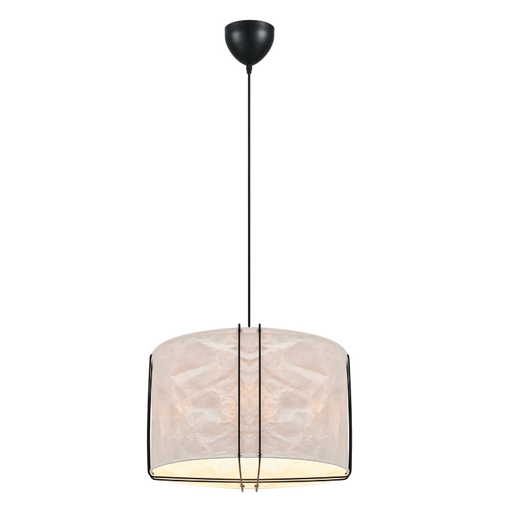
The Profile: You seek the serenity and harmony of Scandinavian and Japandi styles. The Cardine pendant, with its delicately crinkled Tyvek paper shade and clean wireframe structure, perfectly embodies this fusion of Nordic minimalism and Japanese philosophy.
It sidesteps the trap of unsuitable lighting by diffusing a soft, enveloping light, perfect for a soothing atmosphere in a living room or bedroom, without any glare.
Its light and airy design adds a touch of poetry without cluttering the space, while establishing itself as a centrepiece of the decor.
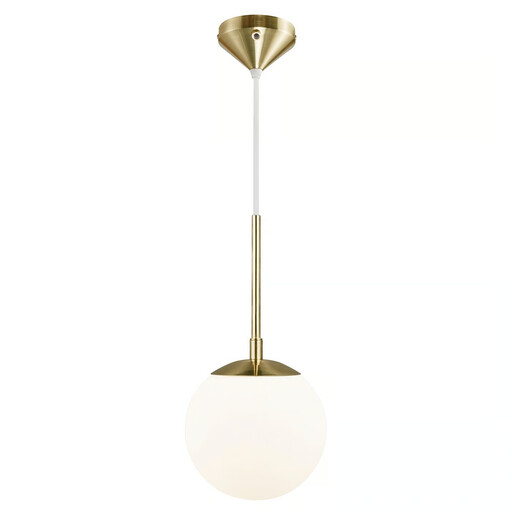
The Profile: You love interiors with an Art Deco or "modern glam" feel. The Grant pendant, with its mouth-blown opal glass dome and brushed brass structure, is the perfect balance between purity of form and nobility of materials.
It avoids the pitfall of disappointing materials. The combination of opal glass and brass creates a strong, durable piece that transcends trends without ever sacrificing quality.
The mouth-blown glass makes each piece unique, with subtle variations that give it its character. The diffused light is particularly soft and warm.
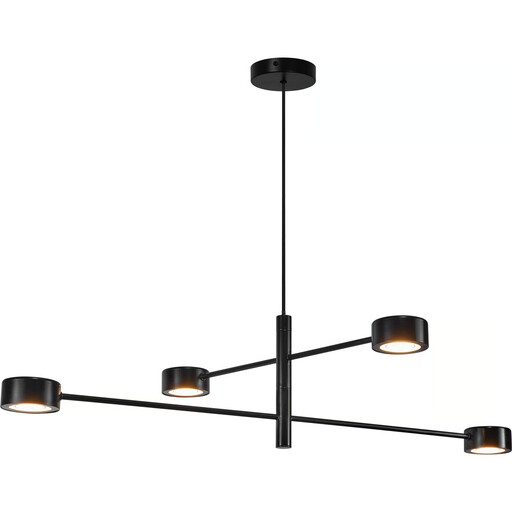
The Profile: You need lighting that is both efficient and flexible for a long table or a kitchen island. The Clyde pendant combines minimalist design with smart technology for maximum functionality.
It solves the dual problem of proportions and insufficient lighting. Its elongated shape and four adjustable spotlights ensure wide, even light coverage without ever visually cluttering the space.
The integrated Moodmaker function, which allows you to adjust the intensity to three levels from a standard wall switch, offers impressive versatility.
For more specific needs, such as a weather-resistant outdoor pendant or a fixture for a bathroom, stricter waterproofing standards (IP rating) apply and must be checked.
We have curated a complete selection of light fixtures that meet our demanding selection criteria and European safety standards, including for bathrooms and wet rooms.
The ideal distance between the lowest point of the pendant and the tabletop is between 75 and 90 cm. This is the perfect height to illuminate the surface without glaring at guests or blocking their line of sight.
These delicate materials require gentle care. A simple feather duster or a soft-bristled brush is sufficient for regular dusting. If there's a stain, do not use water. A low-power handheld vacuum with a brush attachment can also work, provided you use it with great care.