
Livraison le jour même ou le lendemain

Qualité garantie

Débloquez vos offres de bienvenue: Livraison GRATUITE | Jusqu'à -80 % | 30 jours d'essai gratuits à JoyPlus
Téléchargez l'application
A designer pendant light can define a room, draw attention to a table and complete a Scandinavian, contemporary or Japandi décor scheme. But attractive design alone does not guarantee a successful purchase. A light that is the wrong size may cause glare, obstruct movement or produce insufficient light.
Before choosing your ceiling pendant, take the time to check three points that are often overlooked in product descriptions.
A modern pendant light may look compact on screen, then seem particularly imposing once installed. Always compare the diameter, lampshade height and cable length with the space available.
Above a dining table, a light that hangs too low can make conversation difficult. Above a kitchen island, several pendants placed too close together can also create areas of shadow if the light is poorly distributed.
Many lights are sold without a bulb. So check the cap type, the maximum permitted wattage and whether the light is compatible with a dimmable bulb. A pendant fitted with an E27 cap cannot take an E14 bulb or a G9 model.
Suspended LED lighting can help reduce electricity consumption, but wattage alone is not enough to assess visual comfort. Also check the colour temperature, the luminous flux stated by the manufacturer and whether a dimmer is included or supported.
An IP20 light is generally suitable for dry rooms such as the living room, bedroom, hallway or dining room. It is not designed to withstand water splashes or heavy condensation. In a bathroom, on a terrace or outdoors, choose the IP rating according to the exact location and the applicable electrical regulations.
For a pendant light above a dining table, measure the table’s width and leave enough space around the light. A larger model will suit a large table, while a slimmer pendant will be better suited to a smaller room.
The cable length also deserves your attention. An adjustable pendant light makes it easier to adapt the fitting to your ceiling height, but not all cables can be replaced. Some models come with a 130 to 200 cm cable, a length that is generally suitable for a standard home, depending on the installation setup.
Always observe the maximum wattage specified by the manufacturer. Depending on their design, some of the models featured here accept 15 W, 25 W, 40 W or 60 W. This limit must never be exceeded, including when using an LED bulb.
A glass pendant light generally diffuses a soft light, particularly when it uses opal or frosted glass. Ribbed glass adds an extra decorative touch, but requires careful cleaning.
Metal, particularly brass, makes a stronger statement. A brass pendant light can easily complement an Art Deco, vintage or contemporary décor scheme. Textile and paper filter the light to create a warmer atmosphere. With a paper lampshade, choose an LED bulb that produces little heat and follow the safety instructions carefully.
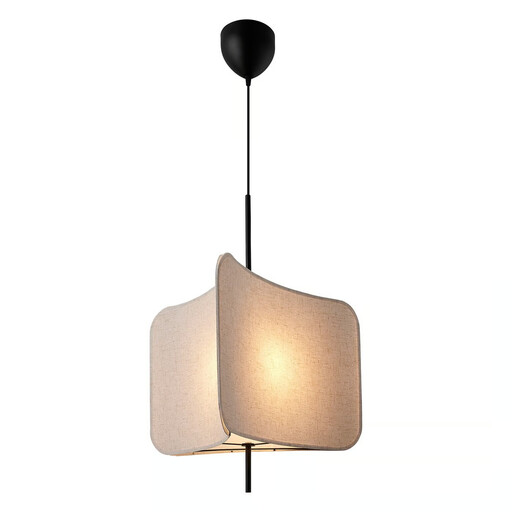
Why this choice suits this profile : With its 50 cm black textile lampshade and E27 cap, it fits easily into a living room or above a small table.
The size and cap type are clearly stated. However, you will need to provide an E27 bulb, which is not included, and observe the maximum wattage of 15 W.
Textile lampshade, diffuse light, 200 cm black cable and compatibility with a ceiling hook.
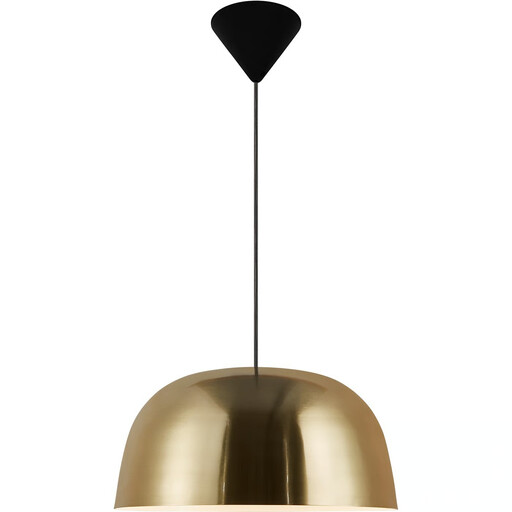
Why this choice suits this profile : Its brass-coloured finish and rounded shape make it a natural choice for a dining room, above a kitchen island or as part of a decorative arrangement.
The product description specifies the metal construction, E27 cap and maximum wattage of 60 W. However, the bulb must be purchased separately.
36 cm diameter, 200 cm black textile cable and downward-directed light.
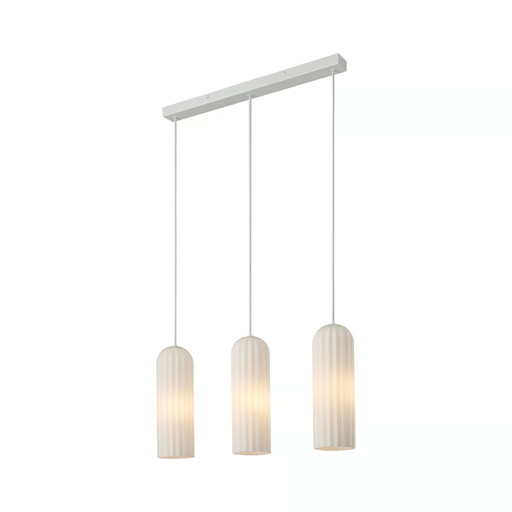
Why this choice suits this profile : Its three light sources and 52 cm width make it suitable for a dining table or kitchen island that requires well-distributed lighting.
The number of lampholders, maximum wattage of 25 W per source and 130 cm cable are all clearly stated, making installation easier to plan.
White ribbed glass, three E27 caps and compatibility with a dimmable bulb.
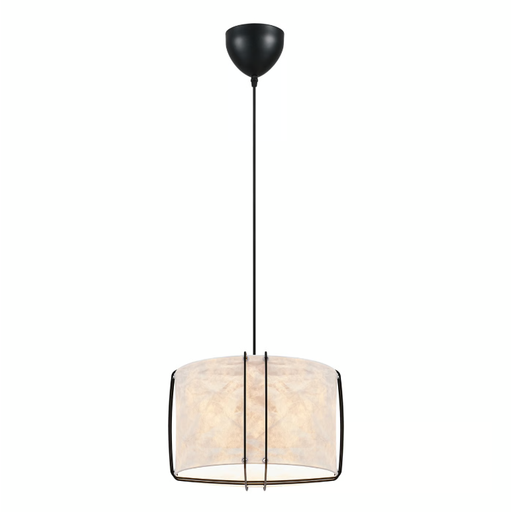
Why this choice suits this profile : Its gently crinkled texture and soft light are a perfect match for a bedroom, reading nook or living room decorated in natural tones.
The paper should be dusted with a dry cloth and kept away from flames and heat sources. An LED bulb that produces little heat is strongly recommended.
Japandi style, soft light and a combination of paper and metal.
We have brought together a complete, real-time updated selection of products that meet these demanding criteria while complying with European safety regulations.
A pendant light connects to the domestic electricity supply at 220–240 V. Switch off the power at the circuit breaker before carrying out any work and make sure the ceiling support can bear the weight of the light fitting. Depending on the model, a hook may or may not be compatible with the fixing system. If you are not familiar with the electrical regulations in force, have the connection carried out by a qualified electrician.
For care, use a soft, dry cloth. Handle glass with care and do not dampen textile or paper. Check the fixing, cable and lampholder regularly.
The ideal height depends on the ceiling height, the dimensions of the light fitting and how the table is used. The aim is to light the surface properly without blocking your line of sight. Before securing the pendant permanently, test it by adjusting the cable length.
Yes, provided it is installed in a dry indoor area, such as above a table or island away from water splashes. However, it must not be placed in an area directly exposed to moisture without checking the applicable electrical requirements.
Choose an LED bulb that is compatible with the cap and, where applicable, with the dimmer. To estimate consumption, multiply the power in kilowatts by the usage time, then by your electricity tariff. A pendant with several light sources may use more energy if all the bulbs are switched on at the same time.