
Livraison le jour même ou le lendemain

Qualité garantie

Débloquez vos offres de bienvenue: Livraison GRATUITE | Jusqu'à -80 % | 30 jours d'essai gratuits à JoyPlus
Téléchargez l'application
A glass pendant light can define a room, soften the light and add character to your décor. But a pretty picture alone isn’t enough to make the right choice. In a kitchen, dining room or living room, the dimensions, light diffusion and fixing system all have a direct impact on everyday comfort.
Before buying a glass pendant light, here are the main pitfalls to avoid and the criteria to check.
A designer pendant light might look perfect in a photo, then appear far too large above a small table. Conversely, a model that’s too discreet risks being overlooked in a large room.
Always check the total width, the diameter of the shades and the cable length. For a pendant light installed above a kitchen island, the length of the fitting must be consistent with the length of the worktop.
Tinted or clear glass can create a pleasant atmosphere, without necessarily providing enough light for cooking, reading or working. The number of bulb holders, the maximum bulb wattage and the colour temperature should all be assessed separately.
Opal glass generally diffuses light more evenly than completely clear glass. It works well for a soft ambience, whereas a clear glass pendant light puts more emphasis on the bulb and its lighting effects.
Some models don’t just hang from a simple ceiling hook and require a suitable fixing system. A heavy pendant light or one with several globes also needs to be installed with care.
Handle the glass carefully during assembly. For electrical connections, turn off the power at the circuit breaker and call a qualified electrician if necessary. Also check the stated voltage, the electrical class and the IP rating.
For an indoor pendant light, measure the ceiling height, the room size and the area to be lit. Above a table, the pendant light should be low enough to light it properly, without getting in the way of people sitting down.
An adjustable cable allows you to adapt to different ceiling heights. The seven-light linear model shown below, for example, has an adjustable cable of 1,500 mm. This feature is particularly useful in an open-plan kitchen or dining room.
The bulb holder determines the type of compatible bulb. E27 and E14 fittings are common, but they don’t accept the same bulbs. A pendant light with several light sources offers more even distribution, but its total energy consumption depends on the wattage of each bulb.
In particular, check:
Warm white light creates a welcoming atmosphere in a living room or dining room. Above a kitchen island, pay more attention to the lighting level and the even distribution of the light sources.
Opal glass gives a soft finish and generally limits direct visibility of the light source. Clear glass, on the other hand, accentuates the decorative effect of the bulb. The combination of glass and brass adds a classic or art deco touch, while wood and gold-coloured metal fit well into a contemporary and warm décor.
When glass is mouth-blown, slight variations in texture are normal. Small air bubbles or differences in thickness are not necessarily an aesthetic defect. However, they should be distinguished from a crack or damage that occurred during transport.
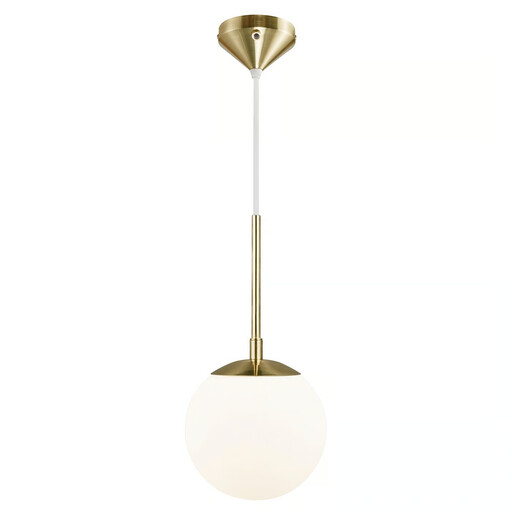
Why this choice suits this profile: With its 15 cm diameter and E14 bulb holder, it’s ideal for anyone looking for an easy-to-integrate pendant light for a hallway, bedroom or small dining nook.
Its clearly stated dimensions reduce the risk of choosing a disproportionately sized light fitting. However, the maximum wattage of 10 W per bulb must be respected.
Mouth-blown opal glass, brass-coloured structure, 200 cm cable and IP20 rating for indoor use.
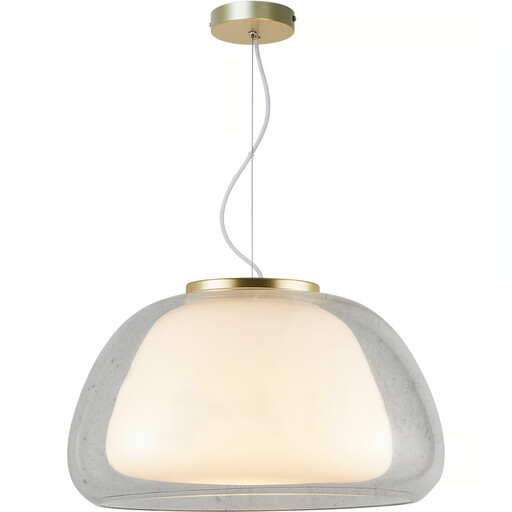
Why this choice suits this profile: Its double glass layer and brass finish will appeal to lovers of carefully crafted decorative details, whether in a dining room or living room.
The inner opal diffuser softens overly direct light. With its 39 cm diameter, this model does require enough space so it doesn’t look too large.
Two layers of glass, E27 bulb holder up to 40 W, white textile cable of 200 cm and bulb not included.
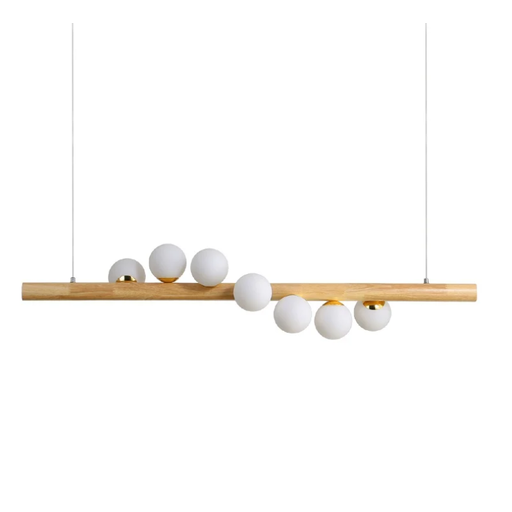
Why this choice suits this profile: With its 1,200 mm width and seven white glass globes, it’s designed for a large table, kitchen island or open-plan room.
Its seven light sources distribute the light across the entire length of the fitting, rather than concentrating it in one spot. The model is not dimmable: check this before buying.
Seven 5 W G9 LED bulbs included, voltage of 220–240 V and adjustable height. The set combines natural wood, white glass and gold-coloured metal.
We’ve put together a comprehensive, real-time updated selection of products that meet these exacting criteria and European safety standards.
Before fitting, check compatibility with your electrical installation in the UK, particularly the 220–240 V voltage when stated. Follow the manufacturer’s instructions and current electrical regulations. For a multi-light model, take into account the total weight and the strength of the ceiling fixing.
Clean the glass with a soft, dry cloth, following the manufacturer’s recommendations. Avoid abrasive products on brass finishes. Turn off the power before replacing a bulb or handling a shade.
The ideal height depends on the room, the height of the users and the shape of the light fitting. In practice, allow enough space between the surface and the shades to maintain good visibility. An adjustable cable lets you fine-tune the position after installation.
It diffuses light more softly and evenly, but the result depends on the wattage, the number of bulbs and the size of the room. In a large space, a multi-light pendant light or additional lighting may be necessary.
The energy consumption depends on the total installed wattage and the number of hours of use. Add up the wattage of each bulb, then compare the result with your lighting habits. LED bulbs are generally preferred for their low wattage, but this doesn’t mean you can skip checking their compatibility with the bulb holder.