
Livraison le jour même ou le lendemain

Qualité garantie

Débloquez vos offres de bienvenue: Livraison GRATUITE | Jusqu'à -80 % | 30 jours d'essai gratuits à JoyPlus
Téléchargez l'application
The promise of a flawless lawn with zero effort is certainly appealing. The wireless robotic lawn mower marks a true revolution, freeing you from the tedious installation of a boundary wire. However, the market is a jungle of technical terms and marketing promises that can be confusing. Our mission is to help you decipher this jargon to make an informed decision that's perfectly suited to your garden and your expectations.
Before you take the plunge, let's review the three most common pitfalls that could turn your investment into a disappointment.
To avoid these pitfalls, focus on the few technical parameters that truly make a difference.
The effectiveness of your wireless automatic mower depends entirely on its ability to navigate its environment. Wire-free technologies fall into three main categories:
The recommended mowing area is just an indicator. Real performance depends above all on the layout of your garden.
Instead of an overwhelming list, here are a few typical use cases and the models we find most relevant.
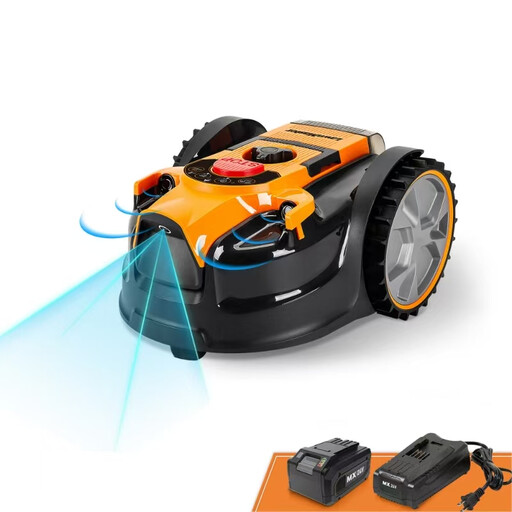
Why it's a match: Ideal for owners of small gardens (up to 150 m?) who want to get started with automatic mowing on a budget. Its simplicity is its greatest strength for a hassle-free first experience.
This model has the merit of being straightforward. It clearly states its target (small areas) and its obstacle-detection navigation, thus avoiding the trap of overhyped 'smart navigation' promises.
Virtually no installation (no wire, no antenna) and a very accessible price point to take your first steps into the world of robotic mowing.
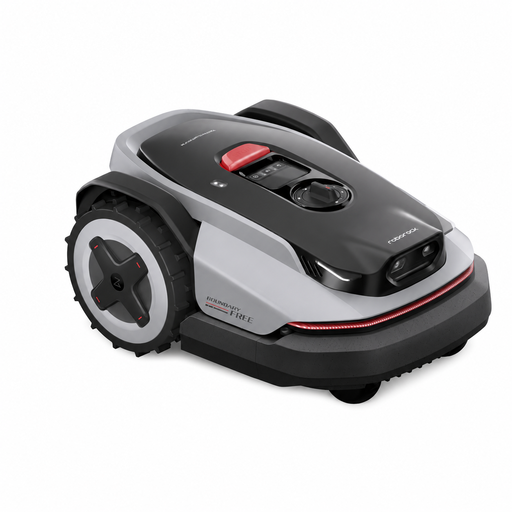
Why it's a match: Designed for gardens up to 1000 m?, it's aimed at demanding users looking for a reliable and precise technological solution. It's perfect for those who love to control everything from an app and benefit from intelligent mapping of their lawn.
It sidesteps the 'vague navigation' trap by combining two technologies: NetRTK + VSLAM. This duo ensures precise localisation and visual mapping for methodical mowing and effective obstacle avoidance.
Its dual navigation technology and ability to handle slopes up to 45% make it a champion of versatility for most medium-sized gardens.
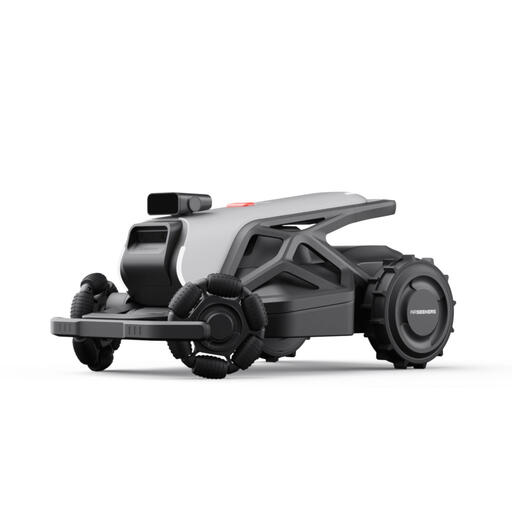
Why it's a match: For owners of large areas (up to 1800 m?) with significant inclines. If your garden is vast and sloped, raw performance is your priority, and this model is built for the challenge.
It tackles the pitfall of underestimating the terrain head-on. Its specifications speak for themselves: an ability to climb slopes up to 65% (33°) and coverage of 1800 m?—figures that position it for the most demanding gardens.
Exceptional slope-climbing ability and a very large mowing area, combined with RTK and Vision navigation for complete and reliable coverage.
Discover our complete selection of models, hand-picked for their reliability, performance, and compliance with European safety standards.
Edge finishing has improved considerably on recent models. Many now feature dedicated modes or offset cutting decks. Robots equipped with high-precision navigation systems (RTK, LiDAR) can follow edges to within a few centimetres, which greatly reduces the need for manual trimming. While an occasional pass with a string trimmer is still useful for a perfect finish, the robot handles the vast majority of the work.
Most models are equipped with Lithium-Ion batteries that typically have a lifespan of 3 to 6 years. This depends on the number of charge cycles, the size of your garden, and operating conditions. Manufacturers often quantify it in cycles (e.g., 800 cycles with 70% remaining capacity). Our advice for preserving it: store the robot and its battery indoors in a dry, frost-free location during the winter.
No, the installation is well-guided by the manufacturer's app and is straightforward for anyone. The RTK antenna simply needs to be placed in an area on your property with a clear view of the sky, away from large trees or buildings, to ensure optimal satellite reception. It can be mounted on a post, a wall, or the roof of a garden shed. It's certainly an extra step compared to a vision-only model, but it's the price you pay for surgical precision in navigation.