
Livraison le jour même ou le lendemain

Qualité garantie

Débloquez vos offres de bienvenue: Livraison GRATUITE | Jusqu'à -80 % | 30 jours d'essai gratuits à JoyPlus
Téléchargez l'application
A boundary-wire-free robot lawn mower can make lawn maintenance much easier. But choosing the right one involves more than checking the maximum area stated in the technical specifications. Navigation, slopes, narrow passages, obstacles and routine maintenance will all have a direct impact on your experience after installation.
Before buying an autonomous robot lawn mower, make sure you check these three often-overlooked points:
A wire-free robot lawn mower generally uses an app to create a map of the garden and define the areas to be mowed. Depending on the model, this mapping may rely on vision, GPS, RTK, LiDAR or several combined technologies.
A robot lawn mower with smart mapping should allow you to edit boundaries, manage multiple zones and schedule mowing times. If your garden consists of several areas, also check the minimum passage width. The RoboUP Raccoon 2 SE, for example, is stated to work with passages from 80 cm wide and can manage three zones.
Models equipped with an RTK antenna can provide highly precise positioning. However, their installation depends on a clear view of the sky and the location of the station. A vision-based system will generally be easier to set up, but it relies more heavily on light levels, contrast and the layout of the garden.
A robot lawn mower with obstacle avoidance does not mean you can skip preparing the garden. Remove toys, tools, hoses and branches before each mowing cycle. Sensors can detect certain objects, but the obstacle’s size, colour and position directly affect how the robot responds.
Review the various safety features: lift detection, emergency stop, rain sensor, geofencing and in-app alerts. The blades remain dangerous: switch off the power before carrying out any work and keep children and pets away while the mower is operating.
Water resistance is generally expressed using an IP rating. A rating such as IPX6 indicates resistance to water jets under the specified conditions, but does not mean that every component can be submerged. The charging station may also have a different rating from the robot itself.
For a 300 to 500 m² lawn, a compact appliance may be perfectly adequate. Between 800 and 1,000 m², choose a model with a battery and navigation system capable of automatically resuming mowing after recharging. For larger lawns, up to 1,800 or 2,500 m², compare the mapping capacity, working speed, cutting width and management of different zones carefully.
Slopes require particularly careful reading. The TRON SE states a maximum working slope of 60 %, or approximately 31°, and a maximum travelling slope of 65 %, or approximately 33°. A figure expressed in degrees may therefore correspond to a different figure expressed as a percentage. Always check the unit used in the product documentation.
A connected robot lawn mower must also maintain a sufficiently stable connection to your network or its mobile service. Check Wi-Fi, Bluetooth or 4G compatibility, as well as whether the app is available in France.
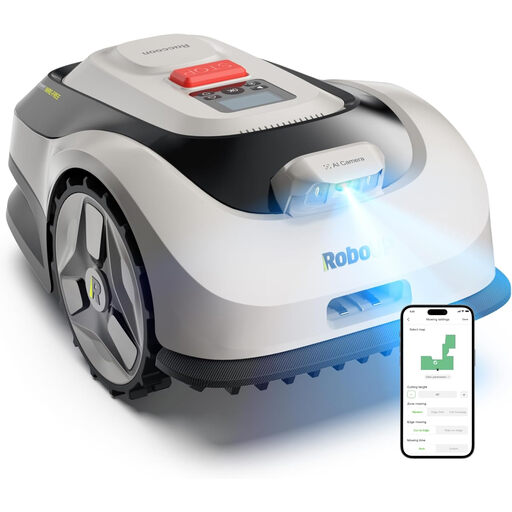
Why this choice suits this profile : This model is designed for smaller private gardens of up to 600 m², without an RTK antenna or buried boundary wire. Its button-start operation also suits people who want to use it without a smartphone.
Its stated capacity is suited to a small garden, without requiring the more complex installation of an RTK system.
5 Ah battery, stated battery life of 150 minutes, management of three zones and a stated noise level of 56 dB(A).
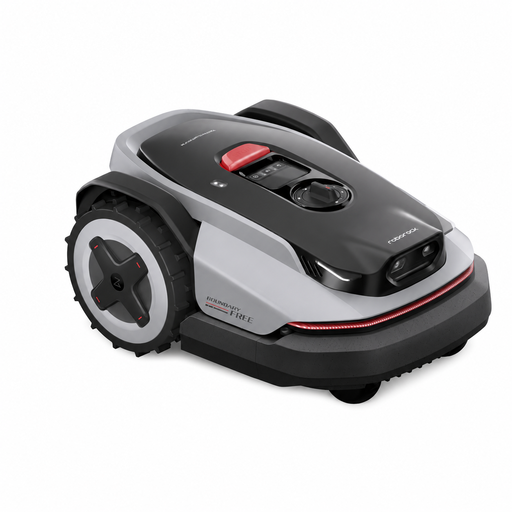
Why this choice suits this profile : This model is aimed at lawns of up to 1,000 m² where precise navigation and app-based control are top priorities.
The specifications mention NetRTK + VSLAM navigation. This means you can make a practical comparison between the technologies, rather than relying on the vague promise of “smart” intelligence alone.
Wire-free navigation, stereo vision, stated obstacle clearance of up to 4 cm and slopes of up to 45 %.
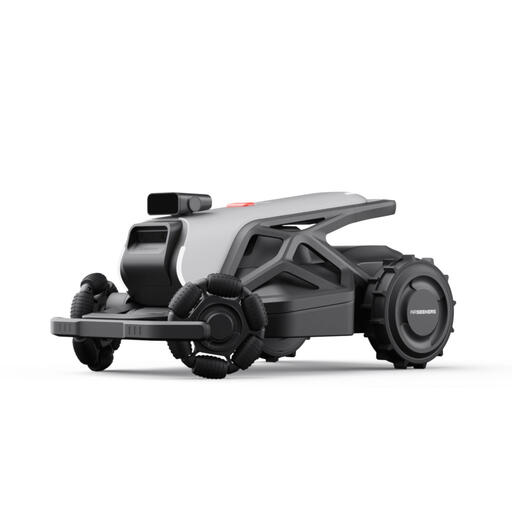
Why this choice suits this profile : Its stated coverage of 1,800 m², Wi-Fi, Bluetooth and 4G connectivity, along with its 10 Ah battery, make it suitable for large gardens and frequent use.
The specifications distinguish between the working slope and the travelling slope. For mowing, you should therefore use the 60 % figure, not the maximum driving capability.
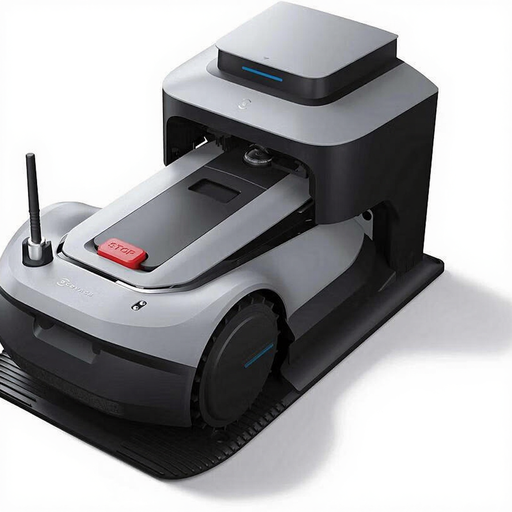
Why this choice suits this profile : It combines stated coverage of up to 800 m², virtual mapping through the app and an included garage for a neater, more organised installation.
The specifications detail the TrueMapping system, binocular vision and virtual boundaries, rather than promising simple random mowing.
360° panoramic camera, stated 3D vision-based obstacle avoidance, strip mowing and visual monitoring of the garden through the app.
We have put together a complete, real-time updated selection of products that meet these demanding criteria, as well as European safety requirements.
No. These models use virtual boundaries created in the app or automatic mapping. However, you still need to prepare the garden, position the station correctly and identify hazardous areas. Depending on the technology used, beacons, an antenna or ground markers may still be required.
It depends on how often it is used, how it is stored over winter, cleaning and blade replacement. Clean the underside of the chassis and the sensors regularly, check the wheels and store the battery according to the manufacturer’s instructions. A model with a garage will be better protected from the weather, but this does not remove the need for regular maintenance.
Vision can be affected by shade, fog, low contrast or dense vegetation. Some models combine vision with LiDAR, GPS or RTK to reduce this reliance. Before buying, assess the actual visibility of the sky, shaded areas and the width of any narrow passages in your garden.