
Livraison le jour même ou le lendemain

Qualité garantie

Débloquez vos offres de bienvenue: Livraison GRATUITE | Jusqu'à -80 % | 30 jours d'essai gratuits à JoyPlus
Téléchargez l'application
A cordless robot lawn mower can significantly simplify the upkeep of a 300 to 1,800 m² garden, provided you choose technology suited to the layout of your property. Today’s models rely in particular on RTK navigation, automatic mapping, cameras that detect obstacles, and app-based control.
However, the absence of a boundary wire does not mean that every garden is ready to use straight out of the box. Here are the key points to check to avoid choosing the wrong model and select an autonomous mower based on the area to be cut, slopes, and the different zones of your garden.
An 800 m² capacity generally refers to the accessible lawn area, not the total size of the property. You therefore need to subtract flowerbeds, patios, swimming pools, paths, and any other areas that should not be mowed.
To maintain a comfortable margin, a robot lawn mower for 600 to 1,800 m² should not be selected solely based on its maximum coverage. A 600 m² garden made up of several narrow passages may require more configuration than a large, open lawn of the same area.
RTK navigation improves positioning accuracy, but it still depends on signal reception and on how the reference station is installed. Dense vegetation, high walls, or a sunken garden can interfere with communication.
Before buying a robot lawn mower with RTK navigation, make sure the antenna can be installed in an open, stable location far enough away from obstacles. Some models combine RTK with vision, LiDAR, or depth sensors to reduce errors. Even so, this does not eliminate the need to prepare the garden properly.
A robot lawn mower with an AI camera can recognise many objects, but no system means you can leave hoses, thin cables, toys, or small tools lying on the lawn. Flat or low-contrast objects can still be difficult to detect.
You should therefore continue to clear the mowing area regularly and follow the safety instructions: switch the machine off completely before turning it over, and clean it or replace its blades in accordance with the manufacturer’s recommendations.
The advertised coverage should match your everyday needs, taking into account returns to the charging station and any weather-related interruptions caused by rain. In this selection, cutting widths generally range from 18 to 23.5 cm. A wider blade can reduce the number of passes, but it may be less manoeuvrable in narrow areas.
Also check the operating time and charging duration. The mower should be able to resume its cycle automatically once the battery has recharged. This feature becomes especially useful for gardens larger than 600 m².
Manufacturers sometimes express the maximum slope as a percentage and sometimes in degrees. These values are not directly interchangeable: a 45% slope corresponds to approximately 24°. Also check whether the stated figure applies to the working area, the edge, or occasional travel.
For sloping ground, prioritise wheels with strong traction, stable control, and a clearly stated limit in the user manual. Wet or uneven slopes can reduce grip compared with the advertised theoretical conditions.
A robot lawn mower with automatic mapping should allow you to define no-go zones, operating schedules, and, where necessary, multiple mowing areas. The multi-zone robot lawn mower function is useful for separating a front lawn from a rear lawn, or for managing several areas connected by a passage.
Also examine the setup method: app-guided mapping, virtual boundaries, beacons, or an RTK station. Finally, check that Wi-Fi, Bluetooth, or mobile network coverage is available where your garden is located.
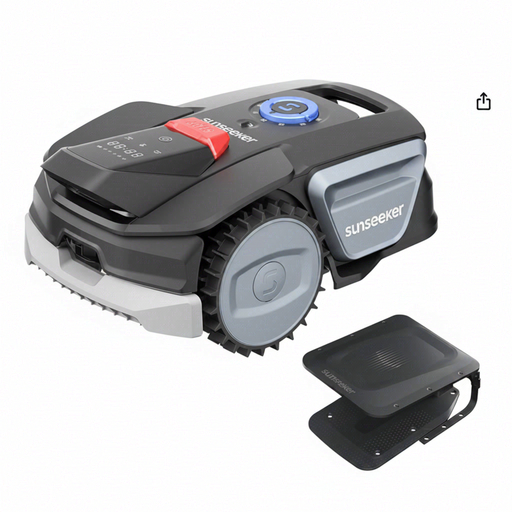
Why this model is a good fit: Designed for smaller lawns of up to 300 m², this boundary-wire-free model combines easy setup, AI-powered vision, and app-based control.
Its stated capacity reduces the risk of overspending on equipment that is too powerful for a small garden. You should still check all passageways and virtual boundaries carefully.
Advertised coverage of 300 m², included garage, and app-based control.
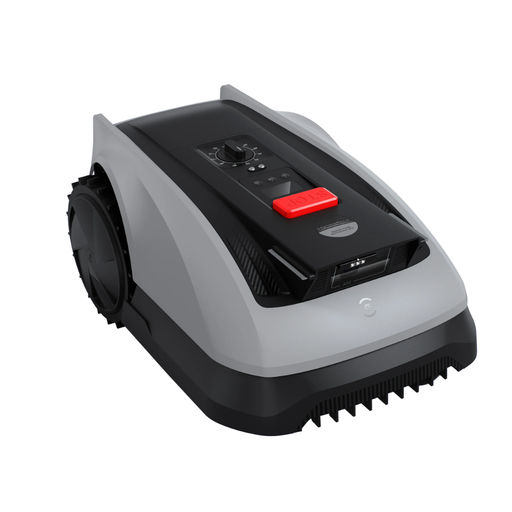
Why this model is a good fit: Suitable for gardens of up to 600 m², it combines RTK navigation, an AIVI camera, app control, a rain sensor, and advertised slope handling of up to 45%.
The specifications clearly state the coverage, slope capability, 19 cm cutting width, and adjustable cutting height from 30 to 80 mm, making comparisons easier.
Advertised noise level of 50 dB(A), IPX6 certification, Wi-Fi, and Bluetooth.
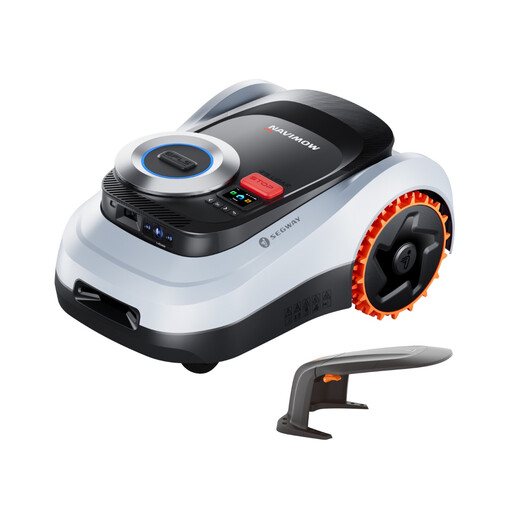
Why this model is a good fit: With advertised coverage of up to 1,500 m², LiDAR combined with vision, automatic mapping, and voice control, it is designed for connected gardens and varied layouts.
Its navigation does not rely solely on RTK. You should nevertheless confirm that the connected features and network coverage are available before placing your order.
Advertised detection of more than 200 obstacles, edge cutting to approximately 5 cm, and slope handling of up to 45%.
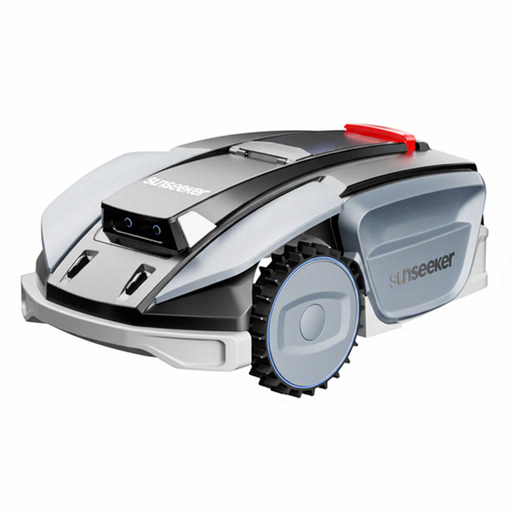
Why this model is a good fit: With advertised coverage of 1,600 m², RTK navigation supported by AI vision, multi-zone management, and the ability to handle slopes of up to 60%, it is aimed at demanding owners of large gardens.
The stated coverage and slope capabilities let you assess the product against the realities of your garden, rather than relying solely on the promise of autonomy.
Advertised all-wheel drive, automatic mapping, app control, and management of multiple zones.
We have put together an up-to-date selection of products that meet these criteria, along with the technical details to check before buying.
Not necessarily. RTK models generally use a reference station that must be installed in an open area. Other devices rely primarily on vision, LiDAR, or GNSS. Check the mapping method and reception requirements specific to the model you are considering.
Clean the underside of the mower, check the condition of the blades, and remove debris accumulated around the wheels and charging contacts. In winter, the user manual may recommend storing the robot in a dry, sheltered location. You should also check for app updates and inspect the battery before mowing resumes in spring.
The electricity used for recharging is generally limited. The main recurring costs are more likely to involve replacement blades, a potential battery replacement, and, depending on the model, a paid connectivity service. To estimate the total cost of ownership, check the price of spare parts, the warranty period, and the after-sales service terms available in France.