
Livraison le jour même ou le lendemain

Qualité garantie

Débloquez vos offres de bienvenue: Livraison GRATUITE | Jusqu'à -80 % | 30 jours d'essai gratuits à JoyPlus
Téléchargez l'application
A flawless lawn, mowed to perfection without lifting a finger and, most importantly, with no strings attached? This dream is now within reach. But be warned: the wireless robotic lawn mower market is exploding, and with it, a flood of marketing promises that can quickly lead to disappointment. To avoid regretting your investment, it's crucial to know how to separate true innovation from mere advertising fluff.
Here at the editorial desk, our mission is to guide you through this tech jungle. Here are the two most common pitfalls to avoid and the essential technical criteria for choosing the model that's truly right for you.
Pitfall #1: "100% GPS" Navigation and Its Limits Many manufacturers tout their GPS robotic lawn mower as the ultimate solution. While GPS (and its enhanced version, RTK) is indeed the cornerstone of these devices, it isn't infallible. Near a wall, a building, or under dense trees, the satellite signal can falter. The result? A robot that relies solely on GPS may get lost, stop moving, or mow in a completely erratic pattern.
Pitfall #2: Underestimating Your Yard's Complexity Does a spec sheet promise slope management? Be skeptical. A 35% slope on dry, flat ground is nothing like the same incline on wet grass or bumpy terrain. Similarly, the ability to navigate a narrow passage or manage multiple separate mowing zones is not a given, even on the most expensive models.
To make the right choice, forget the marketing and focus on the features that truly matter for a wireless robotic lawn mower.
The reliability of a wireless robot depends on its ability to combine multiple technologies. An excellent robotic mower with mapping doesn't just rely on one system; it fuses them to ensure perfect coverage.
A model that combines RTK + Vision or RTK + LiDAR will offer far more reliable and versatile navigation than a 100% GPS robot.
These two specs are critical. Don't just look at the number in big print; read the fine print.
Your day-to-day experience depends almost entirely on the quality of the app. A good connected robotic mower should allow you to:
Here are a few options that meet specific needs, taking into account performance and reliability criteria.
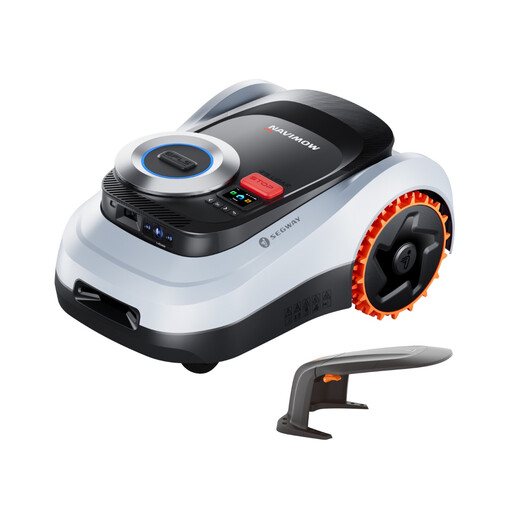
Editor's Pick: Perfect for gardens up to 1500 m? that show no mercy: obstacles, complex passages, and slopes are its playground. Its all-terrain tires and high-torque motor allow it to tackle 45% slopes, where many others would give up.
Its sensor fusion (dual LiDAR + Vision) ensures unwavering navigation, even if the satellite signal disappears. It never falls into the trap of relying solely on GPS.
100% autonomous mapping, with no wires or antennas to install. Its VisionFence AI accurately identifies over 200 types of obstacles.
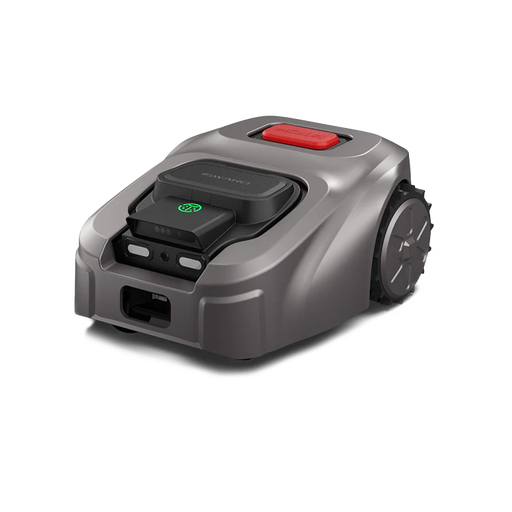
Editor's Pick: Built for very large properties (up to 2500 m?), this robot is a workhorse designed for intensive use. Its ability to climb extreme slopes of 57% (30°) puts it in a class of its own.
It tackles the "underestimated terrain" pitfall head-on. Its specs (2500 m? and 57% slope) are unambiguous and built for the worst-case scenario, preventing any unpleasant surprises during use.
Exceptional slope capability and marathon-like battery life (160 min). The app can manage up to 20 distinct maps, a must-have for the most complex properties.
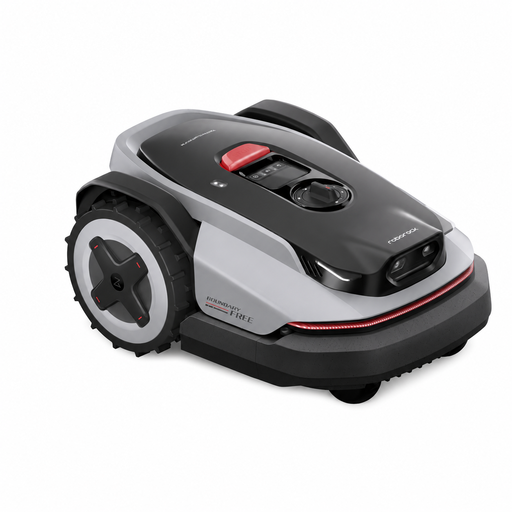
Editor's Pick: This is the balanced champion for gardens up to 1000 m?. It packs in cutting-edge navigation technologies (NetRTK + VSLAM) and excellent slope capability (45%), delivering high-end performance for a common yard size.
The combination of NetRTK and VSLAM (vision-based mapping) allows it to stay on course with precision even with signal loss, preventing frustrating navigation failures.
Incredibly effective stereo vision obstacle avoidance and the ability to cross 4 cm thresholds. All controlled by an app renowned for its user-friendly design.
Is your garden truly unique, or are you considering a riding mower for a very large area? Other options are available. Discover our complete selection of products, all validated against rigorous performance criteria.
Yes, that's their main advantage: goodbye to the chore of laying a perimeter wire! Setup is limited to placing the charging station and RTK antenna (if the model has one) in an open area, then starting the mapping process from the app. The robot then travels around your lawn to memorize its boundaries. The process takes anywhere from a few minutes to an hour, depending on the area.
This is the weak point of 100% GPS models. Under dense foliage, the signal can indeed be lost. This is precisely why the best robots combine GPS/RTK with optical sensors (camera or LiDAR). These sensors take over as soon as the satellite signal weakens, ensuring uninterrupted mowing and navigation.
Expect 8 to 10 years for the robot itself, provided you maintain it properly (cleaning, changing blades). The lithium-ion battery is a wearable part that typically lasts between 3 and 6 years, depending on usage. Rest assured, most brands offer replacement batteries. A tip to preserve it: store the robot and its station away from frost during the winter.