
Livraison le jour même ou le lendemain

Qualité garantie

Débloquez vos offres de bienvenue: Livraison GRATUITE | Jusqu'à -80 % | 30 jours d'essai gratuits à JoyPlus
Téléchargez l'application
A cordless robotic lawnmower can make lawn maintenance much easier. But you need to choose a navigation technology that suits your garden. Before you order, check the actual coverage area, the accuracy of the mapping, and the conditions required for autonomous operation.
Marketing promises can sometimes gloss over certain limitations. Here are the main pitfalls to avoid, so you can choose a machine that works with your garden, your budget and your maintenance habits.
A mowing capacity expressed in square metres doesn't mean the machine will cover that entire area on a single charge. The shape of your garden, narrow passages, shaded areas, slopes and obstacles all have a direct impact on working time.
For a robotic lawnmower up to 2500 m², make sure you check:
The advertised area is mainly there to position the product. It doesn't guarantee the same performance in every garden.
A connected autonomous lawnmower without a perimeter wire still needs to identify the lawn boundaries. Depending on the model, this boundary setting relies on an RTK station, cameras, sensors or a combination of several technologies.
A robotic lawnmower with RTK can provide very precise positioning in a sufficiently open environment. However, trees, walls and obstructed areas can disrupt the signal. Conversely, a robotic lawnmower without RTK that uses vision needs a clearly identifiable lawn and a perfectly clean camera.
The term 'anti-obstacle' doesn't mean you can leave toys, hoses, tools and branches lying around before mowing. Sensors can detect some objects, but their effectiveness depends on size, colour, position and light levels.
A model equipped with lift, tilt, rain or vision sensors has more information to manage its surroundings. That still doesn't replace a regular check of the lawn.
RTK technology uses positioning signals corrected by a station or compatible network. It's best suited to people with a relatively open garden who want to manage several zones without installing a perimeter wire.
Camera-based navigation can be quicker to set up because it avoids installing an RTK antenna. However, you need to check how the machine behaves in low light, rain or dense vegetation. A robotic lawnmower with an app usually lets you view the map, schedule cycles and receive alerts, but the features vary from one manufacturer to another.
Compare the mowing time with the time needed to recharge the battery. The ISWARD GX, for example, claims around 160 minutes of mowing for around 100 minutes of charging, with a cutting width of 23.5 cm. According to the information provided, its LiFePO4 battery at 22.4 V and 4 Ah includes protection against overheating, overcharging, overcurrent and short circuits.
The cutting height should also suit your lawn. A range of 3 to 6 cm works for most regular maintenance mowing. However, very long or neglected grass will probably need a manual pass first.
IP ratings are not interchangeable. For the ISWARD GX, the data shows IPX5 for the body, IPX4 for the charging station and IP65 for the power supply. These ratings describe resistance to water and dust under specific conditions: they don't mean the station can be submerged or left unprotected.
Also check the maximum slope. A machine may accept a different incline within the working area compared to near its boundary. Clean the wheels, cutting deck and sensors regularly, and remove the battery before any manual maintenance.
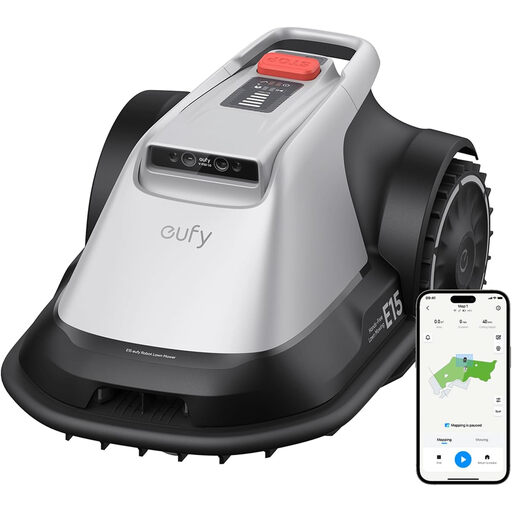
Why this choice suits this profile: With an advertised coverage of up to 800 m², automatic mapping and app control, this model is aimed at owners of small to medium gardens who want to keep installation work to a minimum.
It works without a perimeter wire or RTK station, which reduces the number of items to install. You still need to check that the lawn boundaries remain clearly visible and that there's enough light.
Advertised TrueVision technology, 3D obstacle detection, automatic return in rain or low light, and GPS tracking according to the product sheet.
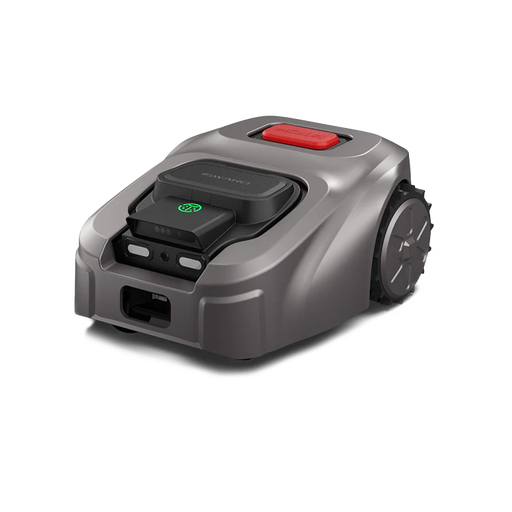
Why this choice suits this profile: With a recommended capacity of 2500 m², 20 storable maps and RTK navigation, this model is designed for large gardens and plots made up of several zones.
The product sheet details the mowing time, charging time, slope and IP ratings. This information lets you compare the machine against the real constraints of your garden.
Brushless motors, IMU, rain, lift, tilt and vision sensors, with a maximum slope of 57% in the working area.
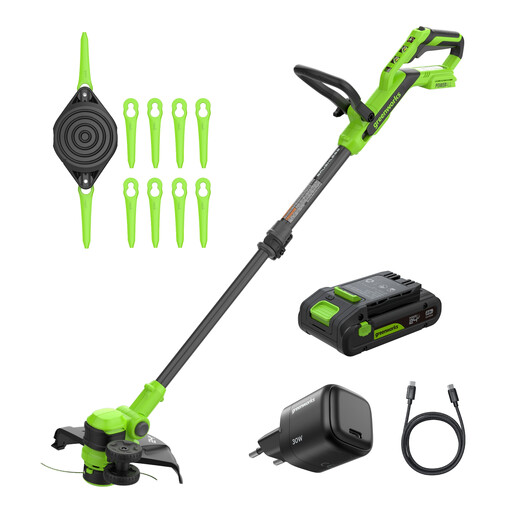
Why this choice suits this profile: This grass trimmer complements a robotic lawnmower for finishing edges along walls, fences and paving, as well as for light grass, particularly in small and medium gardens.
Its 30 cm cutting width and two modes mean you don't need to buy a separate tool for finishing. However, it doesn't replace a brush cutter designed for thick vegetation.
24 V 2 Ah battery and charger included, brushless motor, automatic line feed and ten plastic blades supplied.
We've put together a comprehensive, real-time updated list of products that fully meet these strict selection criteria and European safety regulations.
Before the first mow, remove any movable objects, check the transition areas and install the station on a stable surface that the machine can easily reach. The app makes programming simple, but you should still do a manual check after the first few sessions to spot any missed areas.
Running costs mainly depend on electricity consumption, how often you replace the blades, and the battery's lifespan. Brushless motors reduce some mechanical maintenance tasks, but they don't eliminate the need for cleaning and inspecting wear parts. For a battery-powered grass trimmer, also check the compatibility of batteries and accessories: the Greenworks model shown works with the brand's 24 V ecosystem.
Yes, but the result depends on both the navigation technology and the layout of the garden. Gardens with closely spaced trees, high walls, narrow passages or multiple levels require careful checking of the mapping and the boundaries the machine can recognise.
Often, yes. Even a robotic lawnmower with an obstacle detection system usually leaves a margin near walls, fences and borders to avoid collisions. A 2-in-1 grass trimmer can then handle the finishing, while a 24 V cordless brush cutter will be better suited to light grass and hard-to-reach areas.
The duration varies depending on the model, the slope, the condition of the grass, the temperature and the complexity of the garden. Check the typical battery life stated by the manufacturer and compare it with the charging time. Regular scheduling usually lets you spread the work, rather than trying to do one long session in a single go.