
Livraison le jour même ou le lendemain

Qualité garantie

Débloquez vos offres de bienvenue: Livraison GRATUITE | Jusqu'à -80 % | 30 jours d'essai gratuits à JoyPlus
Téléchargez l'application
A kitchen cut, a blister after a hike or a child’s graze may not all need the same product. Yet the shelves dedicated to plasters and wound care are packed with different formats, materials and claims that can be difficult to compare. The result? You could end up with a box that is poorly suited to your needs, comes loose in the shower, irritates your skin or is eventually forgotten at the bottom of your first-aid kit.
The word “waterproof” sometimes only guarantees protection against splashes. How well a plaster stays in place also depends on your skin, perspiration and how well it is applied. For a plaster to withstand water properly, apply it to clean, completely dry skin, avoiding creases around the edges. If it will come into repeated contact with water, check the manufacturer’s recommendations and replace it as soon as it becomes damp or starts to come away.
A small adhesive plaster is enough for a graze, but not for a larger wound or one located on a joint. Conversely, an oversized plaster can restrict movement and come away more quickly. For home use, assorted-size boxes are the most versatile option. A cut-to-size roll is more practical if the size of the wounds varies considerably.
Hydrocolloid plasters are designed for certain blisters and do not replace a sterile dressing on a deep wound. Corn plasters are primarily intended to protect intact skin from friction: never apply them to broken or infected skin. Take the time to read the warnings, particularly if you have sensitive skin, diabetes or a significant injury.
For a small cut or graze, choose a plaster with a non-stick absorbent pad. This reduces the risk of the pad sticking to the wound when it is removed. Soft fabric backings move more comfortably with your body, while thin, transparent designs are more discreet.
To hold a sterile dressing in place, micro-perforated medical tape can be useful. The 7 m × 2.5 cm Mercurochrome roll tears by hand, and its micro-perforated material allows air to circulate more freely. It must not be applied directly to an open wound: use it to secure a dressing or plaster.
Compare the number of pieces, the dimensions available and the intended application area. A box designed for minor injuries may include formats suited to fingers, knees or joints. For a larger wound, a cut-to-size roll or a sterile dressing secured separately offers greater flexibility.
Individually wrapped sterile dressings are particularly convenient when travelling and in a first-aid kit. Before using them, make sure the sachet is intact and that the expiry date has not passed.
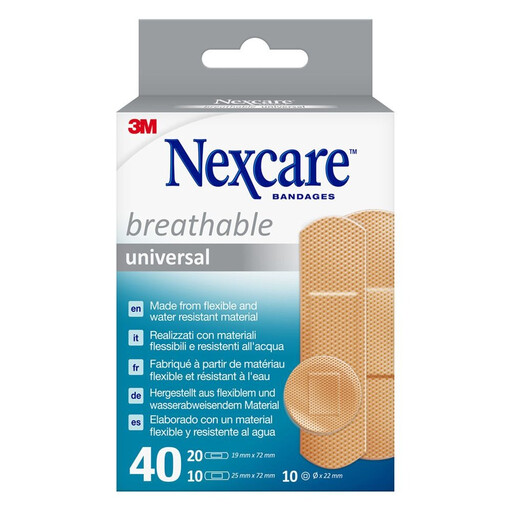
Why this choice suits this profile : With 40 plasters in several sizes, this assortment covers the most common minor accidents at home without requiring you to buy multiple boxes.
The different sizes prevent you from covering a small injury with an unnecessarily large plaster. The non-stick pad makes removal more comfortable.
40 pieces, breathable and water-resistant backing, in sizes 19 × 72 mm, 25 × 72 mm and 22.5 mm.
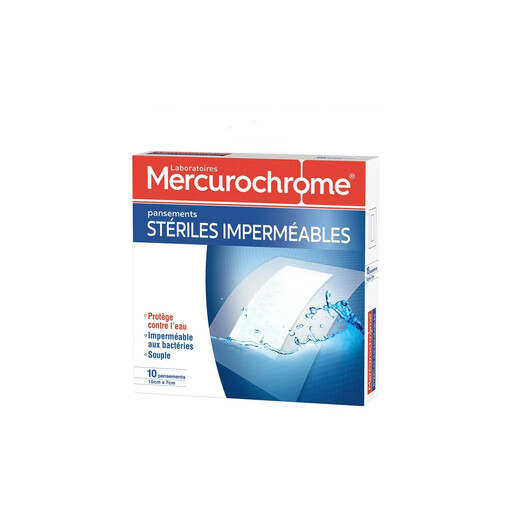
Why this choice suits this profile : This large sterile plaster is ideal for anyone looking for a ready-to-apply solution for covering a larger wound.
The four adhesive sides create protection around the wound, while the integrated pad does not stick to it.
10 plasters measuring 10 cm × 7 cm, waterproof backing and non-stick pad.
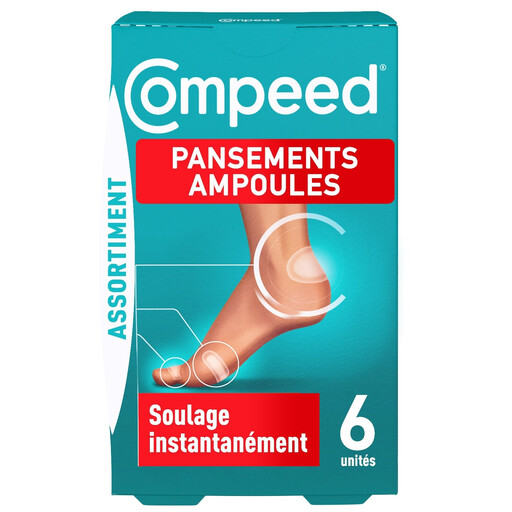
Why this choice suits this profile : Walkers, travellers and sports enthusiasts have three sizes to protect blisters, depending on the affected area of the foot.
The assortment means you do not have to use one size for every blister. The hydrocolloid backing is applied directly to the affected area.
Two medium sizes, two small sizes and two for toes; hydrocolloid gel and removal once the plaster naturally starts to come away.
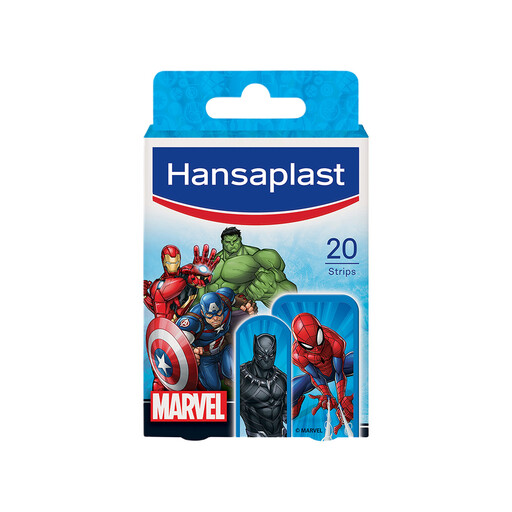
Why this choice suits this profile : Disney Avengers designs may help children feel more comfortable wearing a plaster after everyday minor accidents.
The gentle removal and stated latex-free composition may help minimise discomfort, depending on each child’s tolerance.
20 children’s plasters, designed for easy removal and made from material stated to be latex-free.
A family first-aid kit can contain several adhesive plasters, individually wrapped sterile dressings, a roll of medical tape, a pair of scissors, disposable gloves and an elastic bandage. Add a few waterproof plasters if you take part in outdoor activities, as well as blister plasters if you walk regularly.
Store everything in a dry place at a moderate temperature and out of children’s reach. Check expiry dates regularly and replace any packaging that is open, damp or damaged. Single-use products must not be reused.
For a deep wound, bite, serious burn, visible infection or injury that does not heal, seek medical advice. Corn plasters and blister protectors cannot diagnose or treat a persistent condition.
Change it as soon as it becomes wet, dirty or loose, following the product instructions. For some hydrocolloid plasters, it is time to replace them when the edges begin to lift naturally. Check the wound regularly, particularly if redness is spreading or swelling, discharge or unusual pain develops.
Yes, if the product is clearly described as water-resistant and has been applied correctly to dry skin. This does not necessarily mean that it can withstand prolonged immersion. After a shower or swim, check that it is still adhering properly and replace it if it is damp or has come away.
For a friction blister, choose a hydrocolloid plaster in a suitable size, then apply it to clean, dry skin. Do not use this type of product on an infected blister or deep wound. If you have diabetes or are unsure about the condition of your skin, ask a healthcare professional for advice before applying it.