
Same-day & Next-day Delivery

Quality Guaranteed

Unlock Your Welcome Offers: FREE Delivery | Up to 80% OFF | Free 30-day JoyPlus trial
Download the APP
Living in an apartment or a small space requires smart appliance choices. The washer-dryer emerges as the ideal 2-in-1 solution to optimise your laundry space. However, behind the promise of saving space and time lie pitfalls that can turn a good investment into a daily regret. As a Product Expert at Joybuy, my mission is to help you decode the jungle of tech specs to make a truly informed choice.
Before you commit, here are the 3 most common pitfalls to avoid:
To avoid unpleasant surprises, focus on objective data. Here are the three points on the label you should never overlook.
This is THE number one criterion. Always look at both figures, which are clearly indicated on the energy label.
With the new energy labels, vigilance is key. An appliance can excel at washing but perform poorly on the complete cycle.
For the peace and quiet of your home (and your neighbours), noise is a non-negotiable criterion. The energy label indicates the noise level in decibels (dB) and a noise emission class (from A to D) for the most critical phase: the spin cycle.
Rather than an impersonal list, here are options that cater to distinct user profiles, taking into account the criteria we've just discussed.
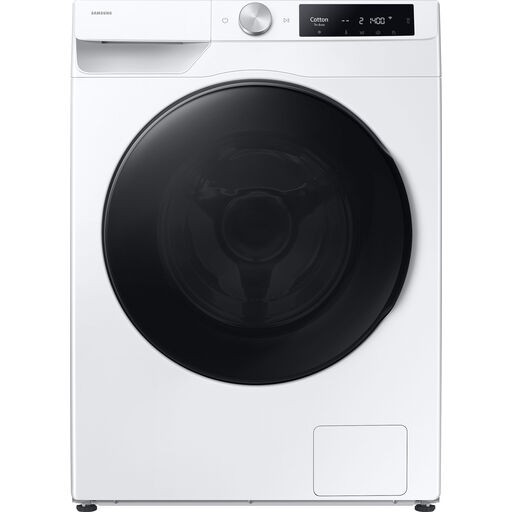
Why it's a great choice: With its extra-large 11 kg wash capacity, it meets the needs of large families. Its smart technologies (AI Wash, auto-dosing) genuinely simplify daily life and optimise consumption, while its silent motor (72 dB, Class A) preserves household peace.
It offers a highly functional wash/dry capacity ratio (11/6 kg). Its smart features are genuinely useful (auto-dosing), and its noise level is kept in check thanks to the VRT Plus system.
The automatic dispensing of detergent and softener, coupled with AI Wash technology that adapts the cycle to the load and fabric type.
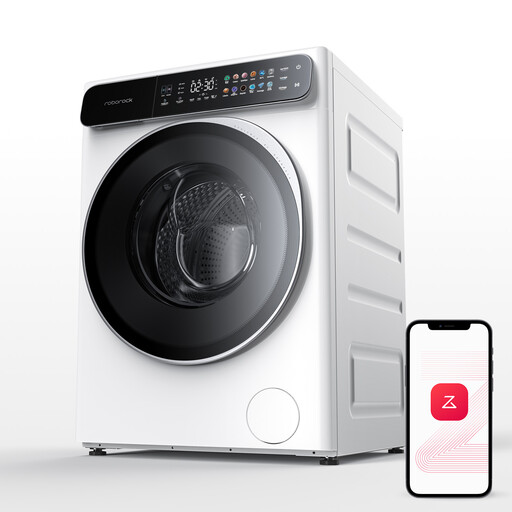
Why it's a great choice: For those who own delicate garments (wool, silk) and seek cutting-edge technology. The Zeo-Cycle low-temperature drying preserves fibres, while the self-cleaning filtration system and automatic dispensing offer maximum user convenience.
It solves the problem of traditional dryers that damage fragile textiles. Its LintClear system eliminates the chore of manually cleaning the lint filter, a hidden flaw in many models.
The Zeo-Cycle low-temperature drying technology, which uses zeolite to gently absorb moisture, protecting clothes from shrinking and damage.
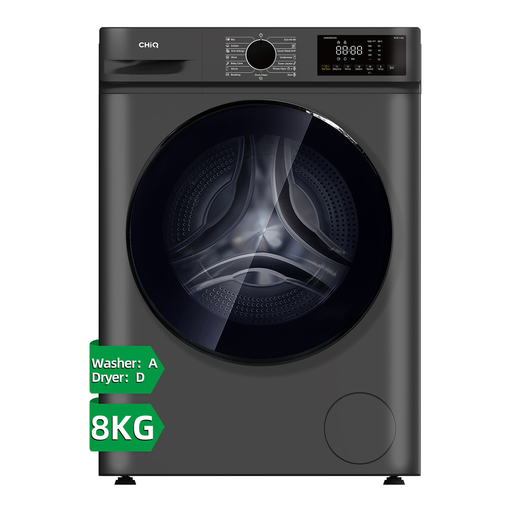
Why it's a great choice: Ideal for studios or kitchens where every centimetre counts. Its slim design and reduced depth allow for a discreet installation without sacrificing a very respectable capacity (8 kg/5 kg) for a couple or single person.
It doesn't just settle for being "compact" with a tiny drum. It optimises the external footprint while maintaining a useful internal volume, avoiding the trap of impractical "space-saving" machines.
Its slim-fit design and shallow depth for easy integration. The steam washer-dryer function is a bonus for de-wrinkling and quickly refreshing clothes.
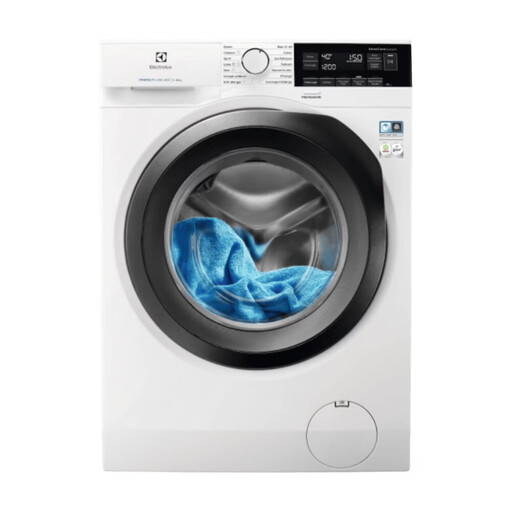
Why it's a great choice: Designed specifically to be concealed behind a cabinet door, this built-in washer-dryer is the solution for a kitchen or laundry room with a sleek, minimalist design. It offers advanced fabric care technologies in an invisible format.
As a fully integrated model, it's designed for optimal ventilation and stability within a cabinet, unlike a freestanding appliance one might try to build in, which can cause overheating and vibrations.
The AbsoluteCare technology, which adjusts drum movements and temperature to protect delicate textiles, even during drying. Its 1600 RPM spin speed reduces drying time.
On average, a washer-dryer has a lifespan of 7 to 10 years. Of course, this depends on the build quality, frequency of use, and how well it is maintained (cleaning the filter, door seal, descaling, etc.). Models equipped with an induction motor (often called Inverter or Direct Drive) are known for their longevity.
For the wash cycle alone, consumption is nearly identical. It's the drying cycle that drives up the bill. Most washer-dryers use cold water to condense the steam from the drum, which increases both water AND electricity consumption compared to a dedicated heat pump dryer. This is why it's so important to scrutinise the energy class of the complete cycle (wash + dry).
Yes, absolutely. All models allow you to run a standalone drying programme, which is ideal for hand-washed or already spun items. This is a highly appreciated flexibility, provided, of course, that you never exceed the machine's maximum drying capacity.