Who is a washer dryer suitable for?

People living in a small home with room for just one appliance

You have the space and connections for one appliance, but need to wash and dry without installing a separate tumble dryer. First, check the actual depth, door clearance and usable drying capacity.

Households wanting to start a cycle without handling the laundry

You want to return to a dry load without taking the laundry out between the two stages. This means staying within the stated capacity for the wash-and-dry cycle, which is generally much lower than the washing-only capacity.

Users with lots of laundry to dry

You regularly dry sheets, towels or family-sized loads and could install two appliances. In this case, drying throughput and cycle duration matter more than the space-saving benefit of a washer dryer.

Buying priorities for washing and drying in a small space

Front-loading washer dryer

Choose this if: you can install only one appliance and are happy to limit each load to the drying capacity.

Keep in mind: the drying capacity is lower, and full-cycle data must be compared separately from washing-only figures.

Compact washing machine with air drying

Choose this if: a standard washer dryer will not fit in the available space and a well-ventilated drying area is available.

Keep in mind: this solution requires you to manage the moisture produced by laundry drying indoors.

Separate washing machine and tumble dryer

Choose this if: you have two suitable spaces and regularly dry large loads.

Keep in mind: you need more space and an additional appliance to maintain.

Priority What to check Your needs
Actual drying capacity Compare the drying capacity in kg with your usual loads; distinguish it from the washing capacity; check which programmes allow a consecutive cycle, depending on the fabric. I want to start washing and drying without removing some of the laundry. The drying capacity must cover the load I genuinely want to dry in one go.
Duration and consumption For the full wash-and-dry cycle, check energy use per 100 cycles, water use per cycle, duration and noise; compare these figures on the same basis between models. I’m looking for a compact appliance that remains practical for everyday use, without discovering after purchase that the cycles are too long for my routine.
Size and installation Measure the height, width, depth, door clearance and access routes; confirm the water supply, drainage, electrical socket and floor stability. The appliance must fit into the alcove, pass through the access points in my home and be connectable without unexpected alterations.
Alternative drying If some laundry must dry on an airer, plan for a large, well-ventilated room or one fitted with a mechanical ventilation extraction outlet. I want to reduce air drying when my home has neither outdoor space nor sufficient ventilation. ADEME states that this type of drying releases a significant amount of moisture into indoor air.

Mistakes to avoid before buying

  • Confusing washing capacity with drying capacity

    A machine advertised as 10.5/6 kg can wash 10.5 kg without drying, but can dry only 6 kg in a consecutive cycle. An oversized load means splitting the laundry or removing some of it.

    Choose the appliance based on the loads you want to dry and check the manual for the programmes and fabrics compatible with wash-and-dry mode.

  • Comparing only the washing energy class

    The full wash-and-dry cycle has its own energy, water and duration data. A good rating for washing alone does not automatically describe the use that matters to you.

    The European Commission recommends reading the washing-only and full-cycle information separately on the energy label or in EPREL.

  • Measuring only a 60 cm width

    Depth and height vary between models; a substantial depth may prevent installation under a worktop or between units. Delivery may also be blocked by a hallway, door or lift.

    Measure the alcove, available depth, door clearance and access to your home, while allowing for the clearances specified by the manufacturer.

  • Planning for an airer without considering ventilation

    ADEME identifies air drying laundry as an activity that releases a high level of moisture into indoor air. In a small home, this constraint may influence your choice of drying solution.

    If you choose an airer, plan for a room that is sufficiently large and well ventilated, or fitted with mechanical extraction.

Guide to the brands and models mentioned

Bosch

Worth considering if you want a large washing capacity with 6 kg of drying in a standard front-loading format: the WNC254A0FR is advertised as 10.5/6 kg and measures 848 × 598 × 622 mm.

  • Bosch advertises Auto Dry and an A rating for washing cycles on the WNC254A0FR.
  • For a consecutive cycle, the key figure is the 6 kg drying capacity, not the 10.5 kg washing capacity.

LG

Worth considering if you want a 9/6 kg format: the F964R71WRST is advertised with a 9 kg washing capacity, 6 kg drying capacity and a 68 L drum.

  • LG lists two drying modes, as well as quick-wash and steam functions on this model.
  • Compare the full-cycle label and drying capacity before relying on the advertised features.

AEG

Worth considering if fabric care and heat-pump technology are among your priorities: the LWR98B166X is a freestanding model advertised as 10/6 kg.

  • AEG advertises a heat pump, an A rating for washing, a B rating for wash-and-dry and a Propre&sec 3 h programme for 3 kg.
  • Its advertised depth can reach 660 mm: check the available space before choosing this model.

Samsung

Worth considering if you want a 9/6 kg front-loading washer dryer with advertised dimensions of 600 × 850 × 600 mm.

  • Samsung gives the WD90DG5B15BHEF an EU product rating of D and offers connected consumption-monitoring features.
  • AI Energy features require compatible programmes, Wi-Fi and a Samsung account; always compare the full-cycle figures.

Joybuy options for a front-loading washer dryer

These Joybuy options represent the front-loading washer dryer solution, combining washing and drying in one space.
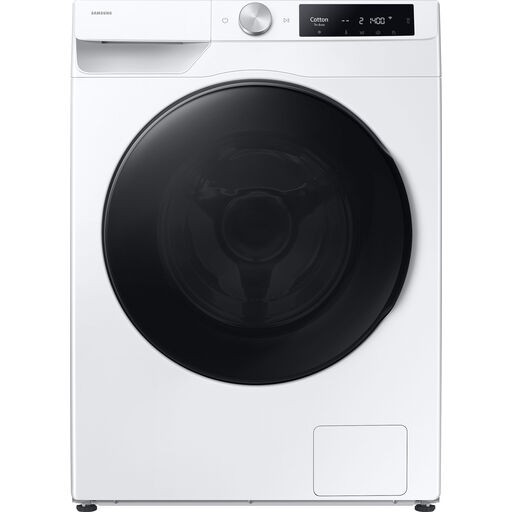
Samsung WD11DG6B85BEU3 washer dryer, 11 kg washing capacity and 6 kg drying capacity

Samsung WD11DG6B85BEU3, 11 kg / 6 kg

An option for a single-appliance space, with separate capacities of 11 kg for washing and 6 kg for drying.

Advertised net dimensions: 60 × 85 × 60 cm. The full cycle is advertised as taking 7 h 32, using 308 kWh/100 cycles and 90 L/cycle; compare these figures with your usage.

Joybuy
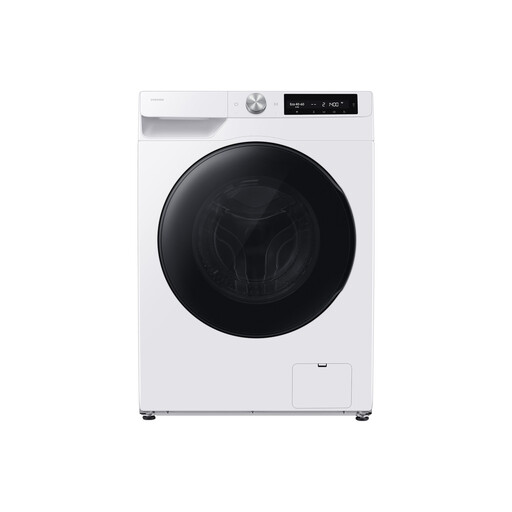
Samsung WD10HG6U34BEU3 washer dryer, 10 kg washing capacity and 6 kg drying capacity

Samsung WD10HG6U34BEU3, 10 kg / 6 kg

This washer dryer is suitable for a home with room for one appliance, provided your drying loads do not exceed 6 kg.

Advertised depth: 590 mm. Check the model’s EU label to compare the duration, water and energy use of the full wash-and-dry cycle.

Joybuy
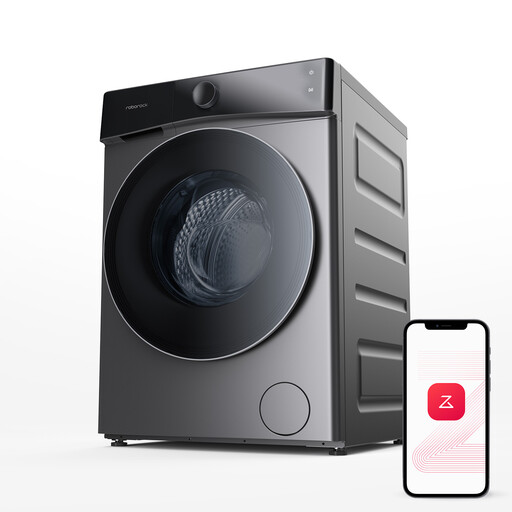
Roborock Zeo Lite Gray washer dryer, 10 kg washing capacity and 6 kg drying capacity

Roborock Zeo Lite Gray, 10 kg / 6 kg

An all-in-one solution advertised for washing up to 10 kg and drying up to 6 kg in the same appliance.

The model advertises 27 programmes, automatic dosing, a LintClear system and low-temperature Zeo-Cycle drying. Check the dimensions, connections and full-cycle data before installation.

Joybuy
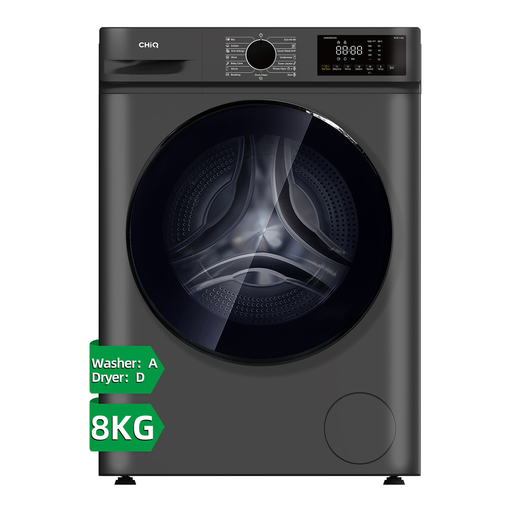
CHiQ JW85882HG washer dryer, 8 kg washing capacity and 5 kg drying capacity

CHiQ JW85882HG, 8 kg / 5 kg

This option is advertised for smaller loads, with an 8 kg washing capacity and 5 kg drying capacity.

The product information lists a 530 mm drum, a BLDC motor at 1,400 rpm and a steam function. Check the technical diagram, as the stated width varies between the information provided.

Joybuy

Frequently asked questions

Can I wash 9 or 10 kg and then dry everything in a 9/6 kg or 10.5/6 kg model?

No, not in a single consecutive cycle: the load being dried must stay within the drying capacity, which is 6 kg in these examples. You can wash more without drying, or remove some of the laundry before drying if the model’s manual permits it.

Which energy-label figures should I compare?

Compare the full wash-and-dry cycle and washing-only cycle separately: energy class, energy consumption, water consumption, duration and noise. The European Commission states that this information appears on the EU label for washer dryers.

Which connections should I check before delivery?

Check the water supply, drainage, electrical supply, floor stability and installation space according to the model’s manual. Also measure doors, hallways and lifts: an installation service does not necessarily include plumbing, electrical or joinery work.

Is an airer still a good alternative to integrated drying?

Yes, if you can hang laundry in a large, well-ventilated room or one fitted with a mechanical ventilation extraction outlet. ADEME nevertheless highlights that air drying increases indoor humidity, which can make this solution less practical in a poorly ventilated home.