What should you look at first?
Measure the space and room needed to open the machine before choosing a capacity. The word “compact” doesn’t guarantee that a machine will fit or handle your usual loads.
| Your concern |
What to check |
Consumers concerned |
| Size and door opening |
Measure the width and depth, including connections, and allow enough room to open the door or lid. Check the model’s installation diagram. |
In a room where every bit of access matters, I want to load the machine without blocking the way. Around 36% of consumers prioritise the space it takes up. |
| Everyday laundry |
Compare the capacity in kg with your usual loads, then check the maximum load for the programmes you plan to use. |
If I wash bedding too, a drum designed for very small loads won’t meet my main needs; capacity comes first for around 29% of consumers. |
| Drying laundry at home |
For a washer-dryer, compare the washing and drying capacities separately, as well as the duration and energy and water use of a full cycle. |
Without a practical place to dry my washing, I want to avoid a separate drying appliance. This is the priority for around 21% of consumers. |
| Small extra washes |
Check the mini appliance’s capacity, spin speed and connection requirements; have another option for bulky items. |
If there’s no room for a main washing machine, I might be happy to wash just a few small items at a time; around 14% of consumers prioritise this as an extra option. |
Brands to consider
There are no brands to feature in this section.
Appliances for different spaces
These Joybuy models illustrate a few options: front-loaders for spaces with limited depth, a top-loader when width is the issue, and a mini appliance for very small loads. Compare their installation dimensions with your available space before choosing.
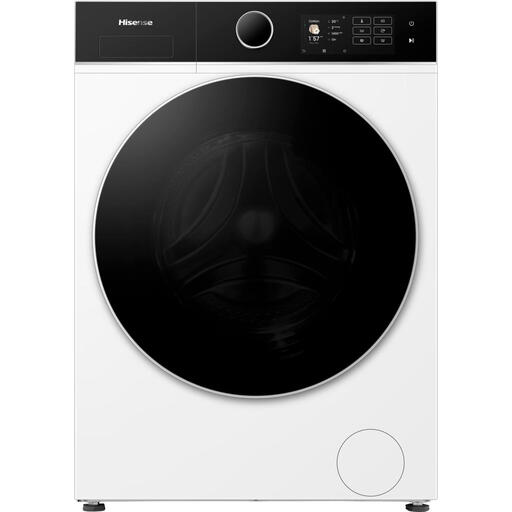 Image unavailable
Hisense WF5I8043BWF, 8 kg front-loading washing machine
Worth considering if you need a main washing machine and have enough room to open a front-loading door.
Stated capacity: 8 kg; stated spin speed: 1,400 rpm. Check the depth including connections and the clearance in front of the machine.
View on Joybuy
 Image unavailable
Candy TCA464TM4-S ProWash 500, 6 kg top-loading washing machine
A top-loader is worth considering if opening a front-loading door would block the way, provided there’s room for the lid to open freely.
Stated capacity: 6 kg; stated spin speed: 1,400 rpm. Check the width, depth and clearance above the machine in its intended position.
View on Joybuy
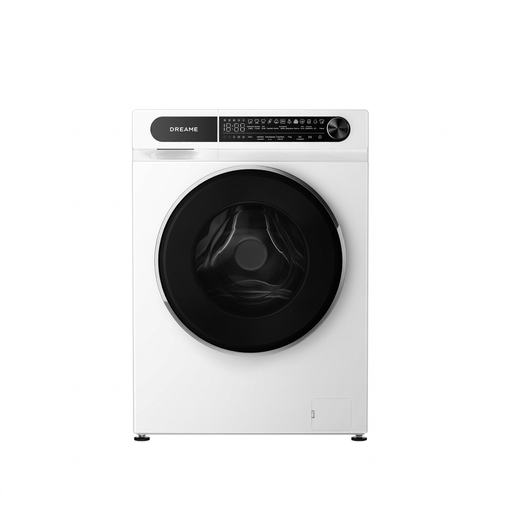 Image unavailable
Dreame DRWASHS8KG Washing Machine S, 8 kg
Compare it with other machines for everyday laundry if depth is your main concern.
Stated capacity: 8 kg. Confirm the dimensions including connections and the space needed to open the door before choosing this model.
View on Joybuy
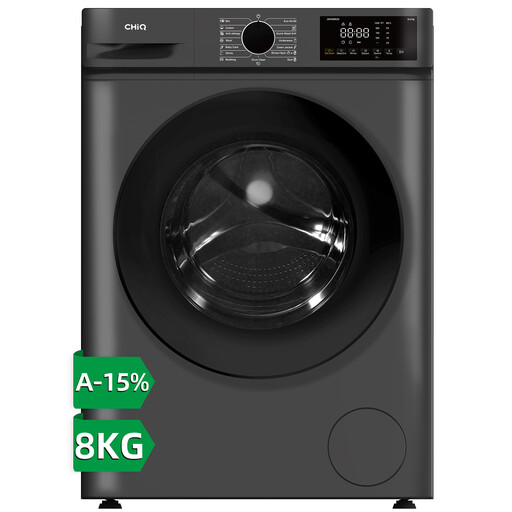 Image unavailable
CHiQ JW85883G, 8 kg dark grey front-loading washing machine
Worth considering for everyday laundry if a front-loading machine will fit in your room.
Stated capacity: 8 kg; stated spin speed: 1,400 rpm. Measure the space and confirm all installation dimensions, especially the width and clearance needed for the door.
View on Joybuy
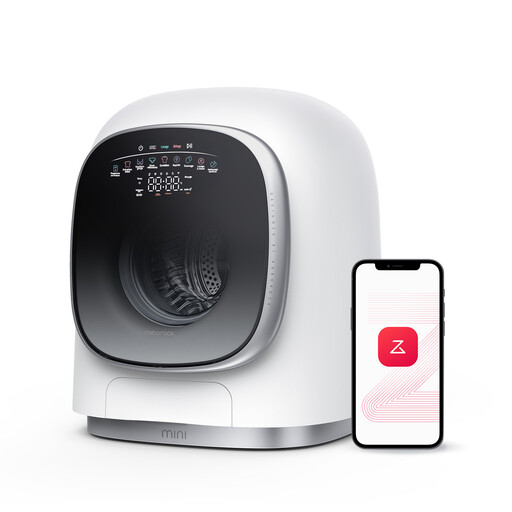 Image unavailable
Roborock Marshmallow Zeo Mini, 1 kg wash and 0.5 kg dry capacity
This mini appliance is suited to very small extra loads, not all the laundry in your home.
Stated capacities: 1 kg for washing and 0.5 kg for drying. Check its dimensions and connection requirements for your room.
View on Joybuy
Frequently asked questions
Can a mini washing machine be the only machine in a studio flat?
It’s better suited to occasional small loads than to all your household laundry. UFC-Que Choisir describes mini washing machines with a capacity of 2 to 3 kg and limited spin speeds. Before choosing one, work out how you’ll wash bedding and bulky items.
Will a washer-dryer fit more easily into a small alcove?
Not necessarily: its main advantage is that it combines washing and drying in one appliance. UFC-Que Choisir says these machines are generally front-loading and usually 60 cm wide. Check the full dimensions of both the alcove and the model, as well as its separate drying capacity.
Which details on the energy label should you compare?
Compare the electricity use per 100 cycles, water use per cycle, capacity, duration of the Eco 40-60 programme, spin performance and noise levels. ADEME recommends choosing a capacity that suits your needs; in a studio flat, also check that the machine fits your installation requirements.
Do you need to leave space around a washing machine in a small room?
Yes. At the very least, you’ll need room to install and open it, and to access the parts that need maintenance, as set out in the model’s manual. Bosch recommends leaving the door ajar after a cycle to help water evaporate, so check that your room layout allows for this.
Will a larger capacity always mean fewer cycles?
No. The capacity should suit the laundry you actually wash and the programmes you use. UFC-Que Choisir says that 5 to 7 kg is generally enough for one person or a couple; also consider bedding, sorting your laundry and how often you wash.


