If you only have room for one appliance, a washer-dryer combines both functions, provided you size your loads according to its drying capacity, which is usually lower than its washing capacity. If you dry laundry often and have enough headroom, stacking two appliances with a compatible stacking kit is another option. If depth is your main constraint, a slim washing machine means you’ll need to arrange drying separately. In every case, check the installation dimensions and the consumption figures for the way you plan to use it.
Which set-up suits you?
If you only have space for one appliance
In a studio flat with room for just one appliance, a washer-dryer means you don’t need to find space for a separate tumble dryer. However, you’ll need to keep your drying load within the appliance’s capacity: UFC-Que Choisir notes that a washer-dryer’s drying capacity is lower than its washing capacity.
If you dry laundry often
If you regularly have large loads to dry, stacking lets you use two separate appliances without needing space for them side by side. You’ll need enough headroom, and you must confirm that both appliances are compatible with the stacking kit.
If your available space is shallow
A slim front-loading washing machine may suit your space. UFC-Que Choisir puts slim models at 33 to 45 cm deep, with a capacity of around 4 to 6 kg. You’ll need to plan for drying separately, with an appliance that works for your home.
How do the options compare?
Start by measuring the space available, then consider how much laundry you actually want to dry. These two factors will help you choose between a washer-dryer, a stacked set-up and a slim washing machine.
Washer-dryer
Consider this if: you can install just one appliance and your drying loads stay within the stated capacity.
Bear in mind: UFC-Que Choisir notes that drying capacity is lower than washing capacity, and that drying can take a long time and use water, depending on the model.
Two appliances stacked
Consider this if: you dry laundry regularly and have enough headroom above a front-loading washing machine.
Bear in mind: you’ll need two appliances and a stacking kit confirmed as compatible with their model numbers and dimensions.
Slim washing machine
Consider this if: the available depth rules out a standard front-loading washing machine.
Bear in mind: washing capacity is more limited, and you’ll need to plan for a separate drying appliance.
| Factor |
What to check before you buy |
What shoppers are looking for |
| Space needed |
Measure the available width, depth and height, as well as the clearance needed to open the appliance. |
If my space is shallow, I want to know which appliance will fit without getting in the way when I use it. Around 25% of shoppers rank space-saving dimensions as their top priority. |
| Drying capacity |
Compare the washing and drying capacities in kg for the exact model, rather than looking at the washing figure alone. |
When I wash and dry in one go, I want to avoid taking some of the laundry out between cycles. Drying capacity comes ahead of other factors for around 31% of shoppers. |
| Water, electricity and time |
Check the figures for the cycle you’ll use: washing only or wash-and-dry, as well as how long it takes. |
If I use the drying function often, I want to factor in the water, electricity and time needed for each cycle. Around 19% of shoppers prioritise these running requirements. |
| Stacking compatibility |
Check the model numbers of both appliances and the kit against the manufacturer’s guidance, then confirm the required dimensions. |
Before stacking my appliances, I want to be sure they’re designed to work with the kit I’ve chosen. This is the top priority for around 25% of shoppers. |
What to avoid before you buy
-
Looking only at washing capacity
With a washer-dryer, you may not be able to dry a full washing load in one go. For example, LG lists 11 kg for washing and 6 kg for drying for its F164R78BSTA model. These figures don’t apply to other models.
Choose a drying capacity that suits the loads you plan to dry, then compare it separately with the washing capacity.
If a load is too large to dry at once, you’ll need to split it across extra cycles.
-
Assuming any two appliances can be stacked
Similar widths don’t prove that a washing machine, tumble dryer and stacking kit are compatible. Bosch, for example, specifies that its WTZ2741C kit is for a standard washing machine over 55 cm deep, and advises you to check which model numbers are compatible.
Make a note of the full model numbers for both appliances and the kit, then check the manufacturer’s instructions before planning a stacked set-up.
-
Comparing figures for different cycles
Energy use for washing alone won’t necessarily tell you how much a wash-and-dry cycle uses. UFC-Que Choisir also notes that drying in a washer-dryer can take a long time and use water, depending on the model.
Check the energy label and product information for the cycle you’ll actually use, including how long it takes.
-
Choosing a slim washing machine based on depth alone
UFC-Que Choisir says that slim front-loading models are 33 to 45 cm deep and generally have a capacity of around 4 to 6 kg. So, even if the depth suits your space, the drum may not be large enough for your usual loads.
Compare the full dimensions with your available space, then check that the washing capacity suits your needs and the appliance you plan to use for drying.
Brands to consider for each set-up
Bosch
Worth considering for a stacked set-up with two appliances that are compatible with a Bosch stacking kit.
- Bosch offers stacking kits with or without a shelf.
- The WTZ2741C kit is for a standard washing machine over 55 cm deep; check the E-Nr model number or the instruction manual. This requirement doesn’t apply to every kit or every appliance combination.
LG
A brand to consider when comparing an all-in-one washer-dryer with an integrated WashTower stacked set-up, depending on the space available.
- LG lists 11 kg for washing and 6 kg for drying for its F164R78BSTA washer-dryer, making the two capacities clear for this model.
- Check the dimensions, capacities and energy figures for the model you’re considering: the specifications of the F164R78BSTA don’t apply across the whole range.
Electrolux
Worth a look if you’re comparing a heat pump washer-dryer with a separate heat pump tumble dryer.
- Electrolux lists 10 kg for washing and 6 kg for drying for its EW9W1166RB heat pump washer-dryer.
- These specifications apply to this specific model. Compare its drying capacity, dimensions and energy label figures with those of any separate appliances you’re considering.
Washer-dryers to explore on Joybuy
These models combine washing and drying in one appliance. They’re suited to a set-up where you want to avoid having a separate tumble dryer. Their capacities don’t replace the need to check your available space or compare the cycles you plan to use.
 Image unavailable
Samsung WD10HG6U34BEU3 washer-dryer, 10 kg / 6 kg
Combines washing and drying in one appliance. Allow for a smaller load if you want to dry it.
Stated capacity: 10 kg for washing and 6 kg for drying. Check the installation dimensions, clearance and figures for the wash-and-dry cycle.
View on Joybuy
 Image unavailable
Samsung WD11DG6B85BEU3 washer-dryer, 11 kg / 6 kg
For a single appliance space, if a drying capacity of 6 kg suits the loads you need to dry.
Stated capacity: 11 kg for washing and 6 kg for drying. Check the dimensions and energy use for the cycles you’re interested in.
View on Joybuy
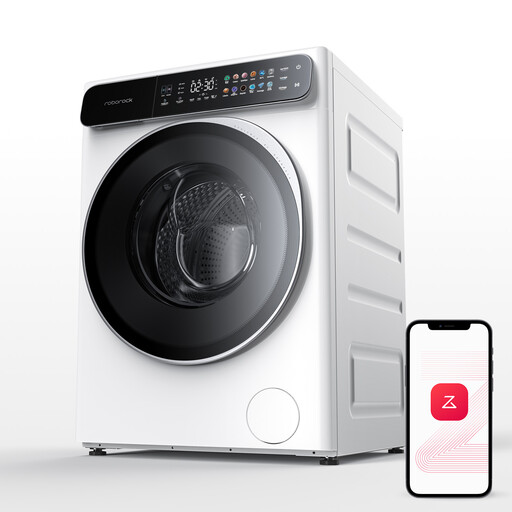 Image unavailable
White Roborock Zeo One washer-dryer, 10 kg / 6 kg
Wash and dry with one appliance, provided you adjust the load to suit the drying capacity.
Stated capacity: 10 kg for washing and 6 kg for drying. Measure your available space and check the model’s energy information before choosing.
View on Joybuy
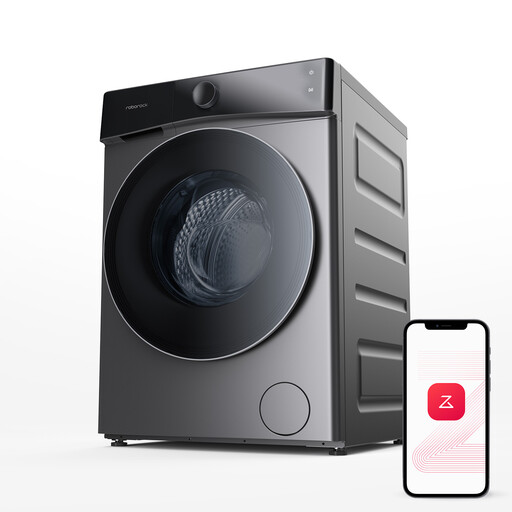 Image unavailable
Grey Roborock Zeo Lite washer-dryer, 10 kg / 6 kg
For a single-appliance set-up, if your drying loads stay within the stated limit.
Stated capacity: 10 kg for washing and 6 kg for drying. Check the installation dimensions and energy use for the cycle you’ll be using.
View on Joybuy
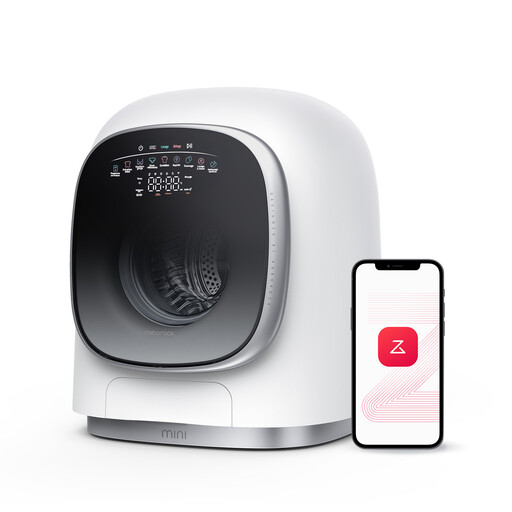 Image unavailable
White Roborock Marshmallow Zeo Mini washer-dryer, 1 kg / 0,5 kg
Only worth considering for very small loads; it doesn’t offer the same capacity as the other washer-dryers featured here.
Stated capacity: 1 kg for washing and 0,5 kg for drying. Check its actual dimensions and energy use before setting aside space for it.
View on Joybuy
Frequently asked questions
Can you wash and then dry a full load in a washer-dryer?
Yes, as long as the load is within the model’s drying capacity, which is usually lower than its washing capacity. UFC-Que Choisir gives typical capacities for washer-dryers of 5 to 12 kg for washing and 2,5 to 8 kg for drying. If you want to run both functions without removing any laundry between cycles, use the appliance’s drying capacity as your guide.
Can you stack any tumble dryer on top of any washing machine?
No. You need to confirm that the exact models of both appliances are compatible with the stacking kit. For its WTZ2741C kit, Bosch specifies a standard washing machine over 55 cm deep and asks you to check the E-Nr model number or instruction manual. This requirement applies to that kit only and doesn’t confirm compatibility with other appliance combinations.
Does a separate tumble dryer need an external vent?
It depends on the type of tumble dryer. UFC-Que Choisir says that vented models need an outlet to the outside or a duct, while condenser models, including heat pump models, don’t need this connection. In all cases, follow the installation and room requirements specified for the model you choose.
What should you compare on the energy label before choosing?
Compare the information for the cycle you plan to use, especially if you expect to run a wash-and-dry cycle. ADEME recommends checking the energy label for the appliances you’re considering. Also consult the product information to compare energy use and cycle length for the relevant programme, rather than relying on the energy rating alone.


