
Livraison le jour même ou le lendemain

Qualité garantie

Débloquez vos offres de bienvenue: Livraison GRATUITE | Jusqu'à -80 % | 30 jours d'essai gratuits à JoyPlus
Téléchargez l'application
A broken object, a tube of glue in hand, and the hope of a quick fix. Who hasn't been there? Yet, the result is all too often disappointing: the bond fails, the glue has dried out in its tube, or worse, it has oozed everywhere except where it was needed. Choosing a super glue seems simple, but numerous pitfalls can turn a split-second repair into a real headache.
As a product expert for Joybuy, my mission is to help you navigate the options. Let's forget the marketing jargon and focus on what matters: a clean, durable repair. Let's review the most common traps and, more importantly, how to avoid them.
To avoid making the wrong choice again, keep three key criteria in mind before you check out. This is what will make all the difference between a successful repair and another disappointment.
The texture of the glue is a crucial factor, to be chosen based on your intended use.
The main component of super glue is cyanoacrylate. This molecule provides a powerful bond on many materials like ceramic, metal, or wood. However, it is often ineffective on certain so-called "low-surface-energy" or "oily" plastics, such as polyethylene (PE) and polypropylene (PP). You'll find them everywhere: storage boxes, toys, automotive parts...
For these specific cases, it's essential to choose a dedicated plastic-specific glue. It usually includes a primer (or activator) to be applied before bonding to prepare the surface.
The container is as important as the contents. A well-designed applicator makes all the difference between a clean repair and a small disaster.
The perfect all-purpose glue doesn't exist. It's better to choose a product tailored to a specific use. Here are our recommendations for three common scenarios.
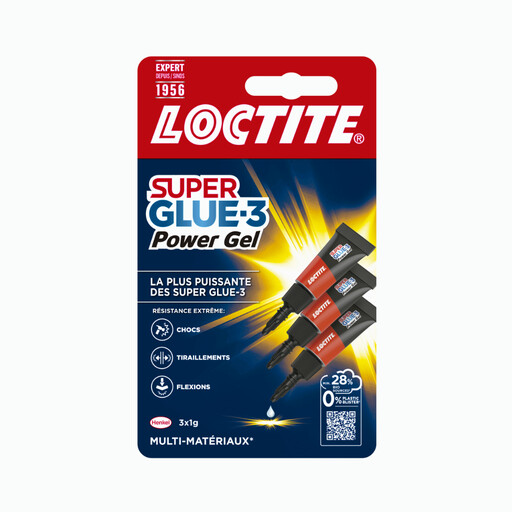
Why we chose it : Ideal for those who only use super glue occasionally. This pack puts an end to waste and guarantees fresh glue for everyday small repairs (a peeling shoe sole, a broken toy, etc.).
The format of three single-use mini-doses eliminates the risk of your glue tube drying out after a single opening. It's the ultimate anti-waste solution.
Its rubber-toughened gel formula ensures a shock-resistant and flexible bond, making it perfect as a shoe glue or for other flexible materials.
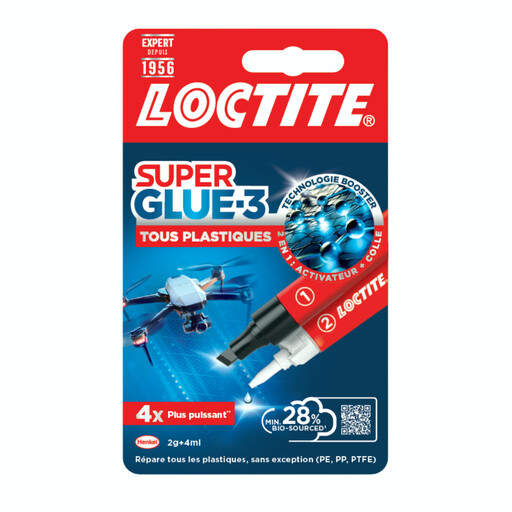
Why we chose it : The go-to solution for anyone who has ever failed to glue a plastic object back together. Perfect for repairing toys, car accessories, or electronic device casings.
This product tackles the incompatibility problem head-on. Its two-step system (activator pen + glue) prepares the surface and allows for a powerful bond even on notoriously difficult plastics like PE and PP.
The activator pen makes it possible to glue all types of plastics, an advantage that most standard instant glues lack. The bond is fast and the finish is transparent.
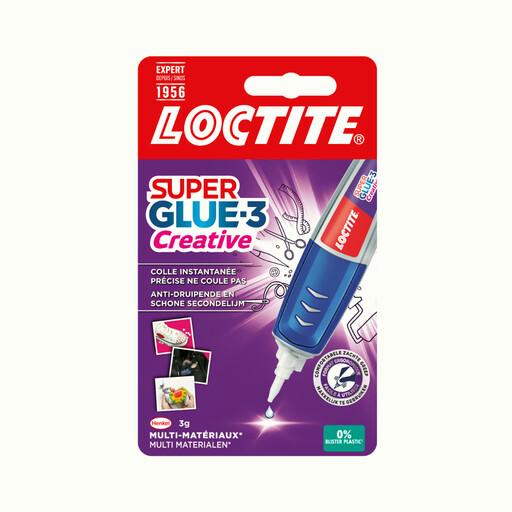
Why we chose it : For enthusiasts of creative hobbies, model making, or any repair that requires precision. Its handling and flow control make it a formidable precision glue.
No more messy applications! The pen format and non-drip gel formula allow you to apply the glue exactly where you want it, even on a vertical surface, without any overflow.
Its ergonomic design makes gluing as easy as writing. The pressure system ensures drop-by-drop distribution for clean, waste-free work.
We have curated a complete range of products that meet our demanding selection criteria.
It's a classic mishap. Whatever you do, don't force it! The easiest method is to soak the area in warm, soapy water for several minutes. Then, gently try to peel the skin apart, for example by rolling a pencil between your fingers. If that's not enough, an acetone-based nail polish remover can help, but use it sparingly on your skin.
Many modern cyanoacrylate adhesives, like those in the Loctite Super Glue-3 range, offer good water resistance once cured. Some are even advertised as dishwasher-safe. For maximum durability, it is advisable to wait at least one hour (or even 24 hours) before exposing the object to moisture or heavy stress. Always check the manufacturer's instructions on the packaging.
For a shoe glue, flexibility is the number one criterion. A standard liquid glue would likely crack with the movement of walking. Opt for a rubber-toughened gel glue, such as Loctite Super Glue-3 Power Gel. Its formula is designed to absorb shocks and twists, ensuring a repair to the sole or leather that will last. Just make sure the surfaces are perfectly clean and dry before application.