
Livraison le jour même ou le lendemain

Qualité garantie

Débloquez vos offres de bienvenue: Livraison GRATUITE | Jusqu'à -80 % | 30 jours d'essai gratuits à JoyPlus
Téléchargez l'application
A strong instant super glue can fix a handle, a shoe sole, a ceramic object or a modelling piece in seconds. But not all cyanoacrylate glues are suited to the same materials or the same stresses. A repair that seems successful can come apart quickly if the surface hasn't been prepared properly, if the glue is too runny, or if the substrate is one of those plastics known to be tricky to bond.
This selection helps you compare formats, application systems and uses, without relying solely on claims like "universal" or "ultra-strong".
A glue can set in seconds without being able to withstand heavy pulling, twisting or prolonged contact with water straight away. For a shoe, a flexible hose or a part under constant strain, check the details on flexibility, impact and moisture resistance, as well as the full curing time.
Polyethylene, polypropylene and PTFE (also known as Teflon) are difficult to bond with a standard cyanoacrylate glue. A plastic glue with an activator may be more suitable, but always check the compatibility stated on the packaging. The phrase "all materials" does not replace this technical check.
Once opened, a clear strong glue can dry out in its nozzle if it sits in a drawer for months. For occasional use, single-use sachets minimise waste. On the other hand, a 20 g bottle is better suited to regular jobs, DIY projects or modelling.
Start by identifying the two surfaces you need to join:
For quickly repairing a part that will need to flex, a gel glue enriched with rubber can reduce the risk of the bond cracking. For a fine crack or a narrow gap, a liquid formula will generally penetrate more easily.
The packaging directly affects the precision and cleanliness of the job:
Keep the amount small: a layer that is too thick does not necessarily make the bond stronger and can even slow down the setting time.
Some products claim resistance to water, temperature changes, impacts or twisting. You should weigh this information against your intended use. A water-resistant glue does not automatically turn a repaired item into something that can withstand prolonged immersion. For items washed in the dishwasher, always follow the full curing time stated by the manufacturer.
For visible repairs, such as on decorative porcelain, a picture frame or an accessory, also choose a clear glue. For soles, hoses and flexible items, the flexibility of the bond matters more than its final appearance.
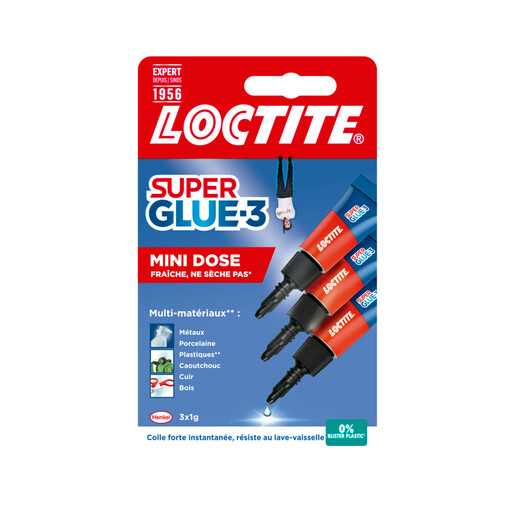
Why this choice suits this profile: The individual sachet format is ideal for households that only do a few repairs a year and prefer not to keep a half-used large bottle.
The three 1 g sachets reduce the risk of a large amount of glue drying out after a single use.
Clear gel enriched with rubber, stated to be resistant to water, impacts, twisting and temperature changes.
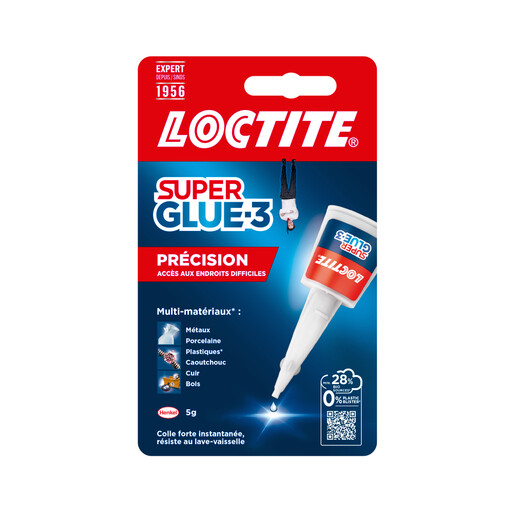
Why this choice suits this profile: Its long, fine nozzle is designed for those who need precise application on visible or delicate items.
The precision nozzle reduces excess glue and makes it easier to reach narrow gaps, unlike a wide spout which is harder to control.
Liquid formula, 5 g, clear finish and stated compatibility with porcelain, metal, wood, leather, rubber and several plastics.
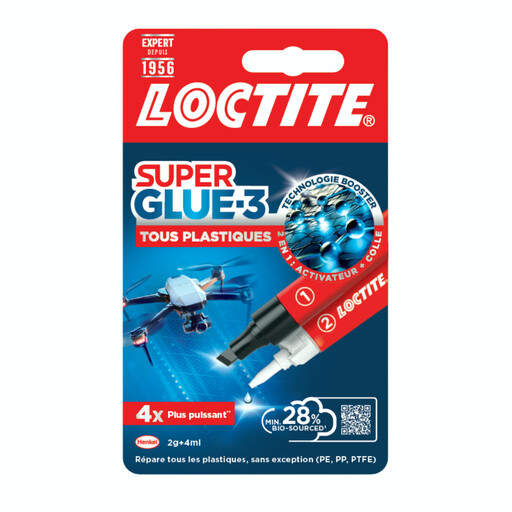
Why this choice suits this profile: This two-step system is designed for plastics where adhesion is uncertain with a standard glue.
The activator pen prepares the surface before the cyanoacrylate is applied, solving the problem of difficult-to-bond plastics.
Set containing 2 g of glue and 4 ml of activator, with a clear application intended for plastic items.
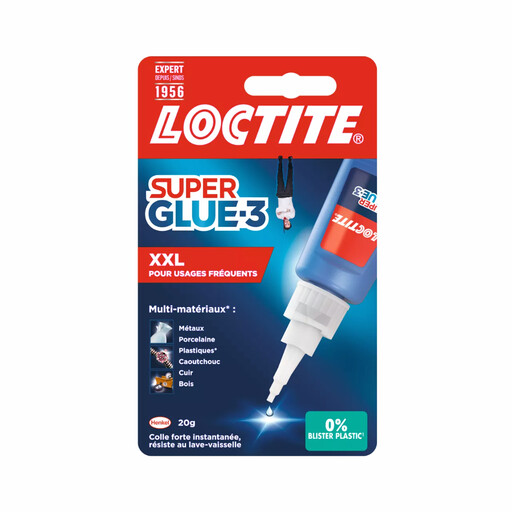
Why this choice suits this profile: This large format is intended for frequent jobs, DIY projects and model assembly.
The 20 g volume saves you from having to buy multiple small tubes when several repairs are planned as part of the same project.
Clear liquid glue with fast setting, stated for wood, metal, ceramic, porcelain, rubber and most plastics.
We have put together a comprehensive, real-time updated selection of products that meet these strict criteria and the requirements of European safety regulations.
Cyanoacrylate bonds skin very quickly and can cause eyelids to stick together. Work in a well-ventilated area, keep the product out of reach of children and avoid any contact with the eyes. If you accidentally glue your fingers together, do not pull them apart: soak the area in warm, soapy water, then gently separate your fingers.
A shoe glue in gel form, enriched with rubber, can work when a sole needs to remain flexible. The Loctite Super Glue-3 Power Gel Mini Sachet and Power Gel Control products state compatibility with soles, as well as resistance to water, impacts and twisting. Clean the surfaces thoroughly and allow a longer holding and curing time than you would with a small rigid object.
The shelf life depends on how well the bottle is sealed, the temperature and the humidity. Close the cap immediately, wipe the nozzle without blocking the opening and store the bottle in a cool, dry place away from heat and sunlight. For occasional use, individual sachets reduce the risk of the glue drying out before your next repair.
Not always. Check whether PE, PP or PTFE are listed as incompatible materials. For difficult-to-bond plastics, a kit that combines plastic glue and an activator may be more appropriate. Surface preparation and a preliminary test are still essential, even with a glue marketed as universal.