
Livraison le jour même ou le lendemain

Qualité garantie

Débloquez vos offres de bienvenue: Livraison GRATUITE | Jusqu'à -80 % | 30 jours d'essai gratuits à JoyPlus
Téléchargez l'application
A chipped mug, a sole coming unstuck, a broken ornament or a tricky plastic part that needs joining: multi-purpose strong glue can tackle many everyday repairs. But choosing a product simply because it’s labelled “universal” can lead to poor adhesion, visible marks or a join that gives way after just a few days.
The right choice depends first and foremost on the materials, the level of precision required and the conditions the repair will need to withstand. Here are the things to check before buying super glue, repair glue or an adhesive for craft projects.
An instant adhesive, usually based on cyanoacrylate, can bond two surfaces in seconds. That doesn’t mean the join reaches its maximum strength straight away. Depending on the formula, you may need to wait several minutes or longer before exposing the repair to a load, water or twisting forces.
For a repair that will be put under strain, hold the parts in place as directed by the manufacturer and allow the glue to cure fully.
The label “multi-purpose” doesn’t guarantee compatibility with every type of plastic. Standard cyanoacrylate glues are often not recommended for polyethylene (PE), polypropylene (PP) and PTFE, also known as Teflon. These materials have surfaces that are difficult to bond.
To choose a plastic glue, identify the material and, if needed, look for a formula supplied with an activator. It’s also wise to test it on an inconspicuous area first.
A liquid glue is suitable for fine joins and small parts that fit together perfectly. On a vertical or porous surface, or one that flexes slightly, a gel or rubber-enriched formula will be easier to use. For joining, fixing or sealing over a longer area, a cartridge of polymer adhesive applied with a gun will often be more suitable than a small tube of super glue.
Start by identifying the two surfaces you need to join: metal, wood, ceramic, porcelain, rubber, leather, glass or plastic. A metal glue won’t necessarily work in the same way as a wood glue. For ceramic, you’ll generally want an adhesive that leaves the least visible finish possible.
Product details usually list compatible surfaces as well as materials to avoid. This information is much more reliable than general claims printed on the packaging.
For a small crack or delicate item, look for:
Clear glue can make a repair less noticeable, but it still needs to be applied sparingly. Too much adhesive can leave a mark or seep out around the join.
Water-resistant glue can be suitable for an item exposed to moisture or washed occasionally, provided you allow it to cure for the recommended time. For a shoe sole, pipe, ball or any item exposed to twisting forces, it’s best to look for a flexible or rubber-enriched formula.
By contrast, a rigid adhesive may be suitable for a figurine, ceramic item or decorative join that won’t be put under much strain. Consider how the item will be used — indoors or outdoors, exposed to temperature changes or submerged — when choosing your glue.
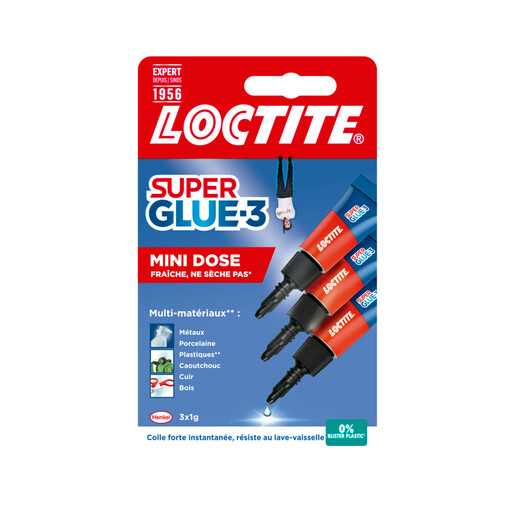
Why it suits this type of user: The three single-use doses are ideal for occasional repairs around the home, so there’s no need to keep a part-used tube for months.
The single-use format reduces the risk of the glue drying in the nozzle before your next repair.
Three 1 g doses, a clear cyanoacrylate formula and stated compatibility with wood, rubber, porcelain and some plastics.
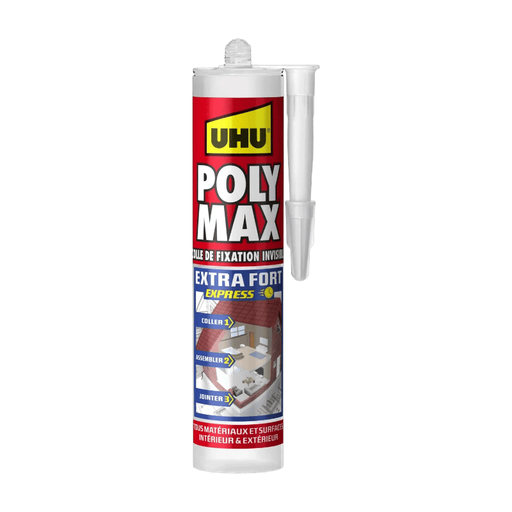
Why it suits this type of user: The 300 g cartridge is designed for joining, fixing and sealing jobs that need a generous application, indoors or out.
Its elastic polymer formula absorbs slight movement better than a rigid instant adhesive.
An adhesive described as solvent-free, clear and water-resistant, and suitable for wood, tiles, PVC, aluminium, glass, metal and concrete.
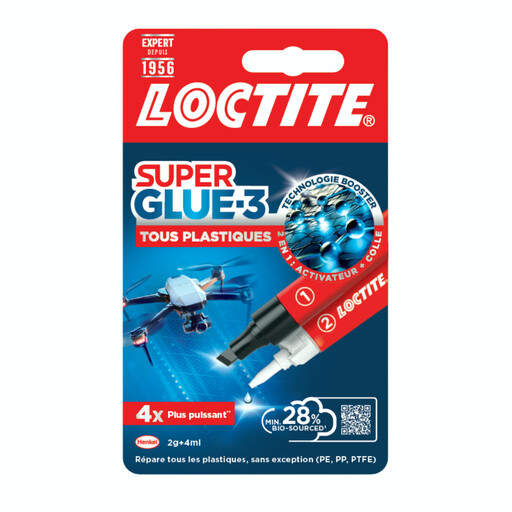
Why it suits this type of user: The set combines 2 g of adhesive with an activator pen to tackle some of the trickiest plastics to bond.
The activator prepares the surface before application, helping to overcome the common problem of plastics that are difficult to bond.
A two-step system, a finish described as clear and an applicator suited to small repairs on toys, accessories or equipment.
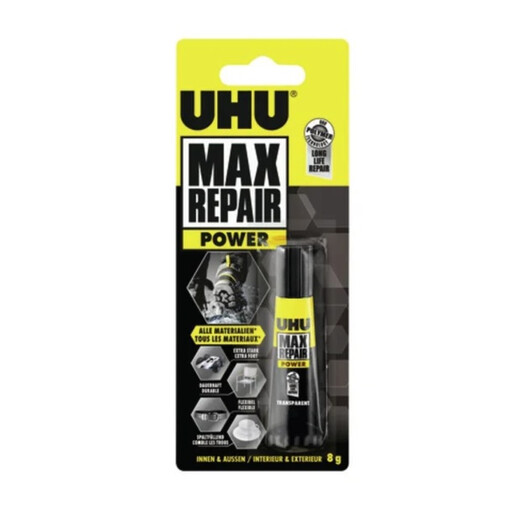
Why it suits this type of user: Its flexible polymer formula is designed for repairs exposed to vibration, impact or slight movement.
Its stated flexibility means you won’t need to use a rigid glue on a shoe sole, fabric item or part exposed to twisting forces.
An 8 g tube, a clear finish once dry and stated compatibility with wood, metal, leather, rubber, plastic, glass and ceramic.
We’ve put together a comprehensive selection, updated in real time, of products that meet these demanding criteria and European safety standards.
Cyanoacrylate glues bond skin quickly and can cause eyelids to stick together. Wear suitable protective equipment, work in a well-ventilated area and keep the product out of reach of children. If it gets in your eyes, rinse thoroughly with water and seek medical advice promptly.
A clear cyanoacrylate glue is often suitable for small repairs involving metal, ceramic, wood, rubber and some plastics. However, check which materials it’s not suitable for, particularly PE, PP and PTFE. For a large surface or a join that will be exposed to movement, a flexible polymer glue will often be a better choice.
Some formulas are described as water-resistant or suitable for washing in a dishwasher once fully cured. That doesn’t necessarily mean they can withstand prolonged immersion. Always check the technical information and allow the glue to cure for the recommended time.
Close the nozzle carefully after each use and store the product somewhere cool and dry, away from heat and direct sunlight. If you only use glue occasionally, single-use doses can also help prevent waste caused by the tube drying out.