
Livraison le jour même ou le lendemain

Qualité garantie

Débloquez vos offres de bienvenue: Livraison GRATUITE | Jusqu'à -80 % | 30 jours d'essai gratuits à JoyPlus
Téléchargez l'application
A strong liquid glue can save a furniture handle, figurine, shoe sole or ceramic object in just a few seconds. But not all instant glues are created equal and, above all, they are not suitable for the same materials or conditions of use. A poor choice can result in a weak bond, leave an unsightly white mark or turn the tube into waste after only a few uses.
Here are the most common mistakes to avoid and the criteria to consider before buying super glue, cyanoacrylate glue or multi-surface glue.
An instant glue may set very quickly, but that does not mean the bond is ready to withstand knocks, twisting or repeated washing. Initial setting and complete curing are two separate stages.
For a repair exposed to moisture, check the product details and look for a mention of water resistance or dishwasher compatibility. In all cases, allow the glue to cure for the time recommended by the manufacturer before putting the item under strain.
PE, PP and PTFE, also known as Teflon, are difficult to bond with many cyanoacrylate glues. The claim ‘all materials’ therefore deserves careful attention: it may cover a wide range of surfaces without including low-adhesion plastics.
Before placing your order, identify the material you need to repair precisely and check the exclusions listed on the packaging or in the product details.
A standard tube may be perfectly suitable for an easy-to-reach break, but difficult to control on a small part. Too much glue can then overflow, leave a visible mark or stick your fingers together.
For costume jewellery, models, frames or hard-to-reach areas, it is better to choose a precision glue with a fine nozzle. On a vertical surface, a thicker, less runny formula will also make positioning easier.
Start by listing the materials involved: ceramic, porcelain, wood, metal, rubber, leather, paper, cardboard or plastic. A multi-surface glue is convenient for small everyday jobs, but always check for any restrictions relating to PE, PP and PTFE.
The surface must be clean, dry, dust-free and degreased. A damp or greasy surface will generally reduce the quality of contact between the two pieces and weaken the bond.
A very runny glue penetrates fine cracks easily and is suitable for precise assemblies. However, it can run on a vertical surface. A thicker or gel formula often provides better control when applying the glue.
A long nozzle or precision tip is particularly useful for applying a single drop exactly where it is needed. This limits waste and reduces the risk of overflow on delicate or decorative objects.
A clear glue makes repairs less noticeable on glass, porcelain, ceramic and certain plastics. Nevertheless, check that it remains clear after drying and that it can withstand moisture or heat if the item will be exposed to them.
Cyanoacrylate glues are primarily designed for quick, small repairs. They do not necessarily replace structural glue, sealant or resin when a joint needs to support a significant load.
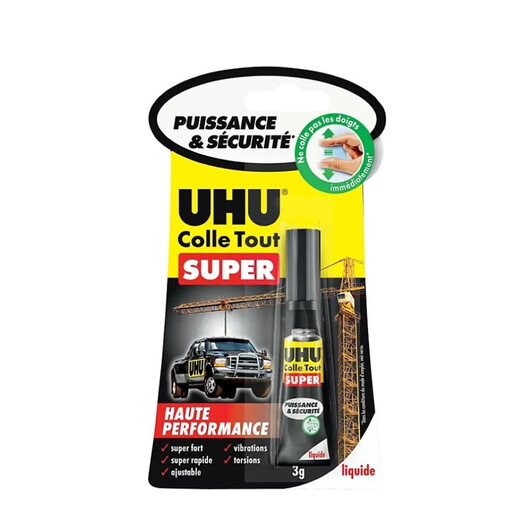
Why this choice suits this profile: with 3 g of glue, this tube is enough for small everyday repairs at home, in the office or in an occasional workshop. The product details state that you have around 20 seconds to reposition the pieces.
The stated adjustment time reduces the risk of bonding the pieces at the wrong angle straight away. Its gel texture is also described as less likely to run on vertical surfaces.
Clear, flexible formula, moisture resistance and a stated operating range of -50 °C to +100 °C. Listed surfaces: metal, compatible plastic, wood, rubber, paper and cardboard.
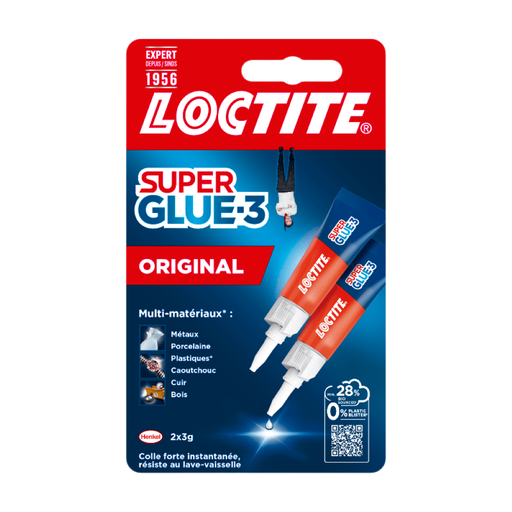
Why this choice suits this profile: the twin pack gives you a spare for several projects. The precision nozzle helps you create neat bonds without applying more glue than necessary.
The product details specify incompatible materials, including PE, PP and PTFE. This is useful information that helps you avoid relying blindly on the ‘all materials’ claim.
Clear cyanoacrylate glue, fast drying and stated compatibility with wood, rubber, porcelain and leather. The product details also indicate resistance to water and heat.
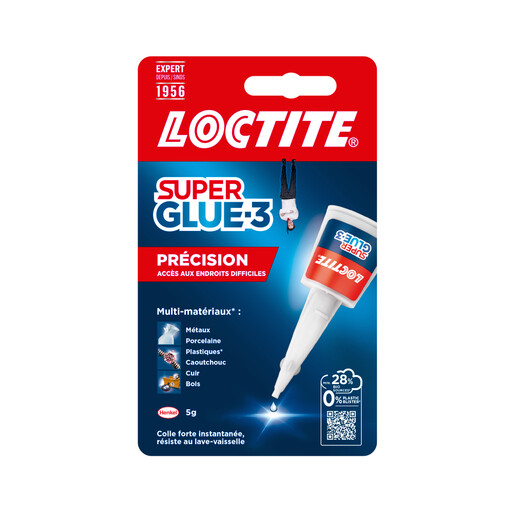
Why this choice suits this profile: its long nozzle is well suited to repeated repairs, delicate objects and narrow spaces, such as a glasses frame, shoe sole or small decorative element.
Drop-by-drop application helps prevent overloading the joint and leaving visible marks. However, the exclusions concerning PE, PP and PTFE must still be taken into account.
5 g bottle, precision nozzle, clear liquid formula and stated water resistance after complete curing. Listed surfaces: ceramic, metal, wood, leather, rubber and compatible plastics.
We have put together a complete, real-time updated list of products that fully meet these strict selection criteria and European safety regulations.
A clear cyanoacrylate glue may be suitable for small, clean breaks in ceramic or porcelain. However, make sure that both surfaces are completely dry and that the product details specifically mention these materials. For an item intended to come into contact with food, check the relevant regulatory guidance before use.
The glue may set almost immediately, but the complete curing time varies according to the formula, the amount applied, the temperature and the material. Hold the pieces together for the recommended time, then avoid knocks, water and mechanical stress until the stated curing period has elapsed.
Wipe the nozzle after each use, replace the cap immediately and store the tube in a cool, dry place away from heat. Do not insert a damp tool into the nozzle: moisture can speed up the curing of some cyanoacrylate glues.