
Livraison le jour même ou le lendemain

Qualité garantie

Débloquez vos offres de bienvenue: Livraison GRATUITE | Jusqu'à -80 % | 30 jours d'essai gratuits à JoyPlus
Téléchargez l'application
A favourite mug shatters, a shoe sole comes loose, a toy's arm breaks off... We all instinctively reach for a tube of super glue to save the day. Yet, who hasn't cursed at a bond that won't hold, fingers stuck together, or an unsightly drip on a valuable item? No, choosing a glue isn't something you can just wing.
Before you grab the first tube you see, let's review the classic mistakes that turn a good intention into a failed repair (and wasted money).
To navigate the jungle of adhesives, focus on a few key points that will make all the difference for your repair.
Most of the adhesives we commonly call "super glue" belong to the family of cyanoacrylate adhesives. Their principle is simple: they polymerise (harden) almost instantly upon contact with the moisture present in the air and on surfaces.
The choice between a liquid and a gel formula is crucial for the success of your object repair.
Don't confuse setting time (the few seconds needed for the pieces to hold together) with full curing time (several hours to reach maximum strength). Some formulas, like UHU's, are designed to remain adjustable for about twenty seconds: a real bonus for millimetre-perfect positioning.
Finally, for occasional use, mini-dose formats are a clever solution to prevent the entire tube from drying out after its first use.
To help you see more clearly, we've selected glues for every type of user, based on their performance and ease of use.
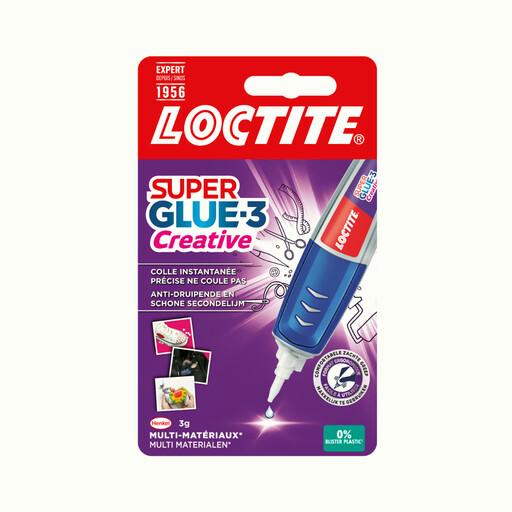
Who is it for? Ideal for model making, jewellery repair, or any creative hobby that demands high precision. The pen format offers a grip and control worthy of a writing instrument.
This pen format with a pressure-sensitive dispenser solves the problem of an ill-suited applicator. It allows you to apply just the right amount of glue, drop by drop, without smudges or excess.
Its gel glue formula doesn't run, making it perfect for detailed work, even on vertical surfaces. It dries transparent for an invisible finish.
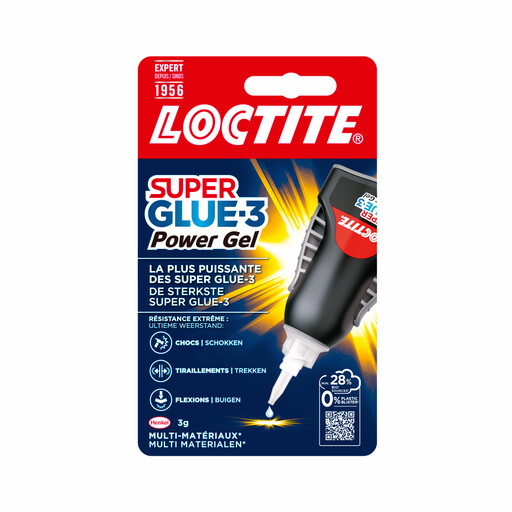
Who is it for? Perfect for repairing items that need to remain flexible or that undergo stress: shoe soles, watch straps, toys... Its formula is designed to absorb shocks.
It debunks the myth of rigid "multi-purpose" glue. Enriched with rubber, its formula is specifically designed for flexible materials where a standard cyanoacrylate glue would snap clean off.
Its resistance to impact, torsion, and temperature variations ensures a long-lasting repair. The side-squeeze bottle offers easy and precise dispensing.
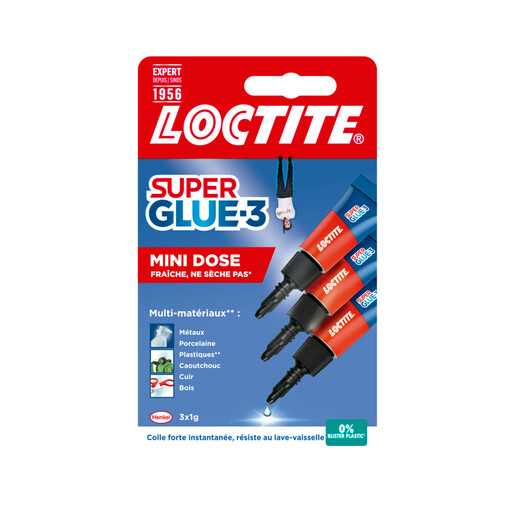
Who is it for? For those who only use super glue once or twice a year. This pack ensures you always have a fresh dose on hand for an emergency, without wasting a large tube.
It solves the frustrating problem of a glue tube drying out and becoming unusable after a single use. The single-use format guarantees glue that's always ready to go with zero waste.
An ultra-practical and economical format for occasional use. Its classic liquid formula is versatile for small, everyday repairs on ceramic, wood, or leather.
Discover our full selection of glues tested and approved by our experts, compliant with safety standards.
It's the classic mishap. Above all, do not force the skin apart. The simplest method: soak the area in warm, soapy water for several minutes. Then, gently try to peel the skin apart, for example, by rolling a pencil between your fingers. Acetone (found in some nail polish removers) is effective but should be used sparingly on the skin.
No, and this is a common cause of failure. Cyanoacrylate glues adhere poorly to so-called "oily" plastics like polyethylene (PE)—used in bottles and bags—and polypropylene (PP)—used for storage boxes or car bumpers. For these materials, you need a specific adhesion primer or a two-part epoxy. When in doubt, always check the manufacturer's recommendations.
The bond may seem solid in a few seconds (rapid bonding), but this is only the initial set. Maximum strength is not achieved for several hours, typically between 12 and 24 hours. For an item that will be under stress (a mug handle, a shoe), patience is key: wait for the full curing time indicated on the packaging before putting stress on it or exposing it to water.